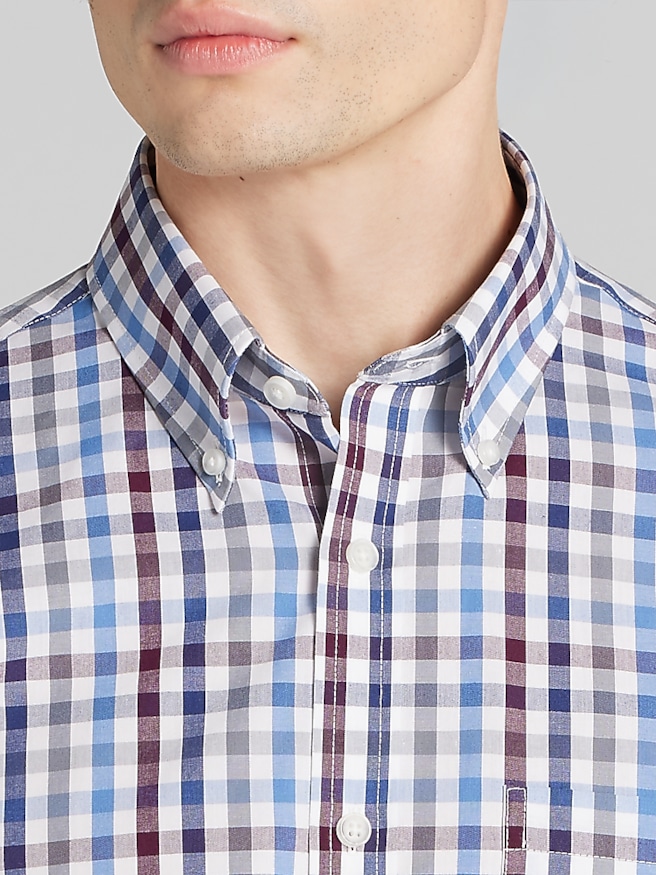
Men's check shirts bring intersecting lines, balanced color, and visual texture to everyday clothing, with patterns that range from subtle grids to bold blocks. A check shirt can sit comfortably beneath a suit jacket, add character to a business-casual outfit, or pair with denim for a relaxed dinner. The pattern's scale makes a noticeable difference: small checks tend to read as a fine texture from a distance, while larger checks give the shirt a more prominent role in an outfit. Gingham typically features an even pattern of white and colored squares, windowpane checks use widely spaced lines, and tattersall patterns combine thin intersecting lines, often in more than one color. Plaid introduces a broader mix of crossing stripes and bands, creating a less uniform arrangement than a simple check. These distinctions give checked shirts plenty of range without changing their familiar, easy-to-wear appeal. Fabric contributes just as much to the character of the shirt. Cotton poplin has a smooth surface that gives small checks a crisp appearance, while oxford cloth adds visible texture and a slightly more relaxed feel. Twill's diagonal weave can lend a soft drape, and brushed flannel gives a checked pattern a softer, less sharply defined finish. Linen has a naturally textured appearance and a relaxed drape, with creasing that becomes part of its character. Cotton blends may offer easier maintenance or improved wrinkle resistance, depending on their composition and finish; fabrics with added stretch can provide some give during movement. Neither fiber content nor pattern alone determines how dressy a shirt looks. A smooth fabric, restrained colors, structured collar, and neat fit can make a checked shirt appropriate for an office setting, while a brushed surface, open collar, and larger pattern often feel more casual. For someone whose wardrobe leans heavily on solid shirts, checks offer a practical way to introduce pattern while keeping familiar colors such as blue, white, gray, and brown in rotation.
Fit determines whether that pattern looks settled and intentional or pulls out of shape across the body. A well-proportioned checked shirt allows comfortable movement through the shoulders, chest, and upper back, with a button placket that lies flat rather than opening between buttons. On a traditional set-in sleeve, the shoulder seam generally sits near the edge of the shoulder; a seam that falls much farther down the arm can create a looser silhouette than intended. Slim fits bring the fabric closer to the torso, while classic and more relaxed fits provide additional room, though the exact measurements vary by maker. The best match depends on body proportions and personal preference rather than the fit name alone. Someone who spends much of the day seated may appreciate room through the waist, while someone wearing a jacket over the shirt may prefer less excess fabric around the sides. Collar comfort matters, too: a collar worn buttoned with a tie needs enough space to sit comfortably without appearing loose. Sleeve length should allow the cuff to reach the wrist without swallowing the hand, and the cuff should not bind when the elbow bends. For outfits built around jackets, knitwear, or a neatly rolled sleeve, men's long-sleeve check shirts offer several styling possibilities. A button-down collar keeps its points secured for a tidy, relaxed appearance, while a spread or point collar can create a more tailored impression. Shirt length also influences how the outfit comes together. Longer tails help a shirt stay tucked during sitting and reaching, while a shorter hem can look more balanced when worn untucked. A small blue check with solid navy trousers keeps an office outfit composed without looking flat. A larger check worn with straight-leg jeans creates a more casual balance. When adding a tie or patterned jacket, differences in pattern size help each element remain distinct; a fine check and a broader stripe usually compete less than two equally sized grids.
The lasting appeal of a checked shirt depends on how it feels after repeated wear as much as how it looks at first glance. Fabric weight, weave, construction, and care all contribute to durability, so a thicker shirt is not automatically a longer-lasting one. Even stitching, secure buttons, and well-finished seams are useful details to assess, especially at the cuffs, collar, and underarms where shirts receive regular friction and movement. Pattern alignment can also affect the overall appearance: checks that meet neatly across the front or blend into a chest pocket create a more continuous visual line. Care should follow the garment's label, since washing temperature, drying method, and ironing requirements vary with fiber content, finishes, and construction. Separating similar colors, avoiding an overloaded washer, and promptly removing a shirt after the cycle can help limit unnecessary creasing and friction. Excessive dryer heat may contribute to shrinkage or wear, particularly in cotton fabrics, while smoothing the collar, placket, and cuffs before drying can reduce the work needed later. Some shirts benefit from pressing for a crisp finish; others look appropriate with a softer, more natural texture. An iron setting suitable for one fabric may be too hot for another, especially when stretch fibers or synthetic blends are involved. For regular rotation, checked shirts can serve distinct purposes without requiring a completely separate wardrobe for every occasion. A restrained pattern can work for a client lunch, a family photograph, or a restaurant gathering, while a more pronounced check can bring personality to an otherwise simple weekend outfit. They can also make thoughtful gifts for a father, partner, brother, or friend when the recipient's measurements and preferences are known. A favorite shirt's neck size, sleeve length, fit, and usual color palette offer more useful direction than guessing from a general clothing size. For the wearer who values familiar pieces with a little visual interest, a comfortable checked shirt can become a dependable part of getting dressed.