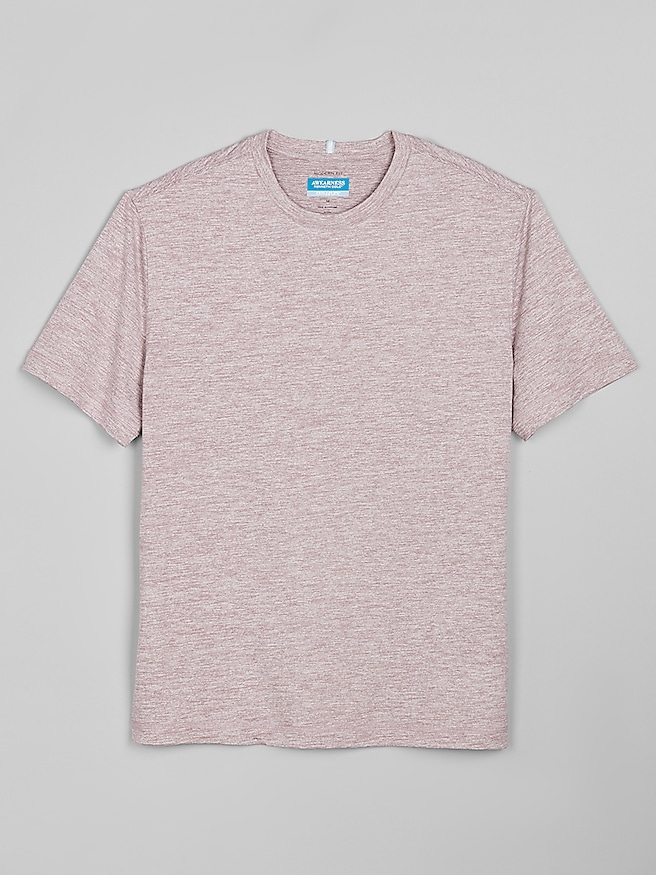
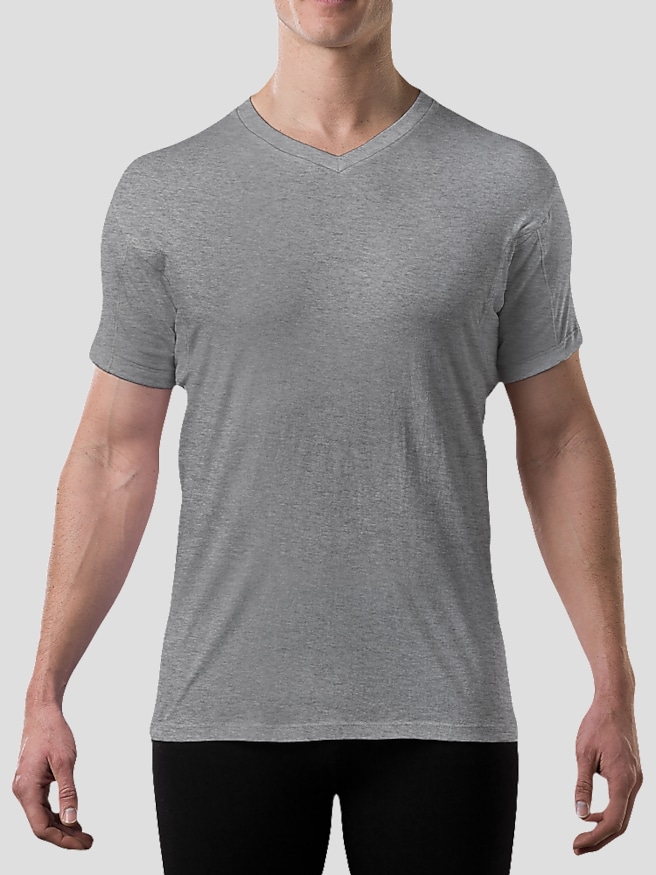
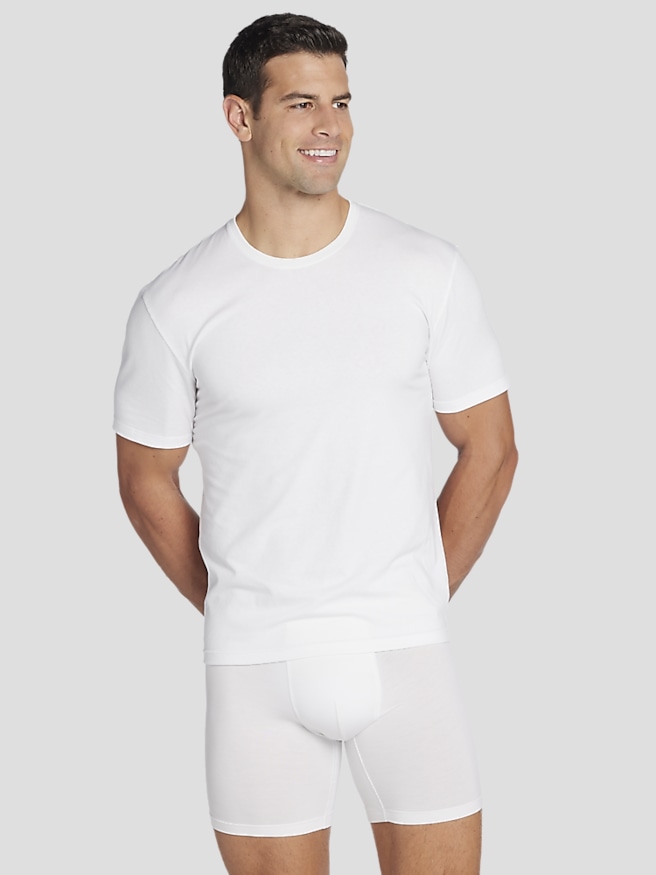
V-neck T-shirts are knit shirts with a neckline that forms a V at the front, creating an open shape that works both on its own and beneath other layers. That simple detail gives a familiar everyday essential a distinct look: a shallow V keeps coverage close to a crewneck, while a deeper opening reveals more of the chest and can sit below the collar of an unbuttoned shirt. For everyday wear, the most useful neckline is one that lies flat rather than pulling outward or curling along the edge. Fit makes just as much difference as neckline depth. Shoulder seams should generally sit near the edge of the shoulders, with enough room through the chest to move comfortably without stretching the fabric taut. A close-fitting cut can work well as an undershirt, while a straight or slightly relaxed silhouette leaves more breathing room when the tee is worn alone. Sleeves that follow the upper arm without squeezing it create a neat outline, especially when paired with chinos or dark jeans. Length matters, too: a hem that falls around the middle of the fly usually gives an untucked shirt balanced proportions, though torso length and personal preference affect the right placement. Extra length can help a tucked undershirt stay in place, but too much fabric may bunch beneath a waistband. Men’s V-neck T-shirts suit a range of routines, from working at a desk in a casual setting to taking a flight, meeting friends for lunch, or spending an afternoon at home. For someone who prefers a less enclosed neckline, the V shape offers an alternative without adding buttons, a collar, or extra detailing. A well-proportioned tee can look intentional with very little styling, particularly when the shoulder fit, sleeve length, and hem all work together. The result is a practical foundation for outfits that need to feel comfortable without looking unfinished.
Fabric influences nearly every part of how a V-neck T-shirt feels and wears, including its softness, drape, stretch, and opacity. Cotton jersey is a familiar choice for its soft hand and breathable feel, with lighter constructions tending to fall closer to the body and heavier versions often providing more structure. Fabric weight alone does not determine quality; yarn, knitting, finishing, and construction all contribute to the result. A lightweight tee can be useful beneath a button-front shirt, while a more substantial knit may feel better suited to wearing by itself. Cotton blended with modal can have a smooth, fluid drape, and cotton blended with polyester may offer quicker drying and better resistance to wrinkling than some all-cotton fabrics. A small amount of elastane can add stretch and help the shirt move with the body. The exact blend matters, so fiber content is more informative than softness alone when comparing how a shirt might perform through repeated wear. Color also changes the impression. White creates a crisp contrast beneath an open shirt, black gives a simple outfit a sharper edge, and gray or navy can coordinate easily with denim, khaki, and patterned layers. With lighter shades, checking coverage in natural light helps reveal whether the fabric works best alone or as an undershirt. Construction details deserve the same attention as color and texture. An evenly sewn neckline, smooth seams, and a tidy hem contribute to comfort and a cleaner appearance. Reinforcement along the shoulder seams can help support the shape, while a neckband with good recovery is less likely to look stretched after ordinary use. The point of the V should sit smoothly against the chest rather than puckering. These are small distinctions, but they become noticeable when a plain tee is the main focus of an outfit, with no print or decorative detail to draw attention away from its fit and finish.
The versatility of V-neck T-shirts comes from how easily they connect with clothes already in a wardrobe. With straight-leg jeans and clean sneakers, a solid tee makes an uncomplicated everyday combination; with chinos and an unstructured jacket, it creates a more relaxed alternative to a collared shirt when the setting allows. A shallow V generally keeps that look understated, while a deeper neckline makes a stronger visual statement. Under an open overshirt, the V creates a clear frame at the chest without competing with the outer layer’s collar. Under a button-front shirt, a neckline that sits below the open collar can keep an undershirt out of sight, though the depth needed depends on how many buttons are left undone. For outfits built around shorts and lighter layers, men’s V-neck shirts for summer carry the same easy shape into casual combinations. Keeping a tee looking neat depends partly on care. The garment’s care label should take priority, since fibers, dyes, and finishes can require distinct handling. Washing with similar colors, avoiding excessive heat when instructed, and removing shirts promptly after drying can help limit fading, shrinkage, and set-in wrinkles. Turning a tee inside out may reduce surface abrasion, and folding rather than pulling it onto a tight hanger can help avoid stretched shoulders. Necklines also benefit from gentle handling instead of being tugged when dressing or removing the shirt. For travel, a tee that layers comfortably and coordinates with several bottoms can simplify packing without limiting outfit choices. As a gift, V-neck tees are most useful when the recipient’s preferred size, neckline depth, and usual fit are known. Someone who wears close-fitting undershirts may want a very different shape from someone who favors a relaxed standalone tee. Familiar colors and an appealing fabric feel make this everyday staple a thoughtful, practical addition to a personal wardrobe.