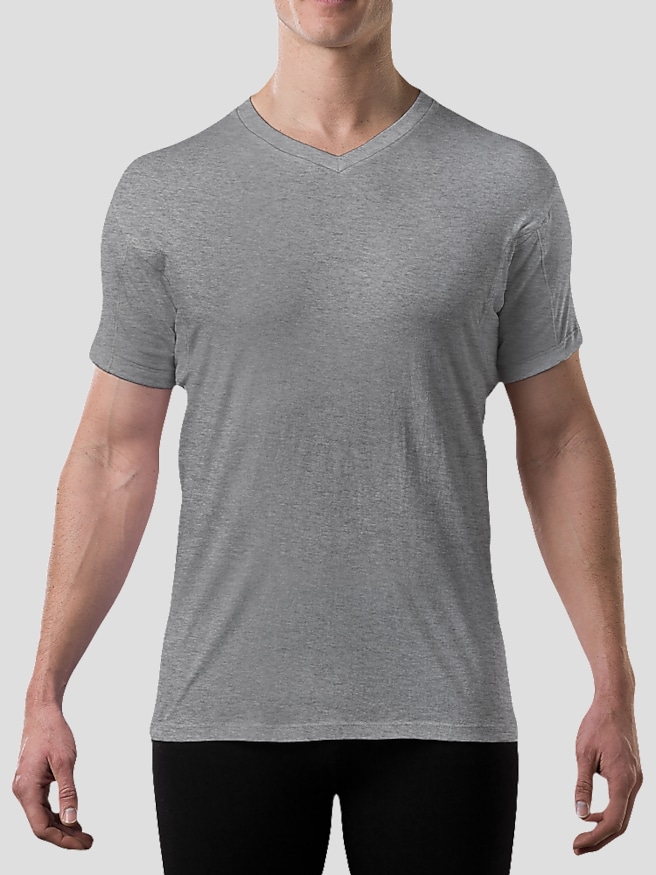
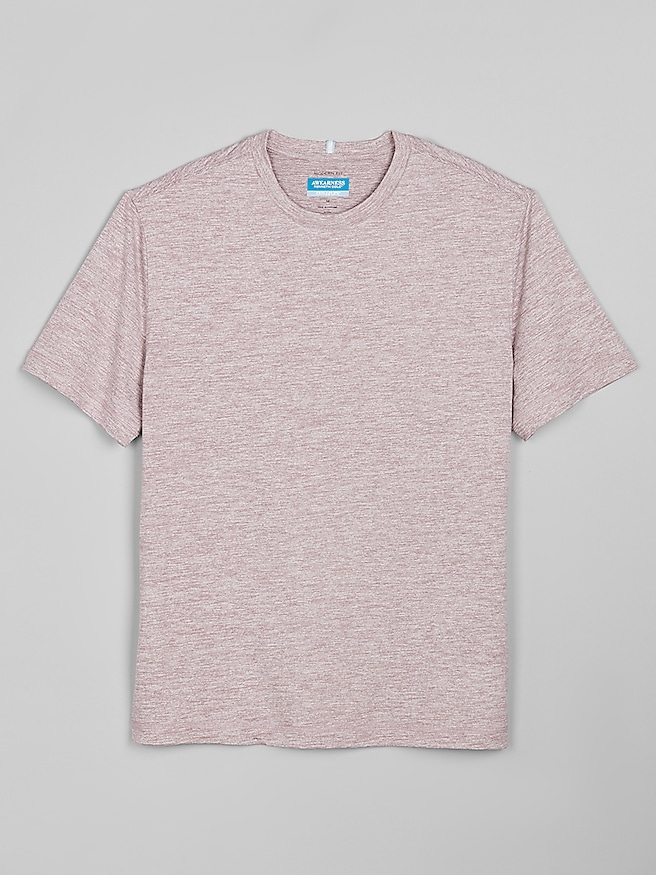
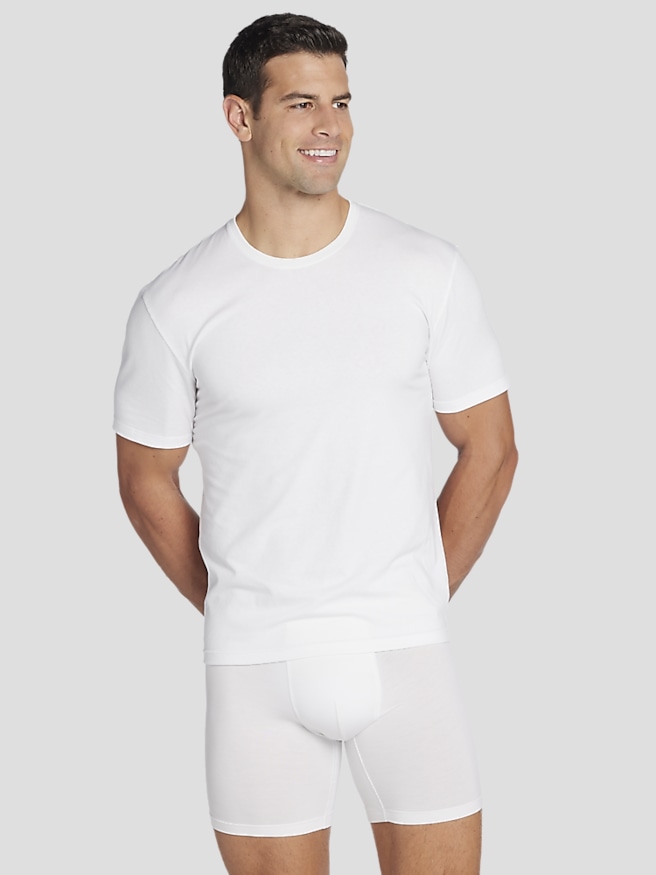
Men’s stretch V-neck T-shirts combine the familiar feel of a casual tee with added flexibility for reaching, sitting, and moving throughout the day. Their defining features are a V-shaped neckline and fabric that stretches, often through a blend of cotton or polyester with spandex, also called elastane. Cotton-rich blends tend to have a soft, familiar hand and breathable feel, making them a comfortable starting point for everyday wear. A blend of 95% cotton and 5% spandex is one common construction, though the exact fiber mix varies. Polyester blends can bring a smoother surface and faster drying, while moisture-wicking performance depends on the fabric’s construction or finish rather than stretch alone. For days that include a commute, time at a desk, and a walk after work, those distinctions can matter more than how a shirt looks folded. Stretch helps the fabric move with the body; recovery describes how well it returns to its original shape afterward. Both influence whether a tee stays comfortable and keeps a neat outline through repeated wear. Fabric weight also shapes the experience. Lightweight jersey slips easily beneath another shirt, while a more substantial knit can provide greater coverage when worn on its own. Thickness does not automatically determine softness or durability, and a smooth, even knit can feel comfortable without being heavy. The V-neck adds another useful distinction: it leaves more of the upper chest open than a crew neck and can sit out of sight beneath an open shirt collar, depending on its depth. Within the broader selection of V Neck T-Shirts, stretch constructions suit anyone who prefers a little give without giving up a clean, straightforward shape. They can serve as everyday undershirts, standalone casual tops, or flexible layers during the cooler months, with the best match depending on fabric, cut, and intended use.
Fit gives a men’s stretch V-neck T-shirt much of its character, whether the goal is a discreet base layer or a casual shirt that looks finished with jeans. A slim cut follows the chest and torso more closely, reducing excess fabric beneath a button-front shirt or sweater. A regular cut offers more room through the body and often feels less restrictive when worn alone. Stretch should support the fit rather than compensate for a size that is too small: persistent pulling across the chest, a neckline that spreads unusually wide, or a hem that climbs during ordinary movement can signal that more room is needed. On a conventional set-in sleeve, the shoulder seam generally sits near the shoulder’s edge, while the sleeve opening should allow the upper arm to move without digging in. Torso length deserves equal attention. An undershirt needs enough length to remain tucked when reaching for a high shelf or leaning across a desk, while an untucked tee usually looks more balanced when it covers the waistband without extending so far that it bunches over the hips. Body proportions vary, so the relationship between chest room, shoulder width, and length is more useful than a fit label by itself. Neckline depth is another practical consideration. A shallow V offers modest openness for everyday outfits; a deeper V may stay hidden under a collared shirt with the top button undone. The neckline should lie smoothly rather than gape, twist, or feel tight against the neck. For close-to-skin wear, flat seams and a tag-free or softly finished label area can reduce friction, especially beneath several layers. Coverage matters, too. Light colors and fine fabrics may appear more translucent when stretched, making fabric density and a comfortable amount of ease important for a tee worn by itself. A well-proportioned fit leaves enough freedom for a long drive or a relaxed afternoon without creating unnecessary folds beneath outer layers.
The everyday appeal of stretch V-neck tees comes from how easily they move between settings. A clean, solid-color tee works with dark denim and sneakers for a casual dinner, or with chinos and an unstructured jacket when the occasion allows a relaxed approach. Beneath an overshirt, its open neckline keeps the layers from feeling crowded around the throat. During the cooler months, a lightweight version can add a comfortable layer under knitwear without filling the sleeves with excess fabric. For an undershirt beneath a light dress shirt, a shade close to the wearer’s skin tone may be less noticeable than bright white, though visibility also depends on the outer shirt’s weave and thickness. For exercise or an active commute, a fabric specifically described as moisture-wicking or quick-drying is a more useful choice than assuming every stretchy tee performs like athletic clothing. Cotton-rich options remain a natural fit for quieter routines, from working at home to packing a weekend bag. They can also make practical gifts for someone who values comfortable basics, especially when the preferred size, neckline depth, and close or easy fit are already known. Long-term usefulness depends partly on construction and partly on care. Even stitching, a smoothly attached neckband, and secure hems contribute to a tidy finish, while good fabric recovery helps limit a stretched-out appearance. No knit is immune to wear, and repeated friction from bag straps or rough outer layers can encourage pilling. Care-label instructions take priority because blends and finishes vary, but washing with similar colors, using a gentle cycle when appropriate, and avoiding excessive dryer heat can help protect both the fabric and its stretch fibers. Turning tees inside out can reduce surface abrasion during washing. Prompt removal from the dryer, or reshaping and air-drying when the label permits, helps keep wrinkles and distortion in check. With a suitable cut and consistent care, a stretch V-neck T-shirt can remain a dependable foundation for both layered outfits and simple, everyday dressing.