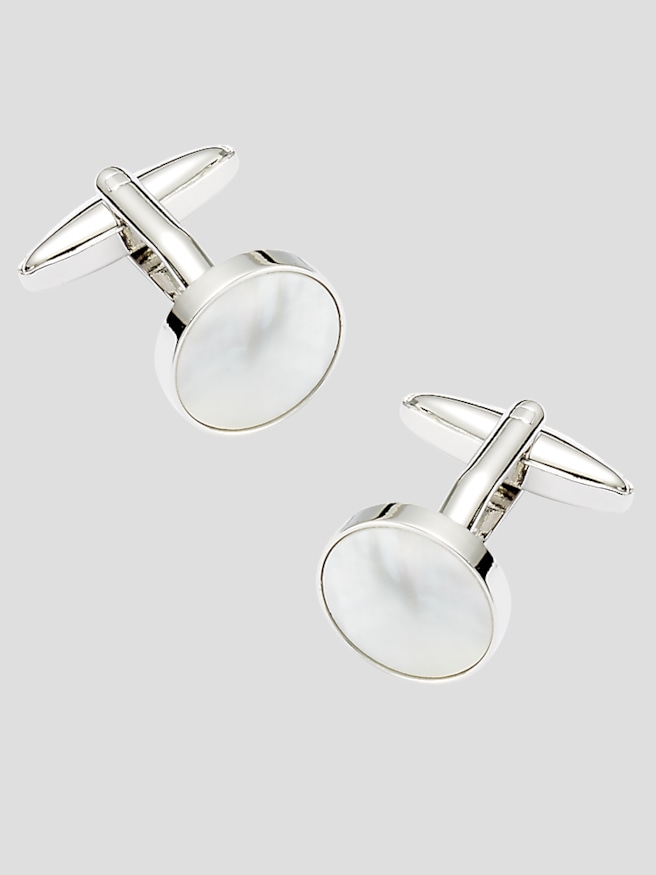
Unique cufflinks bring personality to one of the smallest details in tailored clothing: the point where a shirt cuff meets the hand. Their appeal can come from an unexpected shape, a richly textured surface, an unusual material, or a design that carries meaning for the person wearing it. Vintage-inspired motifs, mechanical details, geometric forms, and understated symbols all offer ways to make a dress shirt feel more individual without changing the character of the outfit. Unlike a stitched-on button, a cufflink passes through aligned cuff buttonholes and fastens the fabric with a separate closure. That functional role gives the design its character: a small decorative face on the outside, supported by a post, chain, or other fastening structure that keeps the cuff together. French cuffs are the traditional setting, while convertible cuffs may also accommodate cufflinks when their construction allows it. Standard button cuffs generally are not designed for them. Proportion matters as much as decoration. A broad face can make a confident statement against a substantial folded cuff, while a smaller profile can sit more quietly beneath a close-fitting jacket sleeve. In either case, the cuff should remain comfortable when the wrist bends, with enough room for the fabric to sit naturally rather than bunch around the fastening. At a wedding, an engraved pattern might provide a personal detail visible during a handshake or toast. In a business setting, an intricate metal texture can add interest without competing with a patterned tie. For an evening celebration, a sculptural shape can stand out against a crisp white shirt. Distinctiveness does not have to mean novelty or bright color; a subtle relief pattern, an unexpected edge, or the contrast between polished and brushed surfaces can be just as memorable. The strongest choices feel connected to the wearer and deliberate within the outfit, rather than decorative for decoration’s sake.
Materials influence the appearance, weight, and long-term care of unique cufflinks. Stainless steel is often valued for its strength and resistance to corrosion, while sterling silver offers a distinctive luster that may develop tarnish over time. Brass can support intricate detailing and is frequently used beneath decorative finishes. A plated surface provides a particular color and sheen, but its appearance depends partly on the underlying construction, the thickness of the finish, and how the cufflinks are handled. Repeated friction against hard surfaces can gradually affect that finish, especially along raised edges. Enamel introduces color with a smooth, glasslike appearance, while stone, mother-of-pearl, and other inlays can add depth or natural variation. Those visual qualities also bring practical considerations: an inset detail may need more protection from impact than a solid metal face, and some materials are sensitive to moisture, chemicals, or aggressive cleaning. Mechanical-inspired designs can be especially engaging because their visible layers and precise shapes reward a closer look, though decorative moving elements should not be assumed to function as working mechanisms. Construction deserves attention beyond the front surface. A hinged fastening should move smoothly and close securely, connections should feel stable, and edges should be finished cleanly so they do not catch on delicate shirt fabric. The space between the face and closure also needs to accommodate the thickness of the cuff without squeezing it excessively. Everyday care is usually more about gentle handling than elaborate maintenance. A soft, dry cloth can remove fingerprints after wear, while a separate compartment or soft pouch helps prevent pieces from rubbing against one another. Cleaning methods should follow the material-specific care directions, particularly for mixed-material designs. Metal polish intended for solid silver may be unsuitable for plating or decorative inlays, and soaking or ultrasonic cleaning can damage some finishes and settings. Keeping cufflinks away from grooming sprays and putting them on after those products have dried can help protect their surfaces. These details matter most for pairs worn frequently, where dependable closures and appropriate care contribute as much to lasting enjoyment as the design itself.
Choosing unique cufflinks is also an exercise in balance, especially when they will become part of a regular wardrobe. A shirt with a strong stripe or check often pairs well with a clear, uncomplicated cufflink shape, while a plain shirt leaves more room for color, relief, or a distinctive motif. Metal tones can relate to a watch case, belt buckle, or tie accessory without matching every detail exactly. The goal is a coherent impression, not a uniform set of identical finishes. For a restrained look with an individual edge, Modern Cufflinks offers a related design direction centered on contemporary styling. More expressive cufflinks can reflect a profession, an interest in engineering, a favorite pastime, or an appreciation for vintage design, but the setting still matters. A playful motif might feel natural at a celebratory dinner and less suited to a conservative client meeting. Formal dress codes generally call for closer attention to the shirt and other accessories, so a distinctive pair should complement the expected level of formality rather than distract from it. Cufflinks can also make thoughtful gifts for someone who already wears French-cuff shirts or has an occasion to begin wearing them. A graduation, wedding, career milestone, or retirement can give the gift a clear connection to a moment in the recipient’s life. For a groom or wedding party, a shared design can create a quiet visual connection without requiring every outfit to look identical. For a father, friend, or mentor, a meaningful texture or motif can feel personal without relying on initials or a prominent inscription. Wearability remains important: a beautifully detailed pair is more useful when its scale, fastening, and styling suit the recipient’s shirts and habits. The most enduring appeal comes from that combination of character and practicality—a detail with enough individuality to be noticed, enough restraint to work with familiar clothing, and a secure, comfortable construction that makes it a pleasure to wear again.