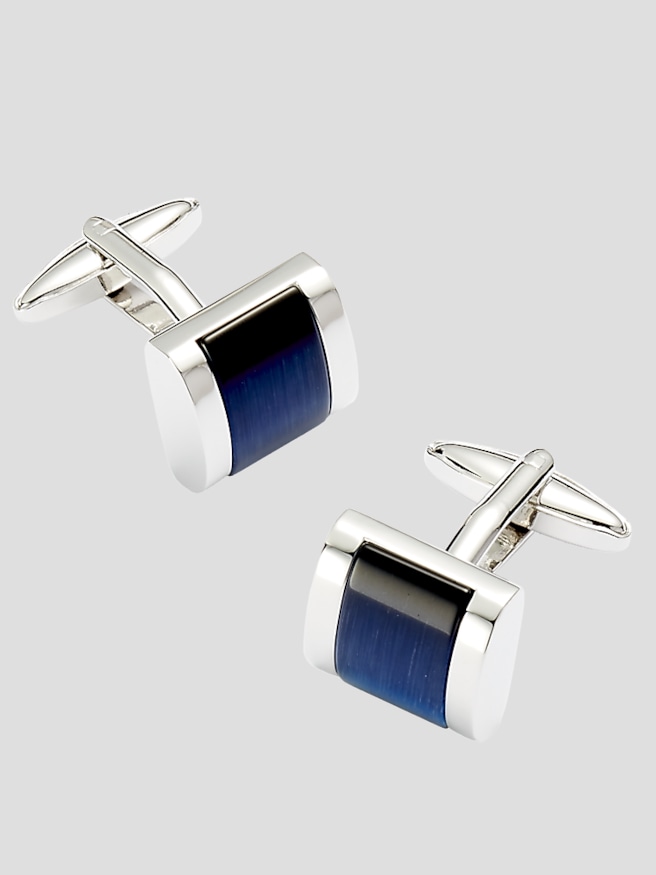
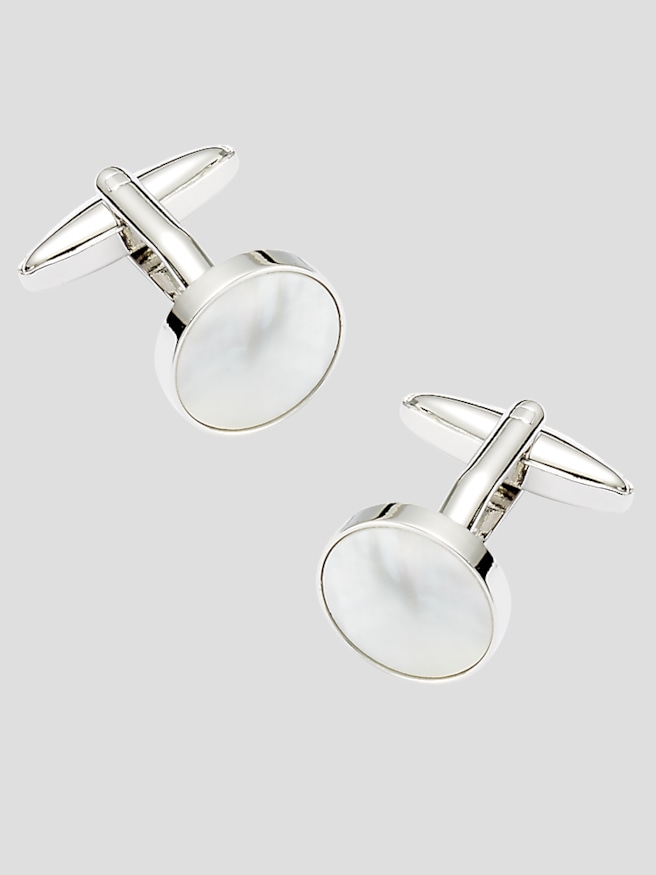
Modern cufflinks fasten dress-shirt cuffs with clean shapes, restrained detailing, and finishes that complement contemporary tailoring. Their defining features often include geometric faces, low-profile settings, brushed or polished metals, and contrasting inlays rather than elaborate crests or heavy ornamentation. Squares, circles, slim rectangles, and softly rounded forms each bring a distinct character to a shirt sleeve without overwhelming it. A flat rectangular face can echo the lines of a narrow tie, while a rounded design softens the sharp edges of a structured jacket. Hexagonal outlines and beveled borders add dimension in a small space, catching light as a hand reaches across a table or rests on a chair arm. Texture makes an equally noticeable difference: a brushed surface has a muted appearance, while a mirror finish creates a brighter accent against crisp cotton. Engraved lines and recessed centers provide visual interest without requiring a large or elaborate design. Modern does not have to mean unconventional; a simple metal face with carefully balanced proportions can feel just as contemporary as an architectural shape or contrasting inlay. Silver-tone finishes pair naturally with charcoal, navy, and black tailoring, while darker finishes create a more understated effect. The warmth of gold cufflinks can complement brown leather accessories, cream-colored shirts, and watches with warm metal details. Matching every accessory exactly is less important than keeping the overall combination intentional. Similar metal tones create continuity, while a deliberate contrast can give a restrained outfit a focal point. With patterned shirts, a plain cufflink face leaves room for stripes or checks; with a solid shirt, subtle texture or a dark inset becomes easier to appreciate. The result is a finishing detail that remains visible in conversation, photographs, and everyday gestures without competing with the rest of the outfit.
Materials influence the weight, feel, finish, and long-term care of modern cufflinks. Stainless steel is valued for its strength and resistance to corrosion, making it a practical material for accessories worn repeatedly. Brass provides a workable foundation for many shapes and decorative finishes, and its final appearance depends on the surface treatment. Sterling silver has a distinctive luster and can develop tarnish over time, a natural characteristic that calls for cleaning appropriate to the metal and any accompanying details. Plated cufflinks combine a base material with a surface layer, so their care needs differ from those of an uncoated metal. Color terminology matters as well: gold-tone describes an appearance and does not, by itself, indicate solid gold construction. Likewise, a silver-colored finish does not necessarily mean sterling silver. Inlays introduce another layer of character. Enamel can create a smooth field of color, dark stone can offer depth and contrast, and mother-of-pearl can reflect light with subtle variation. Natural materials may vary in pattern and tone, giving otherwise precise geometric designs a less uniform appearance. For frequent use, durability depends on more than the visible face. The post, hinge, backing, and connection points all experience movement, and a well-functioning closure should move smoothly and hold its position securely. A substantial face can feel satisfying in the hand, but added weight is not automatically a sign of better construction. Care that respects both the finish and the mechanism helps preserve the appearance over time. A soft, dry cloth can remove fingerprints after wear, while separate storage in a lined compartment or soft pouch reduces contact with other metal accessories. Prolonged moisture, fragrance, abrasive cleaners, and vigorous polishing can affect certain finishes or inlays. Cleaning methods should follow the material-specific care information, particularly when a design combines metal with stone, enamel, or other decorative elements. Even a resilient metal benefits from protection against scratches and unnecessary strain on its moving parts.
Fit begins with the shirt cuff rather than the size of the wrist. Cufflinks are intended for cuffs with compatible buttonholes, most commonly French cuffs, which fold back to create a double layer of fabric. Some convertible cuffs also accommodate cufflinks, while ordinary button cuffs are not designed for them. The length of the post and the shape of the backing need to work with the thickness of the cuff, allowing it to close securely without compressing the fabric excessively. Face size affects comfort and proportion, too. A smaller design can sit neatly beneath a close-fitting jacket sleeve, while a broader face has more presence against a substantial cuff. Smooth edges and a balanced profile matter during a long meeting, a wedding ceremony, or an evening seated at a dinner table. Toggle-style closures use a movable bar to pass through the cuff openings and then turn into a securing position; fixed-back designs rely on their shape to hold the cuff together. The right construction is one that feels comfortable to handle and remains secure during normal movement. These practical details make modern cufflinks relevant well beyond strictly formal dress. A restrained pair can finish a French-cuff shirt worn with a business suit, while a polished design or dark inlay can complement a tuxedo without distracting from its clean lines. For a groom or wedding party, coordinated finishes can create consistency while allowing differences in shape or texture. Cufflinks also make thoughtful gifts for graduations, career milestones, anniversaries, and other occasions associated with dressing well. A recipient who regularly wears French cuffs may appreciate a versatile design suited to repeated use; someone preparing for a significant event may value a pair connected to that memory. Familiar details, such as the metal color of a favorite watch or a preference for simple geometric shapes, can make the choice feel personal. Understated enough to wear again and distinctive enough to remember, modern cufflinks connect practical fastening with individual style.