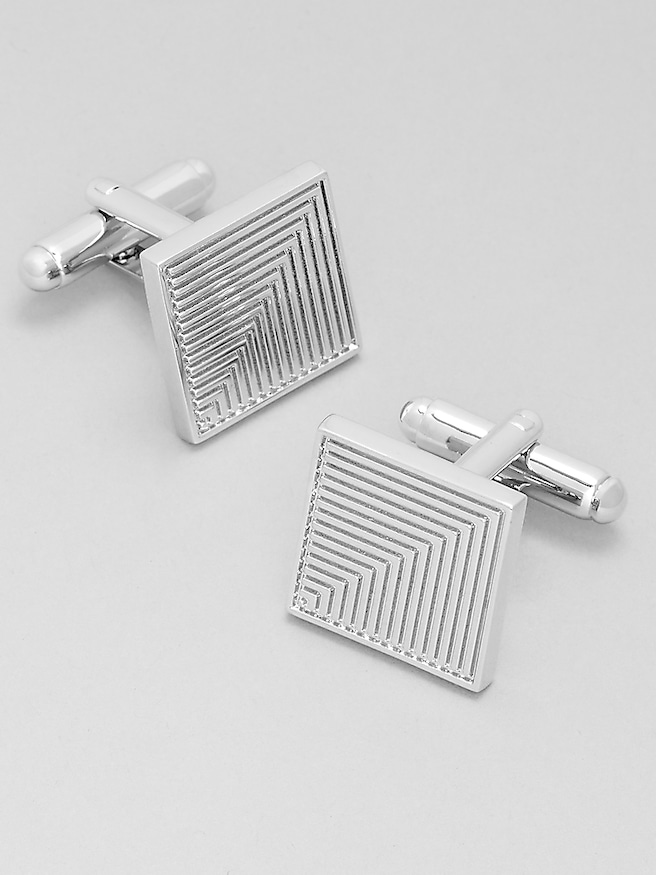
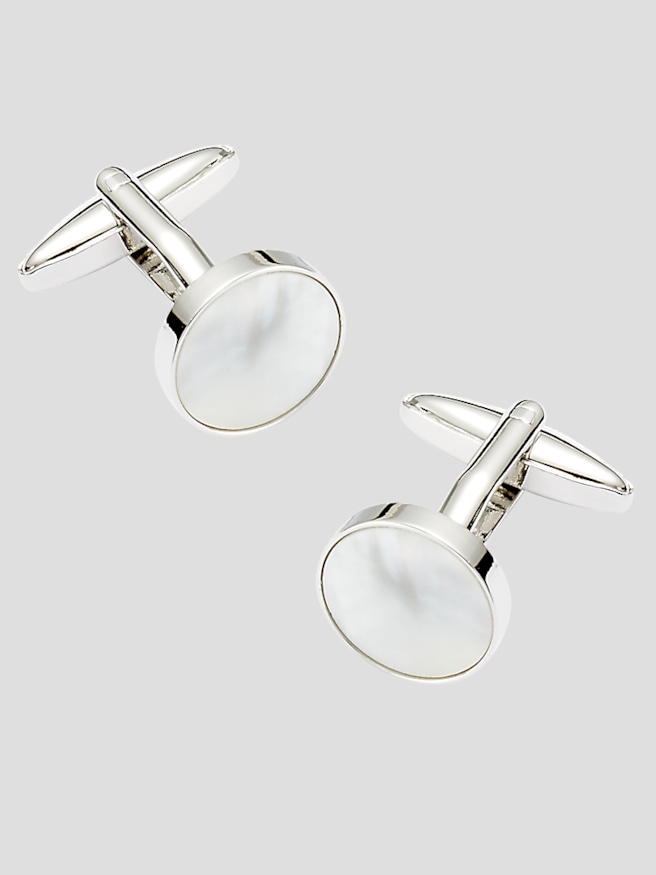
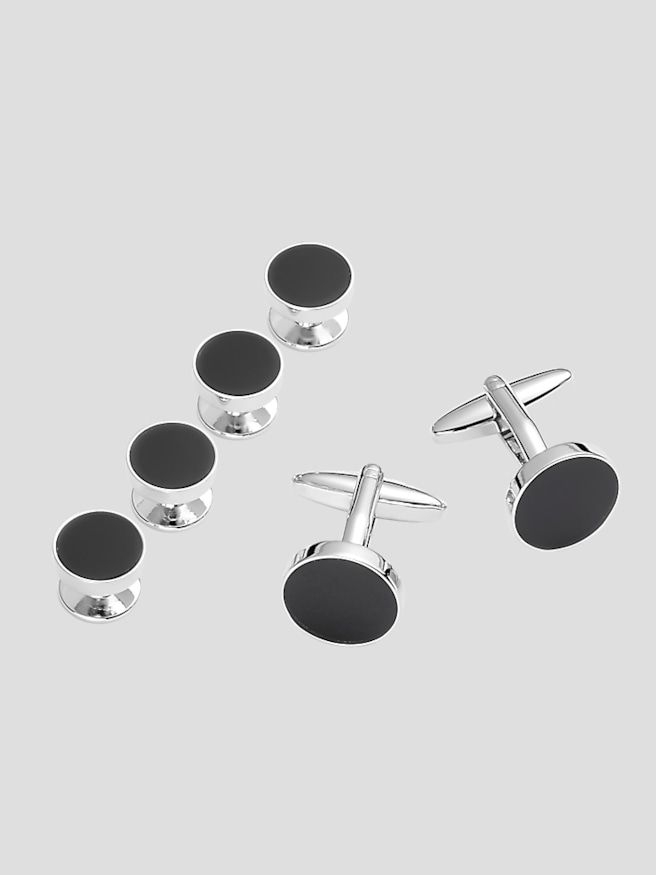
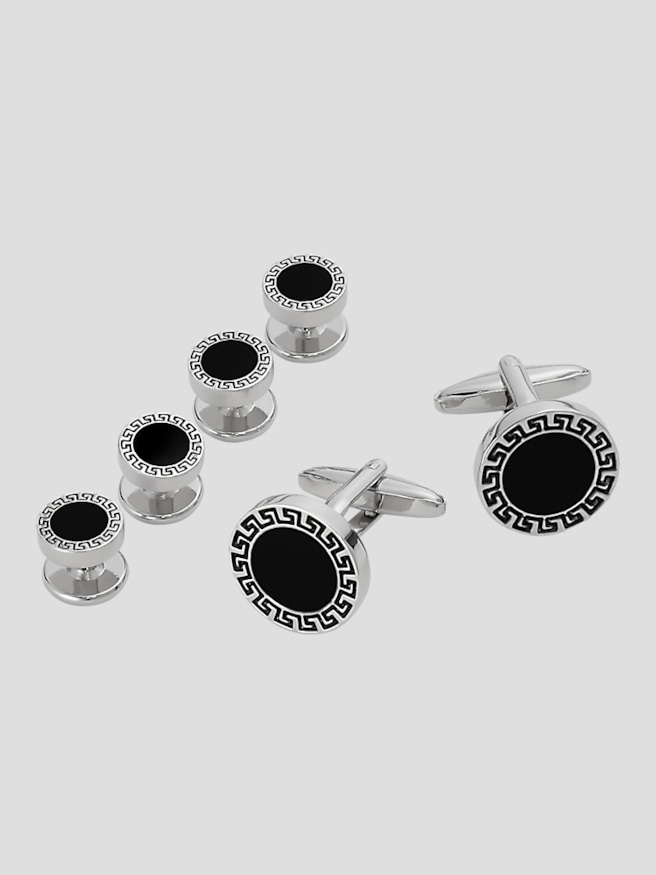
Gold cufflinks bring a warm, polished accent to a dress shirt while serving a practical purpose: fastening the two sides of a French or double cuff. Their color can range from pale champagne to a rich yellow gold, making them easy to coordinate with everything from a classic white shirt to blue, gray, ivory or subtly patterned shirting. Some designs are quiet and streamlined, with a smooth face that catches the light only when the wearer moves, while others add shape, texture, engraved detail or contrasting finishes for a more noticeable statement. Gold cufflinks are often associated with prosperity, achievement and professional success, but their appeal is not limited to formal ceremonies or executive wardrobes. A simple pair can bring refinement to a business suit, add warmth to a dinner jacket and give a wedding-day tuxedo a personal finishing touch. During the warmer seasons, they look especially crisp against lighter shirts and linen-blend tailoring; as the weather turns cooler, their golden tone pairs naturally with charcoal wool, navy suiting, brown leather accessories and richer autumnal colors. For a modern wardrobe with clean lines and understated detail, explore
Modern Cufflinks alongside more traditional gold styles. The best choice depends on the occasion, the wearer’s taste and the rest of the outfit. A smaller, low-profile face is versatile for the office and formal events, while a larger or more decorative design may be well suited to a black-tie celebration, milestone dinner or evening reception. Consider the closure as well: swivel-bar, whale-back, bullet-back and chain-link styles can each offer a different balance of convenience, security and traditional character.
When selecting gold cufflinks, pay attention to the material description as well as the appearance. Solid gold is commonly identified by a karat marking such as 10K, 14K or 18K, which indicates the proportion of pure gold in the metal. Higher-karat gold generally has a deeper color and greater gold content, while lower-karat options may offer additional hardness and a more accessible price. Gold-plated, gold-filled and gold-tone cufflinks can also create the look of gold at different price points, but they are not the same as solid gold; a clear product description helps set appropriate expectations about construction, durability and care. Hallmark stamps can provide useful information, although a stamp alone is not a substitute for a professional assessment when authenticity or value is in doubt. Gold is not magnetic, so a magnet test may offer a simple preliminary observation, but it cannot confirm that a piece is solid gold because other nonmagnetic metals may be used in plated or mixed-metal designs. A jeweler or qualified appraiser can use methods such as an acid test or X-ray fluorescence for a more definitive evaluation. It is also worth checking the fit and mechanism before wearing a pair for an important occasion. The cufflink should pass cleanly through both aligned cuff holes and remain secure without pinching the wrist. To put one on, fold the cuff so the holes meet, insert the decorative end from the palm side of the wrist through both layers, then turn or fasten the closure on the inside of the cuff. Practicing once before a wedding, interview or formal dinner makes the process feel natural, particularly when dressing in a hurry. Keep the rest of the accessories in mind as well. Gold cufflinks coordinate naturally with a gold-toned watch, tie bar or jewelry, while a mixed-metal design can bridge a silver watch and warmer leather or brass details. Matching every metal exactly is not essential, but a deliberate relationship between accessories creates a composed finish.
Gold cufflinks make a thoughtful gift because they combine daily function with lasting significance. They can commemorate a wedding, graduation, promotion, retirement, anniversary or other achievement, and they are easy to personalize through a meaningful style, presentation or engraving where available. A groom may wear them as a discreet detail beneath a formal jacket, a graduate can carry them into a first professional wardrobe, and a father, partner, brother or close friend may appreciate an accessory that can be used for years rather than set aside after a single celebration. For gifting, consider how often the recipient dresses formally and whether his style leans classic, contemporary or expressive. A versatile pair in a modest shape is a dependable choice for someone building a wardrobe, while textured finishes, geometric silhouettes or subtle color accents may suit a man who enjoys accessories with more personality. If the gift is intended for a tuxedo or wedding ensemble, confirm that the recipient’s shirt has French cuffs or compatible convertible cuffs; standard button cuffs typically do not require cufflinks. Storage and care also help preserve the finish. Keep gold cufflinks in a soft-lined case or separate compartment so they do not rub against watches, keys or other jewelry, and wipe them gently with a clean, soft cloth after wearing. Avoid exposing them unnecessarily to perfume, hair products, chlorine or household chemicals, and follow any care guidance provided for plated, filled or gemstone-accented materials. With the right shirt, a secure closure and a finish that suits the wearer, gold cufflinks can turn a small area of a formal outfit into a memorable detail—visible when a hand reaches for a glass, adjusts a jacket sleeve or offers a handshake.