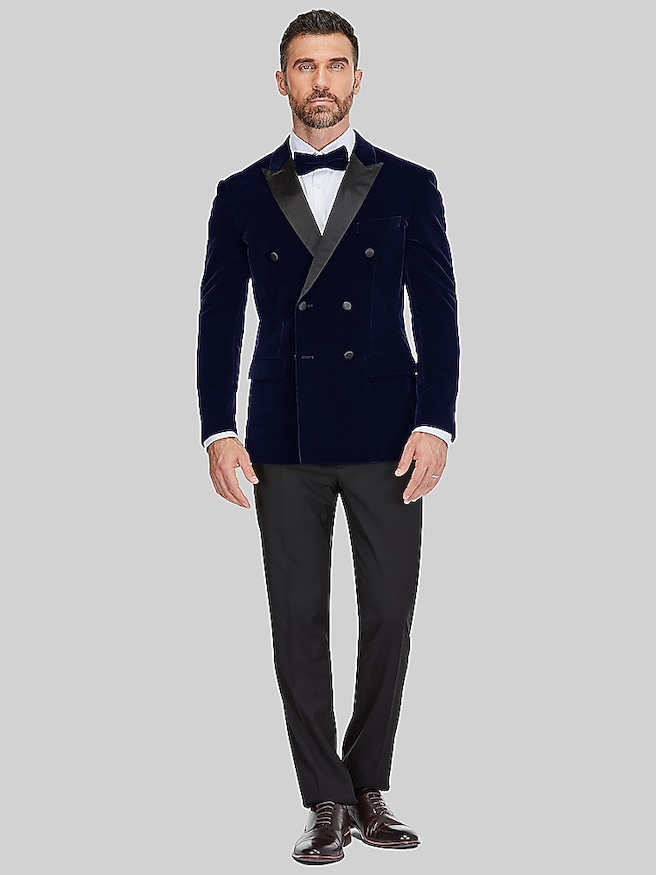
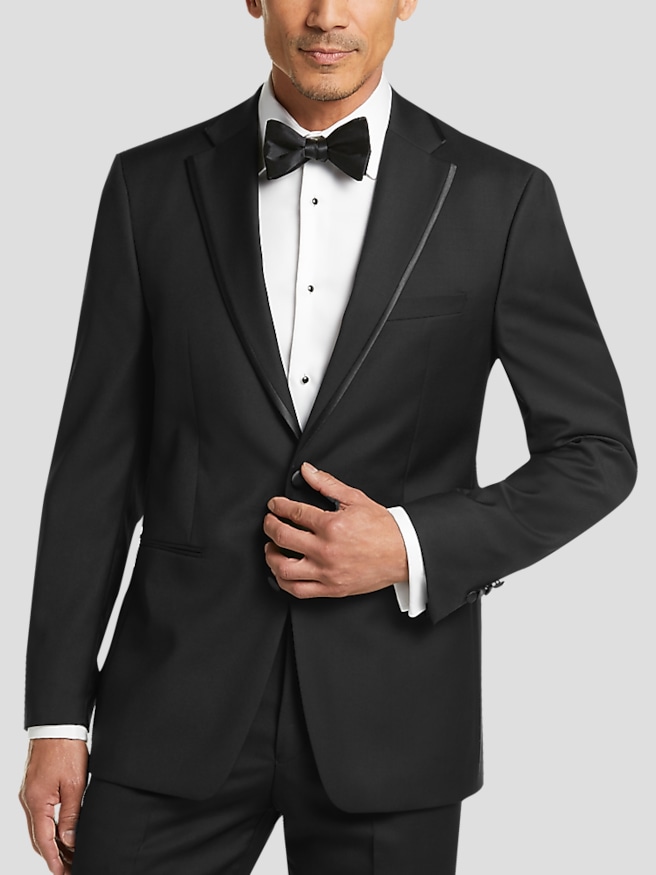
Tuxedos for wedding guests bring a distinct sense of occasion to a celebration, with clean lines, refined fabric, and contrasting lapels that set them apart from everyday tailoring. Their appeal is especially clear at a black-tie wedding, where a coordinated jacket and trousers create the foundation for a polished, respectful look. A black tuxedo remains a classic choice, while midnight blue offers a similarly formal appearance with subtle depth. Both work naturally with a white formal shirt and a black bow tie, allowing the shape and texture of the clothing to carry the look without competing with the couple at the center of the celebration. For invitations that specify black-tie optional, tuxedos offer a more dressed-up interpretation of the occasion, though the venue and any additional guidance from the hosts still matter. The broader category of Formal Wear for Wedding Guests also encompasses polished alternatives when the requested dress code leaves more room for interpretation. Within tuxedo styling, small design choices make a noticeable difference. A shawl collar has a smooth, continuous curve that feels understated and elegant, while peak lapels create a more angular outline across the chest. A single-breasted jacket offers a familiar, versatile silhouette; a double-breasted design adds visual structure through its overlapping front. Satin or grosgrain facing provides the characteristic contrast at the lapels, and a coordinating stripe along the trousers can reinforce that formal finish. For a guest attending a ceremony followed by a seated dinner and dancing, the strongest look is usually cohesive rather than elaborate. Restrained accessories, well-proportioned tailoring, and a consistent level of formality help a tuxedo feel considered in photographs and comfortable in the room. Distinctive colors or richly textured jackets can suit some celebrations, but their success depends on the invitation rather than personal preference alone. Wedding-party colors and any attire reserved for the couple deserve particular consideration.
Fabric and construction influence how a tuxedo looks through the full celebration, from the first greeting to the final toast. Wool is a traditional choice because it drapes cleanly, holds a tailored shape, and can recover from light creasing between wears. A finely woven wool cloth often has a smooth surface that lets the lapel facing stand out without making the entire outfit appear shiny. Wool blends can offer a different balance of texture, resilience, and ease of movement, depending on their composition. A small amount of stretch may make sitting and dancing more comfortable, but it does not replace a well-proportioned fit. Lining, seams, closures, and the way the jacket is structured also contribute to how naturally the garment moves. Fabric weight affects drape as well: a cloth with more body can create a defined outline, while a lighter construction may feel less substantial. Neither is automatically better; the important relationship is between the fabric, the cut, and the wearer. At the shoulders, a tuxedo jacket should follow the natural frame without extending into a pronounced ridge or pulling across the upper back. The lapels should lie smoothly when the jacket is fastened, with enough room through the chest and waist to breathe and sit comfortably. Sleeves that reveal a modest amount of shirt cuff create a deliberate finish, and jacket length should balance the torso rather than simply follow a trend. Trousers need similar attention. A comfortable rise, a smooth seat, and a leg that falls cleanly over formal shoes tend to look more refined than an excessively tight cut. Slim, modern, and classic fits describe general silhouettes, not universal sizing standards, so the proportions matter more than the label. Someone with broader shoulders may need room through the upper jacket while still benefiting from definition at the waist. Someone who prefers a straighter silhouette may value additional ease without wanting excess fabric. Good tailoring accommodates these differences while preserving the clean, uninterrupted lines that make formal clothing distinctive.
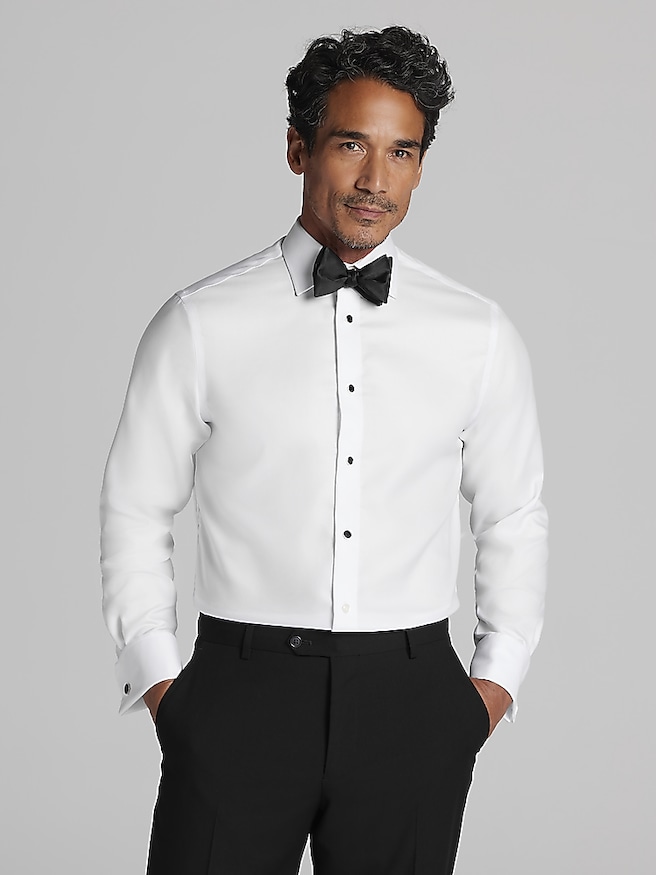
The supporting pieces give a wedding guest’s tuxedo its finished character. A formal white shirt creates crisp contrast against a dark jacket, while its collar should sit neatly beneath the bow tie without crowding the neck. Shirt-front details can range from restrained texture to pleating, with the most cohesive choice reflecting the formality of the tuxedo rather than adding decoration for its own sake. French cuffs allow for cufflinks, and visible shirt studs can provide another traditional detail when the shirt is designed for them. A vest or cummerbund can create a finished transition at the waist, particularly with a single-breasted jacket; the effect is strongest when the pieces work together rather than compete. A white pocket square adds definition at the chest, and polished black formal shoes keep the outfit grounded. Socks that coordinate with the trousers help maintain a continuous line when seated. These details become practical during a long reception: shoes need to fit securely, the shirt should allow comfortable arm movement, and the waistband should remain comfortable through dinner. Durability also depends on what happens after the celebration. Following the care label protects the fabric, lining, and lapel facing, which may require different handling from everyday clothing. Professional cleaning is appropriate when specified or when soil requires it, but unnecessary cleaning can add wear over time. Between occasions, allowing a tuxedo to air out before storage and using a broad, supportive hanger can help preserve its shape. Trousers benefit from careful hanging, while a breathable garment bag helps protect the outfit without trapping moisture. Any pressing or steaming should respect the fabric and trim; direct heat can leave unwanted shine or damage delicate facing. With thoughtful care and occasional fit adjustments, a well-chosen tuxedo can serve beyond a single wedding, including future black-tie celebrations and other formal gatherings. Its lasting value lies in balanced proportions, sound construction, and details that feel appropriate each time it is worn.