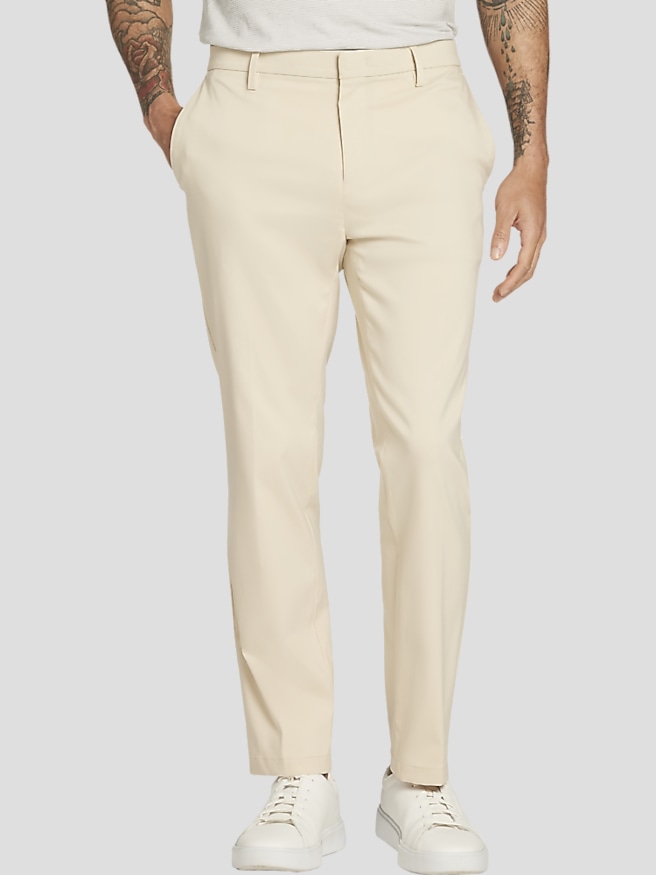
Travel slacks are dress-style pants designed to balance a polished appearance with the comfort and practicality of being on the move. They suit trips that involve more than one kind of setting: a flight followed by a client meeting, a train ride before dinner, or a conference schedule that leaves time to explore on foot. Compared with traditional dress trousers, travel-focused styles often emphasize stretch, wrinkle resistance, easy care, or a combination of these features. The exact benefits depend on the fabric and construction, so the fiber content matters more than the travel label alone. Polyester blends can help fabric hold its shape and resist creasing, while nylon can contribute durability without adding much weight. Elastane adds stretch, although a higher stretch percentage does not automatically mean a better fit or better recovery. Cotton blends offer a familiar feel and can work well for business-casual plans, but they may show creases more readily than some synthetic blends. Wool and wool-blend trousers can also be useful travel companions because wool has natural resilience and can recover from light wrinkles when given time to hang. Fabric weight, weave, and finish influence how the pants drape, how easily they pack, and how formal they look. A smooth woven fabric with a clean crease generally reads dressier than a visibly textured or sporty material. Wrinkle-resistant does not mean wrinkle-proof: a tightly packed suitcase or several hours in the same seat can still leave marks. The goal is a pair that looks composed after ordinary movement and can be refreshed without an elaborate routine. For frequent business travelers, occasional conference attendees, and anyone trying to make a smaller suitcase work harder, that balance can be more useful than a long list of technical features. Well-finished seams, secure buttons, and fabric that returns to shape after stretching help distinguish pants suited to repeated trips from a pair that feels comfortable only at the first fitting.
Fit becomes especially noticeable when the day includes long stretches of sitting followed by walking, standing, and reaching for luggage. Travel slacks should leave enough room through the seat and thighs to sit comfortably without pulling across the pockets or placing strain on the fly. A slim silhouette can still allow movement when its proportions suit the wearer; a straight leg may provide a more forgiving feel without looking loose. The important distinction is between a clean line and a tight fit. Horizontal pulling at the hips, pocket openings that flare outward, or a waistband that digs in when seated usually signal that the cut or size needs attention. Rise matters, too, because it determines where the waistband sits and affects comfort through the torso. Stretch waistbands or discreet elastic sections can add flexibility, but they should support the fit rather than compensate for pants that are too small. Length deserves the same care. A modest break over dress shoes creates a traditional finish, while a shorter, clean hem can work with loafers or understated sneakers in less formal settings. Excess fabric pooling around the ankles is more likely to look rumpled after a day of movement. Pocket design is another practical consideration: a secure closure can help keep small essentials contained, while flatter pocket construction preserves a dressier outline. Overfilled pockets can distort even well-cut trousers, so larger belongings are better carried in a bag. Think about how the pants will function across an entire itinerary, not just while standing in front of a mirror. A pair intended for presentations may call for a sharper crease and restrained detailing; one meant for sightseeing and casual dinners may prioritize ease of movement and a less structured appearance. Travel slacks can also make a useful gift for someone who travels regularly, particularly when their preferred rise, leg shape, and waist and inseam measurements are already known. Those familiar proportions are usually a better starting point than guessing based on a general size.
Versatile colors and straightforward styling help travel slacks earn their space in a suitcase. Navy, charcoal, and medium gray can anchor several outfits without making every combination look the same. A button-down shirt and leather shoes create a dependable business-casual look, while a fine-gauge knit or polo shifts the same pants toward a relaxed dinner or an afternoon away from scheduled plans. For occasions that need an extra layer of polish, a coordinating travel blazer can bring the outfit together without requiring a full suit. Separate trousers and a jacket do not need to match exactly; a deliberate contrast in color or texture often looks more intentional than two nearly matching fabrics. The formality of the occasion still matters, and travel slacks are not a substitute for a suit when the dress code specifically calls for one. Care and packing habits help preserve their usefulness between trips. Always follow the garment’s care label, since some fabrics are machine washable while others require professional cleaning. Turn washable pants inside out when appropriate, avoid overloading the machine, and use only the drying method the label allows. Too much heat can affect stretch fibers and fabric finishes, so pressing and steaming should also follow the stated instructions. Treat spills according to the fabric’s care requirements rather than scrubbing aggressively, which can alter the surface. Before packing, fasten closures, empty the pockets, and smooth the legs along their existing crease or natural fold. Packing without excessive compression can reduce deep fold lines; hanging the trousers after arrival gives the fabric a chance to relax. Letting a pair rest between wears can help it recover its shape, especially at the knees and seat. Over time, inspect hems, pocket edges, and high-friction areas for wear, and address a loose button or opening seam before the next departure. With suitable fabric, a comfortable fit, and consistent care, travel slacks can move easily between the journey itself and the plans waiting at the destination.