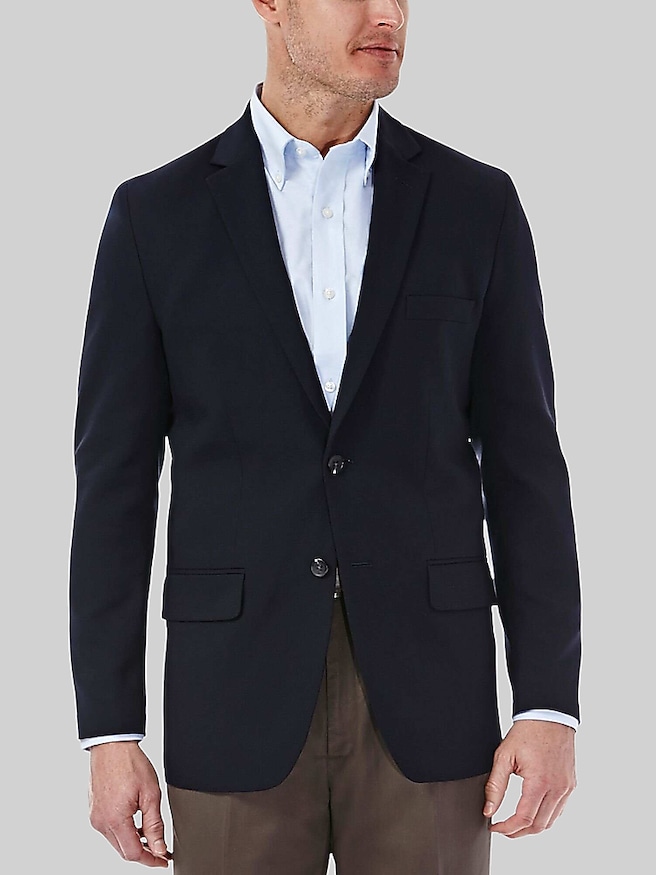
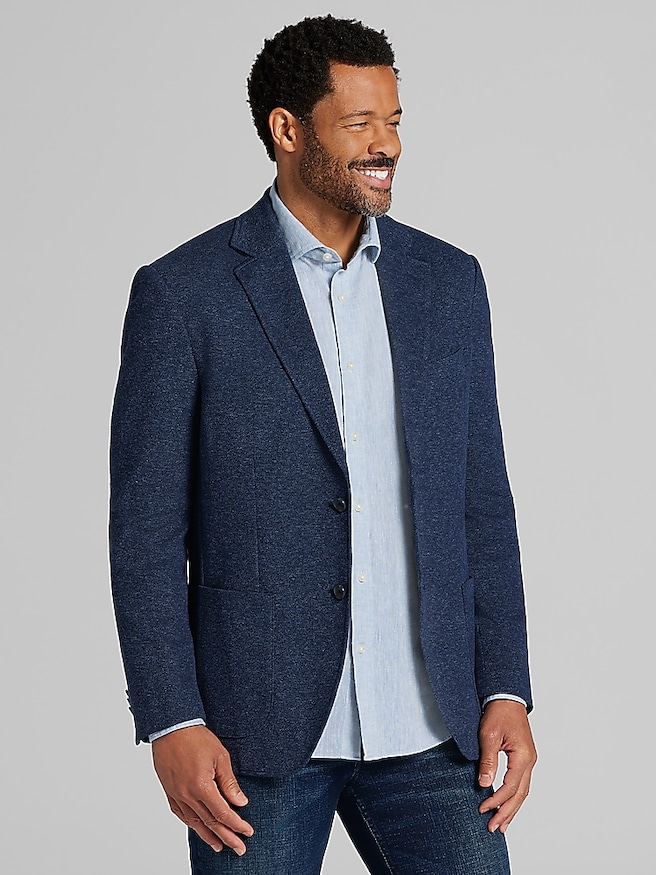
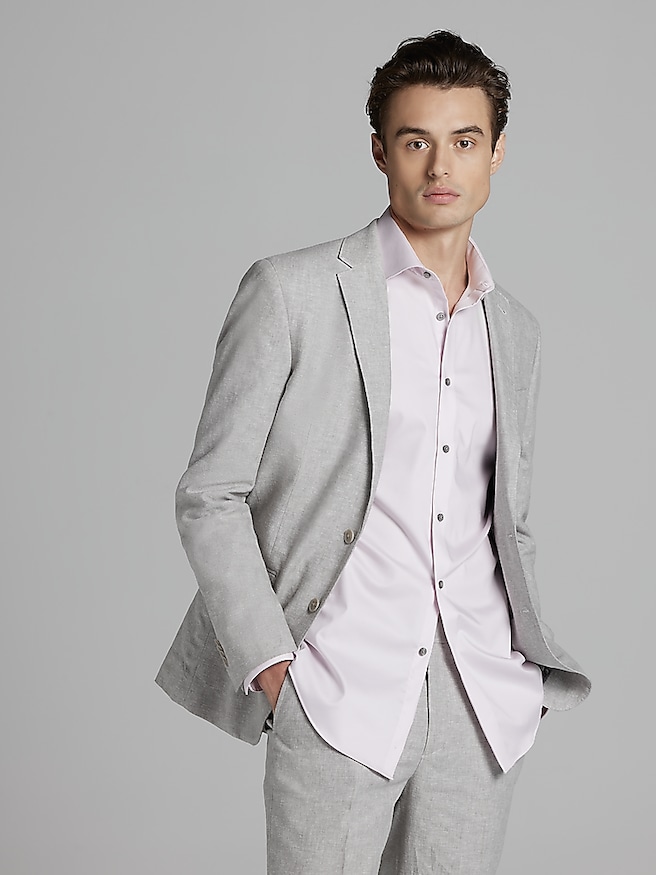
A travel blazer is a tailored jacket designed to combine a polished appearance with the comfort and practicality needed for time away from home. Many travel blazers use lightweight, wrinkle-resistant fabrics, flexible construction, or stretch to make sitting, walking, and packing easier without losing the familiar shape of a blazer. That balance matters on a day that begins with a flight and ends at a client dinner, when there may be little time to change between destinations. Unlike a matching suit jacket, a travel blazer is generally intended to work with separate trousers, giving a small travel wardrobe more combinations. It can bring structure to a knit polo and chinos or add a refined finish to a dress shirt and tailored pants. When comparing Travel Friendly Men’s Blazers, fabric composition is a useful starting point because it affects drape, texture, wrinkle recovery, and care. Wool can offer natural resilience and a clean drape, while certain wool blends combine those qualities with added strength or stretch. Polyester and nylon blends may provide durability and easier maintenance, depending on the fabric and garment construction. A small amount of elastane can improve flexibility, although a stretch label alone does not explain how much movement a jacket allows. Cotton-rich fabrics tend to have a more relaxed character and may show creasing more readily than some performance-oriented blends. A tightly woven surface can look crisp and understated, while a textured weave can make a blazer feel less formal and help disguise minor rumpling. No fabric is completely immune to wrinkles, especially after hours compressed inside a bag. The most useful choice is one whose appearance, feel, and care requirements suit the actual itinerary, whether that means regular commuter trips, a conference with several outfit changes, or a weekend away with dinner reservations. Breathability, fabric weight, and the amount of lining also influence how comfortable the jacket feels over a full day of wear.
Fit is especially important in a travel blazer because comfort has to hold up beyond a quick look in the mirror. The shoulder line should sit cleanly near the natural edge of the shoulder, and the collar should rest against the shirt collar rather than pulling away from it. With the jacket buttoned while standing, the front should lie smoothly without a pronounced X-shaped pull at the closure. Enough room through the chest and upper back makes it easier to reach for a bag, use a laptop, or settle into a seat without feeling restricted. Stretch can support that movement, but it cannot fully compensate for a jacket that is too narrow. A trim fit offers a closer silhouette, while a roomier cut may accommodate broader shoulders or an additional layer more comfortably; the best option depends on body shape and how the jacket will be worn. Sleeve length should leave the hands free, with a little shirt cuff visible when paired with a long-sleeve dress shirt. Jacket length should look balanced with the trousers rather than appearing cropped simply for convenience. Construction makes a difference as well. Soft shoulders and partial lining can create a less rigid feel, while more internal structure may produce a sharper silhouette for business settings. Back vents allow the hem to move more freely, and a smooth sleeve lining can help the jacket slide over a shirt without catching. Pockets deserve attention, particularly for travelers carrying a phone, wallet, or boarding pass. An interior pocket can keep small essentials close, but overfilled pockets can distort the front and weigh down the fabric. Color and pattern influence versatility just as much as construction. Navy, charcoal, and other understated shades pair easily with several trouser colors, while a subtle check or textured finish adds interest without requiring an entirely separate set of clothes. The goal is a jacket that feels appropriate at a meeting table and still looks natural over a simple knit top at dinner.
Packing and care help preserve those qualities over repeated trips. Wrinkle resistance means a fabric may recover from creasing more readily, not that it can remain tightly folded indefinitely without showing marks. A garment bag can reduce compression when luggage space allows, while a carefully folded blazer generally benefits from fewer hard creases and less weight piled on top. Turning one shoulder inward and folding the jacket loosely along its existing lines can help protect its shape, though the best method depends on its construction. Once unpacked, the blazer benefits from time on a broad, shaped hanger rather than a thin hook that concentrates pressure at the shoulders. Leaving space around it allows the fabric to relax and air out between wears. Steaming, pressing, washing, and professional cleaning should always follow the care label; a travel-oriented fabric is not automatically machine washable, and excessive heat can damage some fibers, finishes, or internal components. Light surface dust may be removed with a suitable garment brush, while spills call for prompt attention using the recommended care method rather than vigorous rubbing. Durability also comes from details that are easy to overlook: secure buttons, even stitching, reinforced pocket openings, and lining that does not pull when the arms move. Alternating wear and avoiding prolonged storage with loaded pockets can help maintain the jacket’s shape. For frequent business travelers, a versatile blazer can reduce the need to pack separate jackets for every appointment. For occasional travelers, it can serve just as well at a local presentation, a graduation celebration, or a dinner that calls for something more polished than a shirt alone. It can also make a thoughtful gift for a graduate starting a client-facing role or someone whose work involves regular trips, especially when size and fit preferences are known. A well-chosen travel blazer earns its place through repeated use: comfortable in transit, neat on arrival, and adaptable enough to connect the different parts of a day.