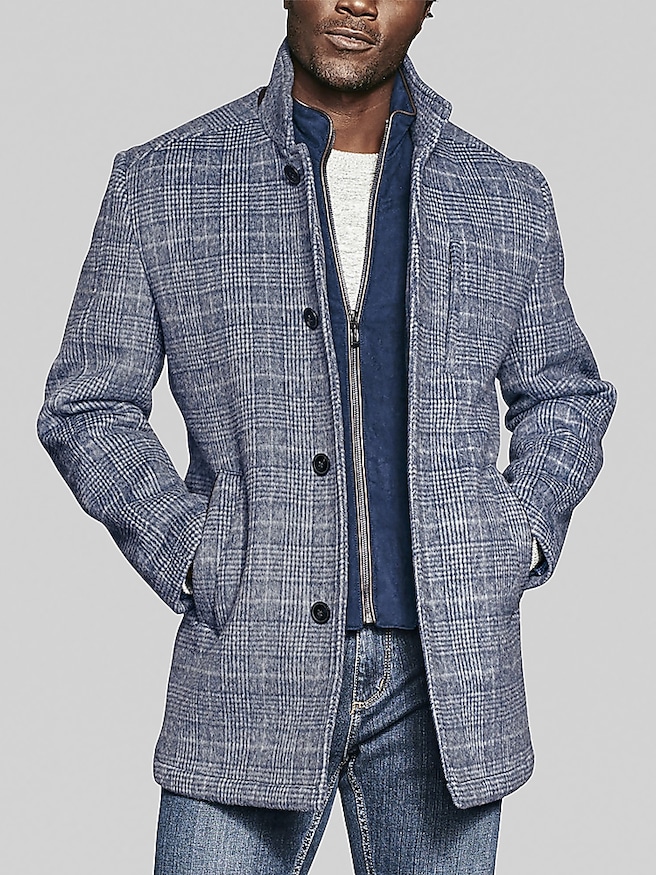
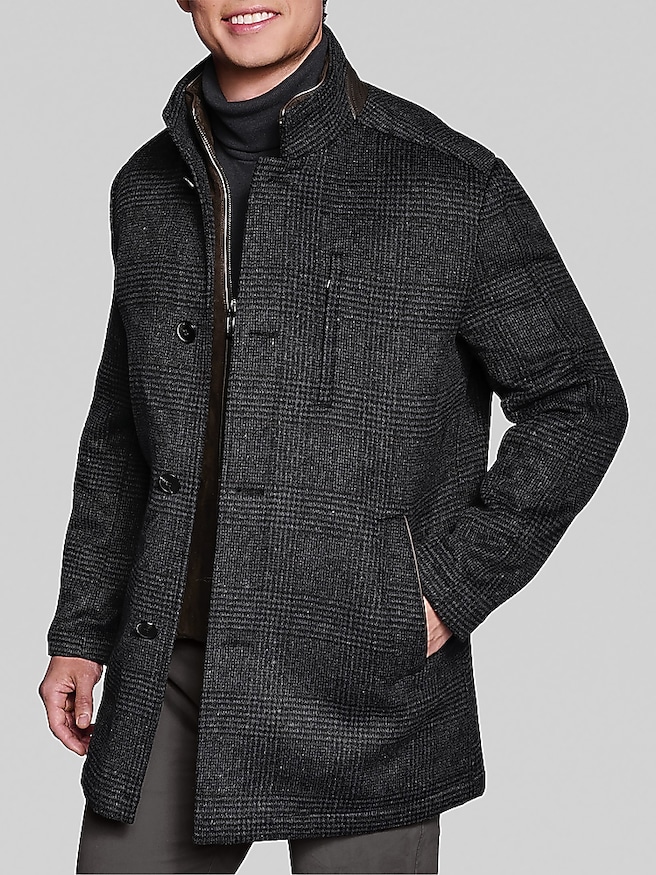
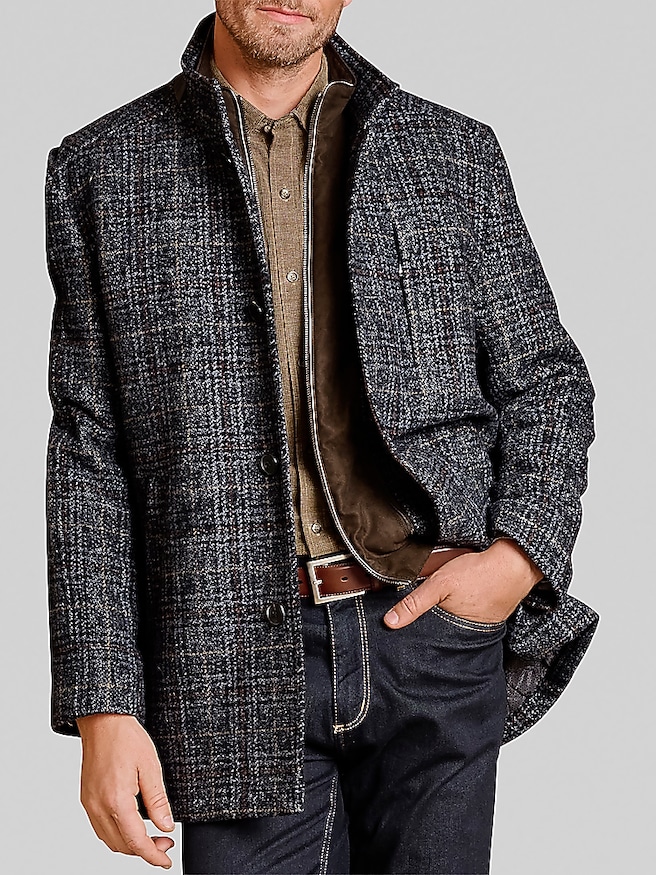
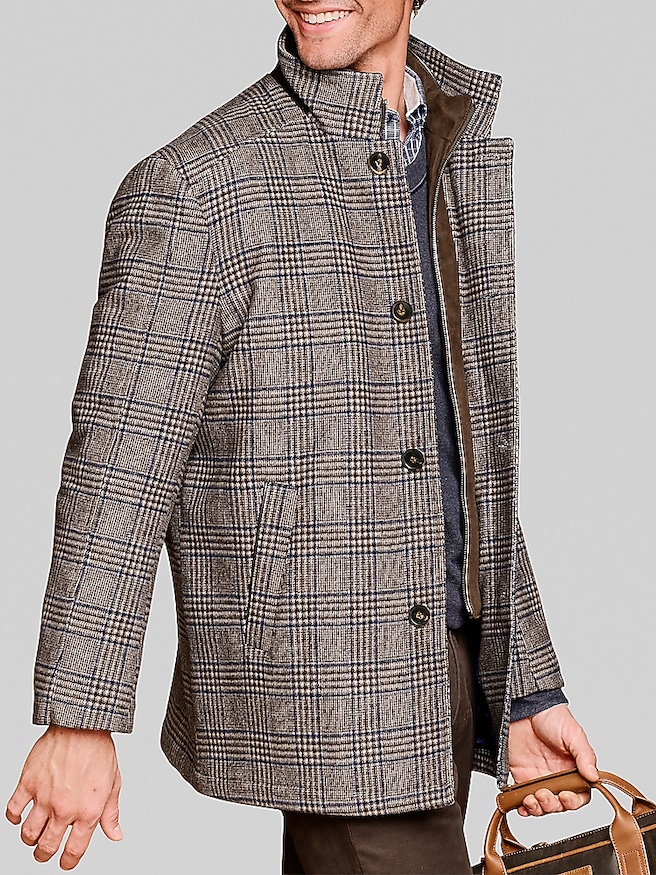
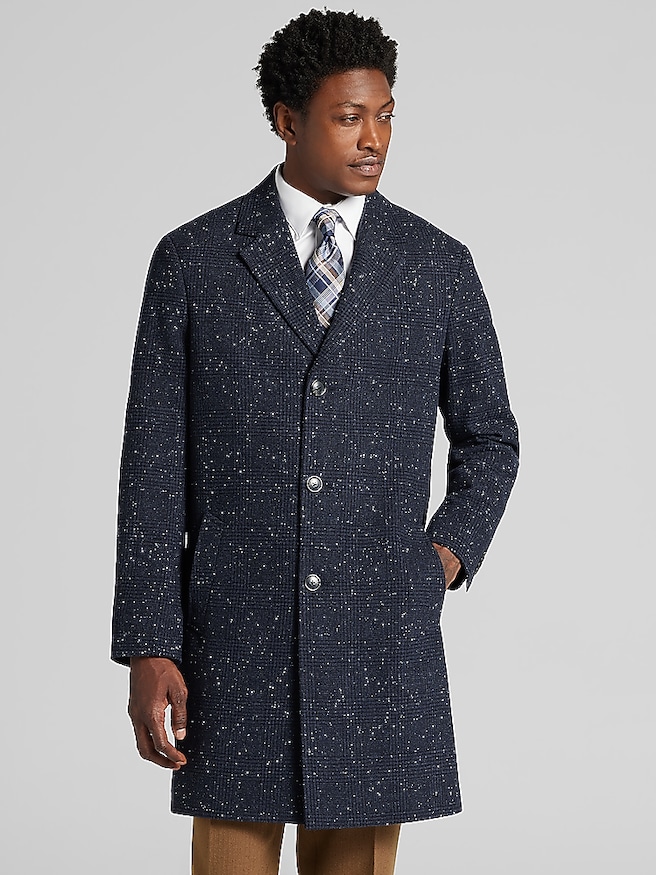
Topcoats for Valentine's Day are tailored outerwear designed to finish an outfit while adding warmth over a suit, sport coat, or sweater. Their appeal is straightforward: a clean shoulder line, a well-shaped collar, and enough length to bring the whole look together before the coat comes off at dinner. For a restaurant reservation, a theater performance, or an evening walk between stops, a topcoat can make practical outerwear feel like part of the occasion rather than an afterthought. Wool is a traditional choice because its crimped fibers help trap insulating air, while the fabric has enough body to hold a tailored shape. Wool blends can balance that structure with other qualities, depending on their fiber content and construction. Cashmere adds a soft hand, though softness alone does not determine warmth or durability; fabric weight, weave, lining, and fit all matter. A tightly woven cloth generally offers more resistance to moving air than a loose, open texture, but a tailored topcoat should not be assumed to be waterproof. Smooth finishes create a dressier impression, while herringbone and other subtle textures add depth without needing a bold pattern. Black, charcoal, navy, and camel each give Valentine's Day outfits a distinct character: dark shades feel understated and formal, while camel brings contrast to dark trousers and knitwear. A burgundy scarf or a muted rose accent can acknowledge the occasion without turning the entire outfit into a holiday statement. The most useful choice reflects the wearer's usual clothing as much as the evening's plans. Someone who regularly wears suits may favor a more structured shape, while someone who prefers sweaters and tailored pants may appreciate a softer construction. Either way, the topcoat serves as the outer frame of the outfit, with fabric, color, and proportion working together to make the first impression feel considered.
Fit matters especially when a topcoat needs to accommodate the clothing underneath. A coat that looks sleek over a thin shirt may pull across the back when worn over a suit jacket, so useful room through the shoulders, chest, and upper arms is part of a polished fit. Shoulder seams should sit close to the natural shoulder without an exaggerated overhang, and the front should close comfortably without strained buttons or pronounced horizontal creases. There should also be enough freedom to reach for a door, sit in a car, or offer an arm without the coat binding. Sleeves need to cover the layers beneath them without swallowing the hands, while the body should skim the torso rather than cling to it. Length changes both the look and the coverage: a shorter topcoat can feel relaxed, while a knee-length silhouette creates a longer line and covers more of the outfit. When worn with tailoring, a topcoat generally looks most balanced when it covers the suit or sport coat hem. Single-breasted fronts offer a simple, versatile profile; double-breasted fronts create a broader, more pronounced shape with additional overlap across the chest. For a dressier Valentine's Day dinner, a dark topcoat over a suit keeps the transition from arrival to the dining room cohesive. For a neighborhood restaurant or an evening performance with a relaxed dress code, knitwear and tailored trousers can strike a comfortable middle ground. Pairing the coat with Smart Casual Tops For Valentine's Day allows the outfit underneath to feel complete when the outer layer is removed. A fine-gauge crewneck or turtleneck creates less bulk at the neckline than several thick layers, while a collared shirt adds definition. Leather footwear and a neatly wrapped scarf can finish the outfit without competing with the coat's shape. These proportions matter more than making every piece match exactly; a little contrast between the coat, trousers, and top usually gives the outfit more depth.
A topcoat can also be a thoughtful Valentine's Day gift for a partner or spouse who enjoys dressing well, especially when it suits an established routine rather than an imagined one. Someone walking several blocks to dinner may value generous coverage and comfortable layering room, while someone moving mostly between a car and indoor venues may prefer a lighter feel. A recipient who wears navy and gray throughout the week may get lasting use from a complementary neutral, and a person who gravitates toward textured sweaters may enjoy a coat with a similarly tactile finish. Accurate measurements and an understanding of what will be worn underneath are more useful than relying on a shirt size alone, since outerwear needs its own allowance for movement. Practical construction details deserve attention alongside appearance: secure buttons, evenly finished seams, a lining that lets sleeves slide over knitwear, and pockets positioned comfortably for the hands all contribute to daily satisfaction. Pocket openings should lie flat when empty, and heavy objects are better carried elsewhere to avoid stretching the fabric. Good care helps preserve the coat's shape beyond the occasion. The care label should determine cleaning methods, particularly for wool and cashmere blends, since heat, agitation, or an unsuitable cleaning process can alter their texture or dimensions. Between cleanings, gentle brushing with an appropriate garment brush can remove surface dust, and a broad, supportive hanger helps maintain the shoulders. A damp coat benefits from drying naturally in a ventilated space away from direct heat before it returns to the closet. Giving the fabric room to breathe also helps prevent crushing and persistent creases. With thoughtful handling and timely attention to loose buttons or small seam issues, a well-made topcoat can remain part of a wardrobe for years. Its usefulness extends beyond Valentine's Day to workdays, celebrations, and evenings out, carrying the same composed look into occasions that call for a little extra care.