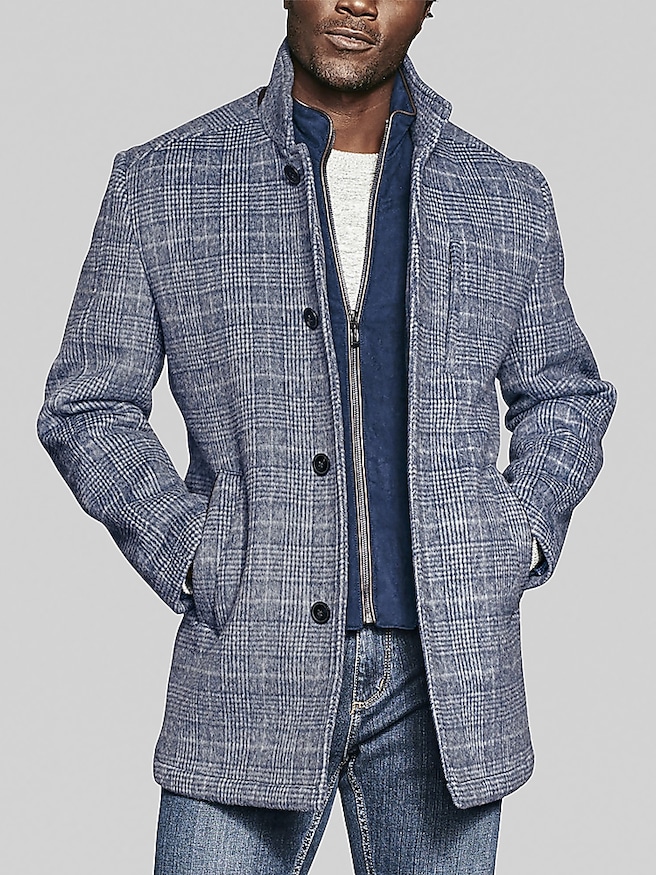
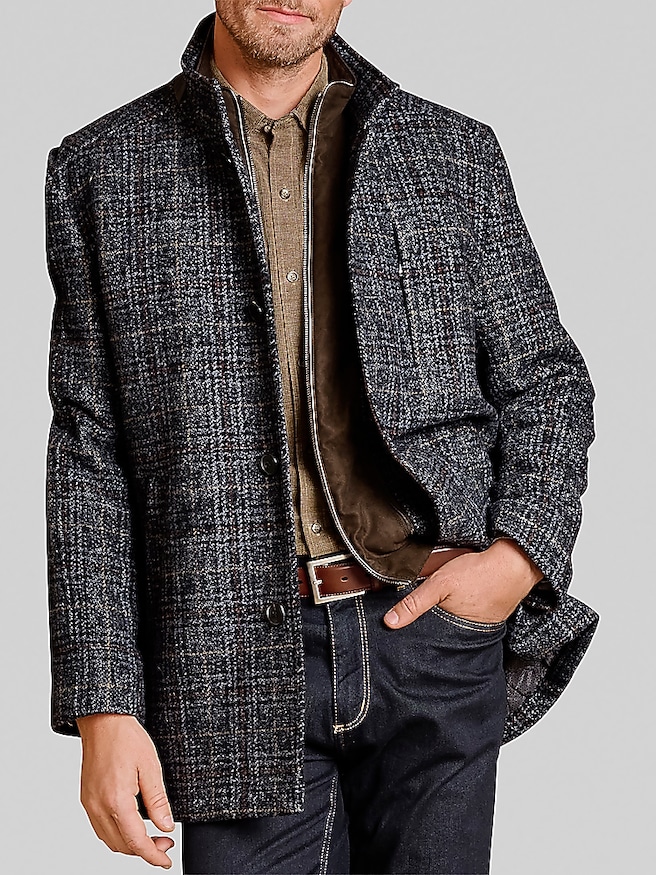
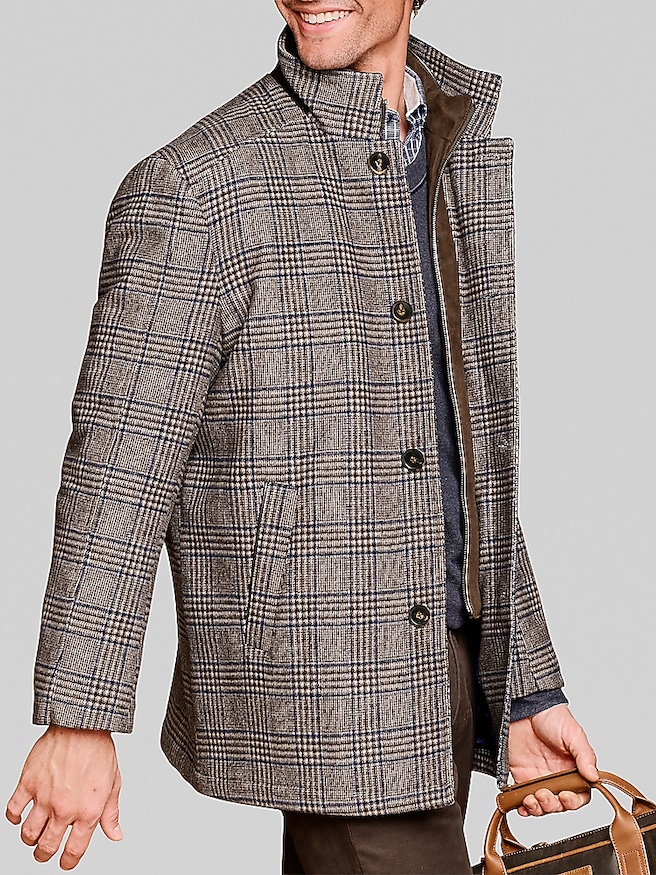
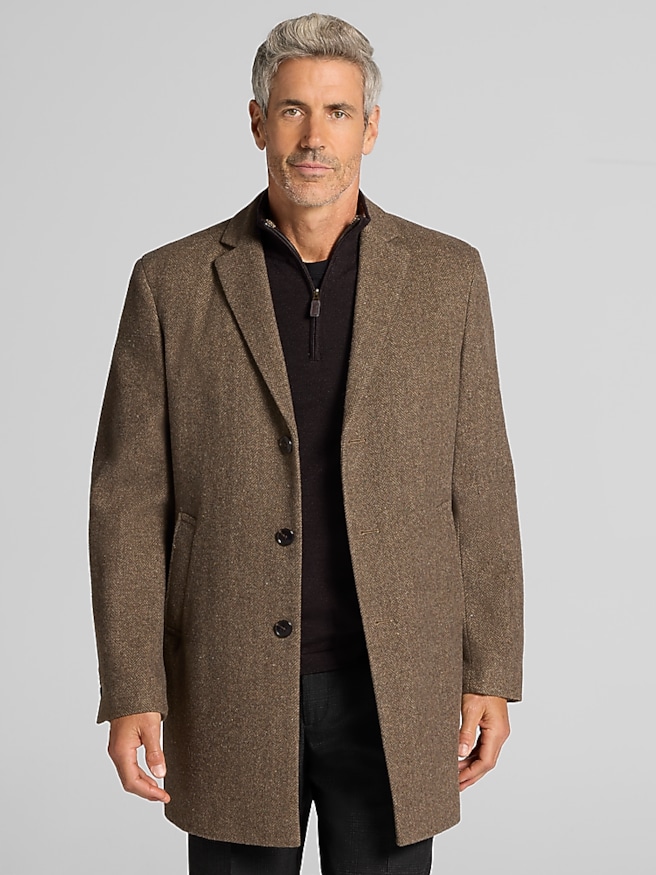
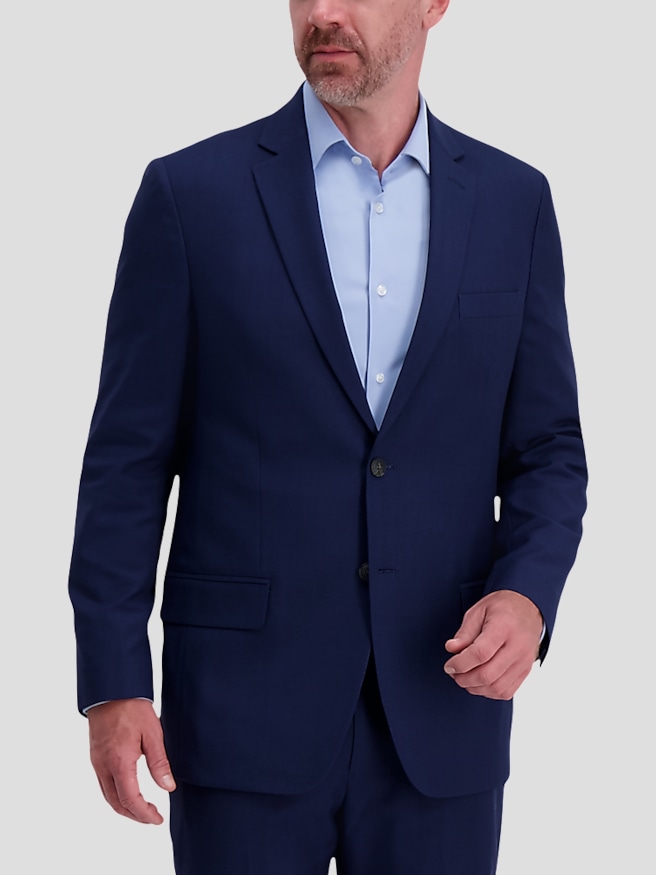
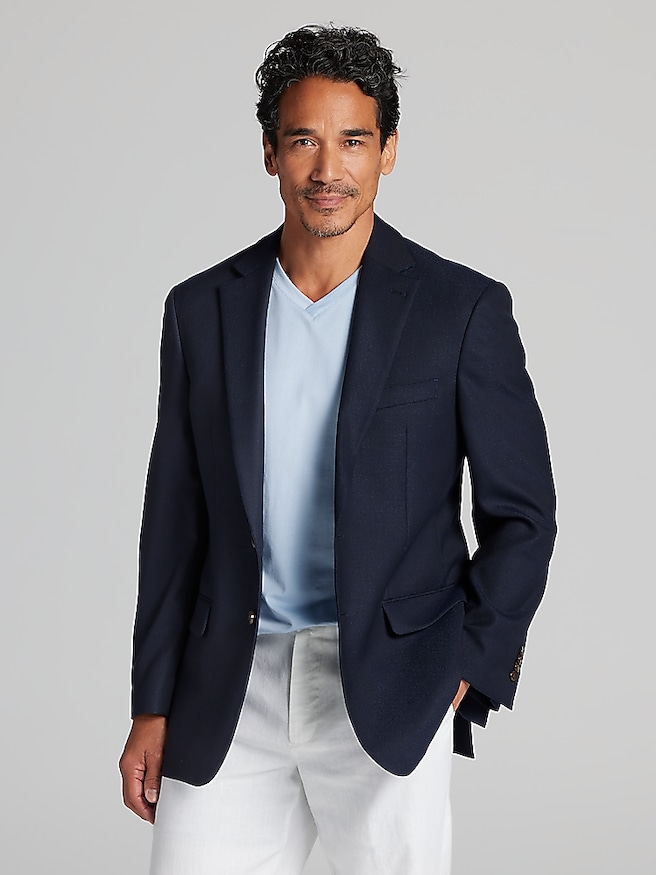
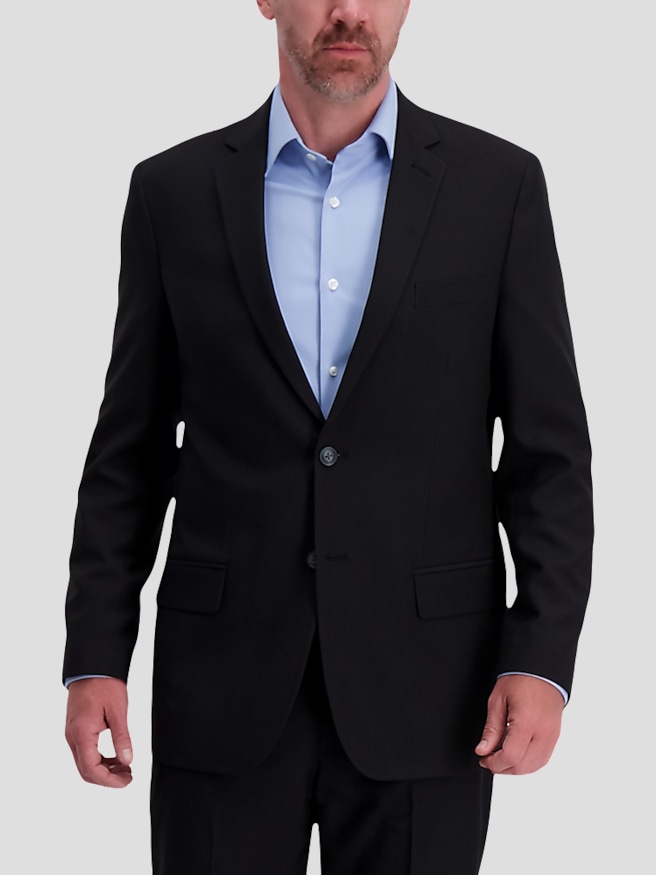
An overcoat for Valentine's Day brings a tailored finish to a dinner outfit while adding a practical outer layer for the trip there and back. Designed to sit over other clothing, an overcoat generally has a longer silhouette than a casual jacket, with enough coverage to complement a suit, dress trousers, or dark denim. Its appeal is especially clear at the restaurant entrance: a defined shoulder, a clean lapel, and a neat hem make an impression before the coat comes off. For a candlelit dinner, theater performance, or evening spent walking between neighborhood stops, the best choice balances the look of the outfit with the conditions outside. Wool is a traditional overcoat material because it provides insulation and takes well to structured tailoring. Wool blends can combine that character with other qualities, such as added resilience or a smoother surface, depending on their composition and construction. Cashmere blends may offer a softer feel, although fiber content alone does not determine warmth, weight, or durability. A densely woven fabric, thoughtful lining, and comfortable closure all contribute to how a coat performs. Charcoal, navy, black, and camel are versatile colors that work with a wide range of dress clothes, while burgundy can introduce a Valentine's Day accent without requiring an entirely themed outfit. Texture offers another way to add interest: a subtle herringbone can look distinctive close up while remaining understated across a dining room. A solid coat also leaves room for a patterned scarf, a textured sweater, or a tie with a small touch of red. The effect can be festive without feeling like a costume. For someone who prefers quiet details, the occasion might be reflected only in a pocket square or scarf, with the overcoat serving as a useful piece long after the celebration. That versatility makes men's overcoats appealing both for a planned date and for anyone building a wardrobe that moves comfortably between everyday commitments and dressed-up evenings.
Fit determines whether an overcoat looks composed over the clothes beneath it. A coat that feels comfortable over a thin shirt may become restrictive over a suit jacket, so the intended outfit matters as much as the size on the label. The shoulders should sit cleanly without collapsing at the edges or creating a tight ridge across the upper back. With the coat fastened, the chest and waist need enough room for natural movement, but not so much excess fabric that the silhouette loses its shape. Reaching forward, sitting down, and slipping a hand into a pocket should feel easy rather than strained. Sleeves generally need to cover the jacket sleeves beneath them without swallowing the hands, and the coat hem should cover a suit jacket rather than leave it peeking out below. A length near the knee creates a traditional line and offers more coverage, while a shorter overcoat can feel convenient for frequent car trips or an evening with several stops. Height, proportions, and personal preference all influence where that hem looks best. Single-breasted designs tend to create a simple vertical line and can transition easily between tailored trousers and denim. Double-breasted designs have more overlap through the front and a stronger visual presence, particularly when worn fastened. Neither approach needs elaborate styling to feel appropriate for Valentine's Day. A charcoal coat over a navy suit can look restrained and formal; a camel coat over a fine-gauge sweater and dark trousers feels more relaxed without becoming casual. For the tailored layer underneath, explore Suit Jacket For Valentine's Day. The coat and jacket do not need to match, but their shapes should work together without bunching at the shoulders or sleeves. A scarf should also fit comfortably inside the neckline rather than force the lapels outward. These small relationships between layers help an outfit look deliberate, whether the evening calls for a tie or an open collar.
As a Valentine's Day gift, an overcoat combines personal attention with everyday usefulness. It can suit a partner who regularly dresses for the office, someone who enjoys formal dinners and performances, or a recipient whose usual outerwear does not comfortably accommodate a jacket. The most thoughtful choice reflects established habits: preferred colors, the amount of walking involved in a typical day, and whether the recipient favors a close, shaped silhouette or a little more room. An existing coat can provide useful clues about sleeve length and overall proportions, although sizing can vary between cuts. Practical details deserve attention alongside appearance. Pockets should be comfortably placed, buttons should feel secure, and the lining should allow the coat to slide over clothing without catching. Even stitching, neatly finished seams, and fabric that lies smoothly around the lapels are useful signs to examine when considering construction. Durability also depends on appropriate use and care. A tailored wool overcoat is not automatically waterproof, and persistent rain or wet snow may call for outerwear designed specifically for those conditions. Care instructions on the garment remain the best reference because different fabrics, linings, and finishes can require different treatment. Between professional cleanings, when recommended, a gentle clothing brush can help lift surface dust, and airing the coat after wear can freshen it without unnecessary cleaning. A broad, supportive hanger helps maintain the shoulders; giving the coat space in a closet helps avoid compressed fabric and crushed lapels. If it becomes damp, allowing it to dry naturally away from direct heat is generally preferable to placing it beside a radiator. Emptying heavy pockets before hanging it also reduces strain. With thoughtful care, an overcoat can become the familiar finishing layer for anniversaries, weddings, business occasions, and future Valentine's Day plans—a piece remembered for how well it fits into someone's life, not just how it looks for one evening.