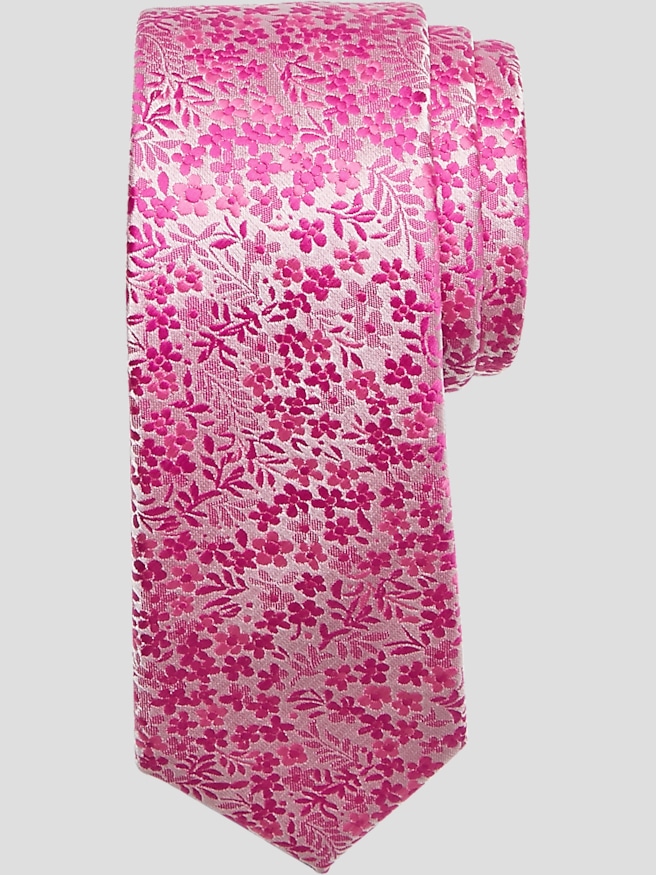
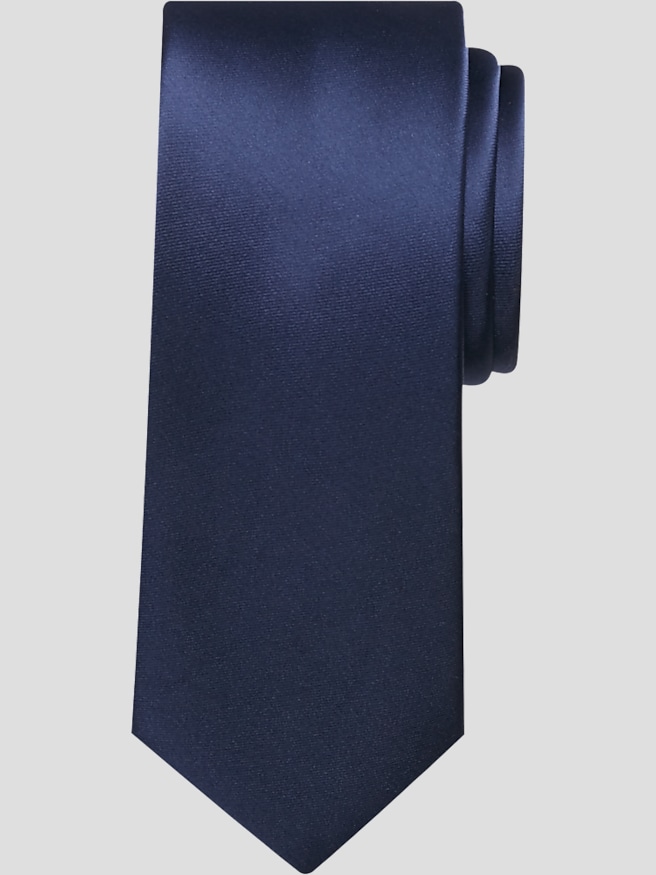
Ties for Valentine's Day bring a thoughtful touch of color and personality to an outfit, whether the occasion is a candlelit dinner, a theater date, a celebration with friends, or a workday followed by evening plans. Red, burgundy, pink, and blush are closely associated with the holiday, but each creates a distinct impression. A rich burgundy necktie feels understated against a white shirt and navy jacket, while a brighter red gives a charcoal suit a clear focal point. Soft pink can lighten the look of a dark jacket without making the outfit feel overly themed. Patterns offer another way to acknowledge the occasion: small hearts add a playful detail, fine florals introduce color and movement, and stripes or subtle geometric designs offer versatility beyond the celebration. The scale of the pattern matters as much as the motif. A closely spaced print can read almost like texture from across a dinner table, revealing its detail only at closer range. Larger motifs create a more expressive look and work best when the shirt and jacket provide a quieter backdrop. For a cohesive outfit, pairing neckwear with a suit for Valentine's Day gives the tie a clear role in the overall color palette. Navy complements wine and rose tones, charcoal works with both vivid and muted reds, and a white or pale blue shirt leaves room for patterned neckwear. A pocket square does not need to match the tie exactly; picking up one secondary color often looks more considered than repeating the same fabric and design. The right balance depends on the setting and the wearer's personality. A restrained solid can feel just as appropriate for the holiday as a heart print, especially when its color or texture makes an otherwise familiar outfit feel more intentional. The result can be festive without looking like a costume, with enough versatility for another dinner, celebration, or dressed-up occasion.
Fabric influences how a Valentine's Day tie looks, feels, and holds its shape throughout an evening. Silk is known for its fluid drape and natural luster, though the finish varies considerably between smooth satin weaves and more textured constructions. A silk satin tie catches light and creates a polished focal point, while a textured weave can provide depth with less shine. Cotton generally has a more matte appearance and works well with less formal jackets or an outfit built around a button-down shirt. Knit ties introduce visible texture and a relaxed character, often with a squared end that distinguishes them from traditional pointed neckties. Polyester and microfiber fabrics can offer easy-wearing practicality and wrinkle resistance, although their finish, softness, and care requirements depend on the individual construction. Fiber content alone does not determine quality or longevity. Even stitching, a balanced shape, and an interlining that supports the fabric without making it stiff all contribute to a tie that hangs neatly and forms a tidy knot. Proportion is another important consideration. Tie width usually looks most balanced when it relates to the width of the jacket lapels and the wearer's frame, rather than following a trend in isolation. A narrow blade can suit slimmer lapels, while a fuller blade complements broader lapels and more substantial tailoring. Length affects the finished appearance, too: the front tip of a traditional necktie generally rests near the waistband or belt buckle when tied. Taller wearers or those who prefer larger knots may need additional length to reach that position comfortably. The shirt collar also helps determine the visual balance. A compact four-in-hand knot pairs naturally with many point collars, while a wider spread collar can accommodate a fuller knot without looking crowded. Bow ties offer a distinct alternative, bringing character to a dinner outfit or a more formal celebration. A self-tie bow has the slight irregularity associated with a hand-tied finish, while a pre-tied style offers a consistent shape. For either option, neck sizing and adjustability matter, since the bow should sit securely at the collar without feeling tight.
A Valentine's Day tie can also be a personal gift, particularly when its details reflect the recipient's everyday wardrobe rather than only the holiday. Someone who regularly wears navy suits may get lasting use from a burgundy silk tie, while a partner who favors textured jackets might appreciate a knit style or a small floral pattern. A heart motif can feel especially thoughtful for a person who enjoys expressive accessories, but a subtle design may be the better match for someone who prefers quiet details. Familiar shirt colors, usual tie widths, and the kinds of occasions the recipient dresses for are useful clues to a gift that feels considered. Neckwear can carry a sentimental connection without being reserved for a single celebration; a pink, red, or wine-colored tie can return to the wardrobe for weddings, anniversary dinners, and other occasions. Keeping it in good condition helps preserve that usefulness. Ties benefit from gentle handling because repeated pulling, tight knots, and careless storage can strain the fabric and distort the shape. Untying a necktie by reversing the knot, rather than tugging the narrow end through it, reduces unnecessary stress on the seams and lining. After wear, a tie should be allowed to rest unknotted, with storage suited to its construction; many woven ties hang well, while knit styles often benefit from being stored flat or loosely rolled. Care labels remain the best reference for cleaning, since silk, cotton, and synthetic fabrics do not all tolerate the same treatment. A dinner spill deserves particular caution: rubbing can spread a stain or damage the surface, and delicate neckwear may require professional cleaning. Snags from rough surfaces, sharp jewelry, or an overfilled drawer can also shorten a tie's life. With appropriate care, well-chosen neckwear remains useful long after Valentine's Day, recalling a special evening while still fitting naturally into the recipient's wardrobe.