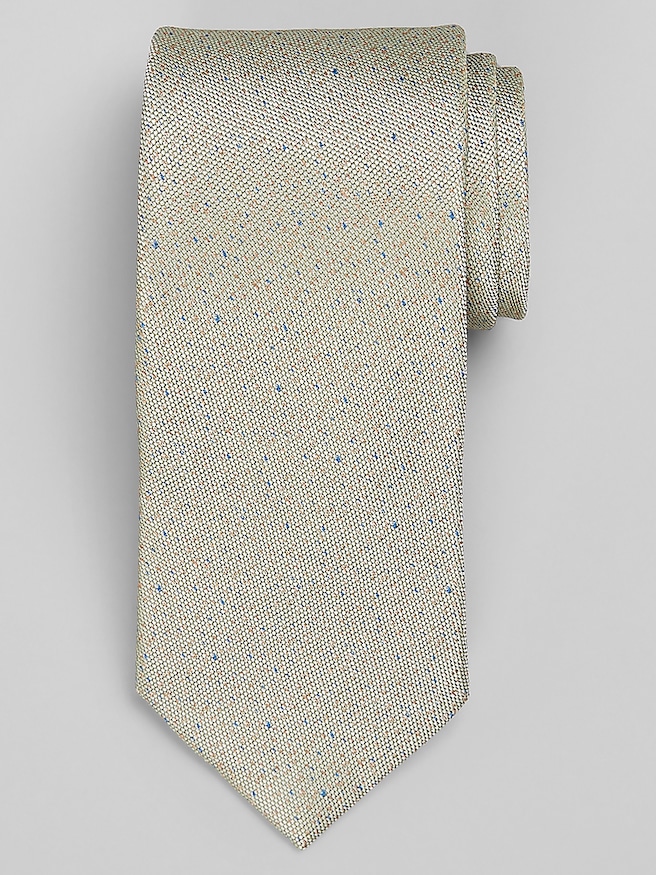
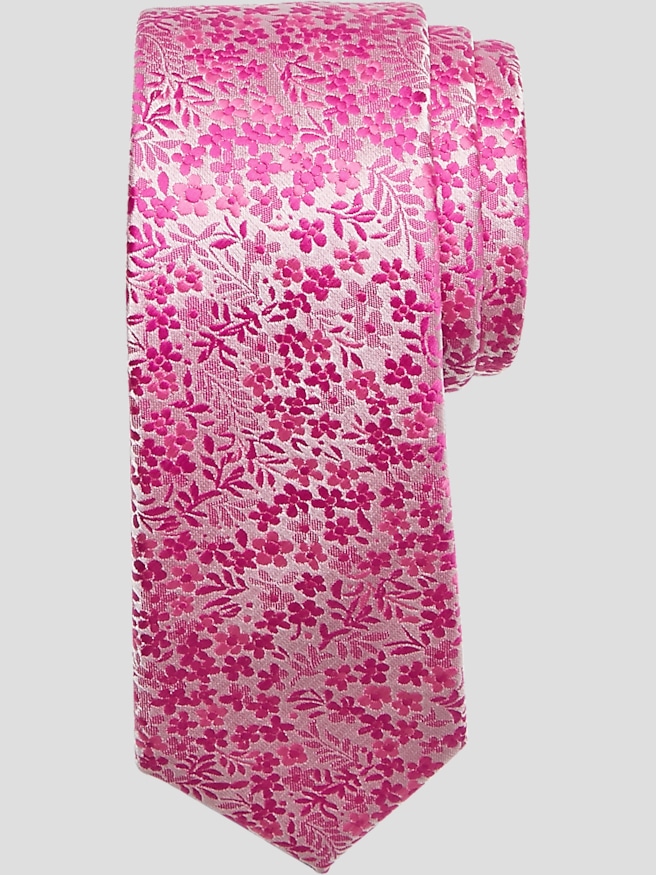
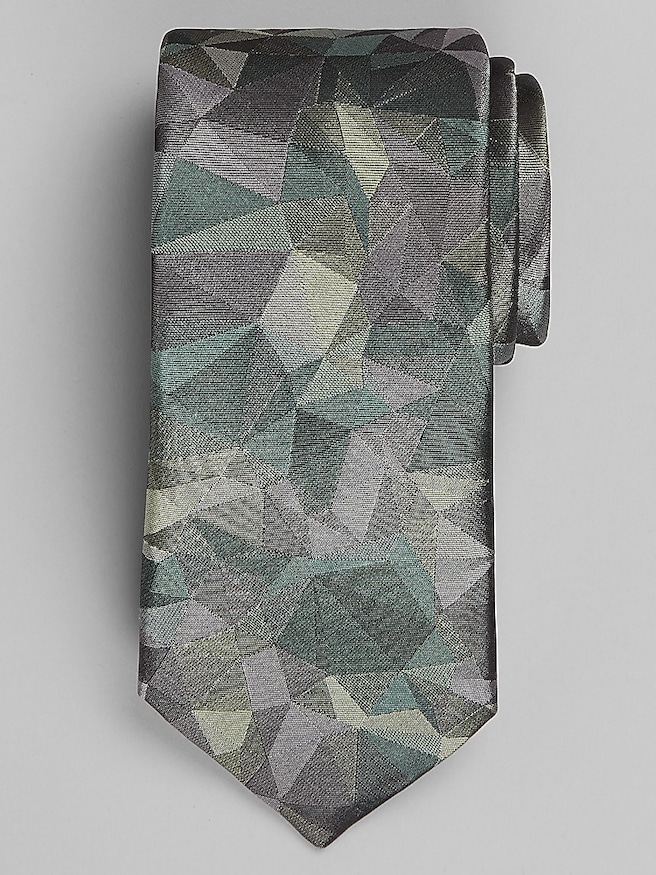
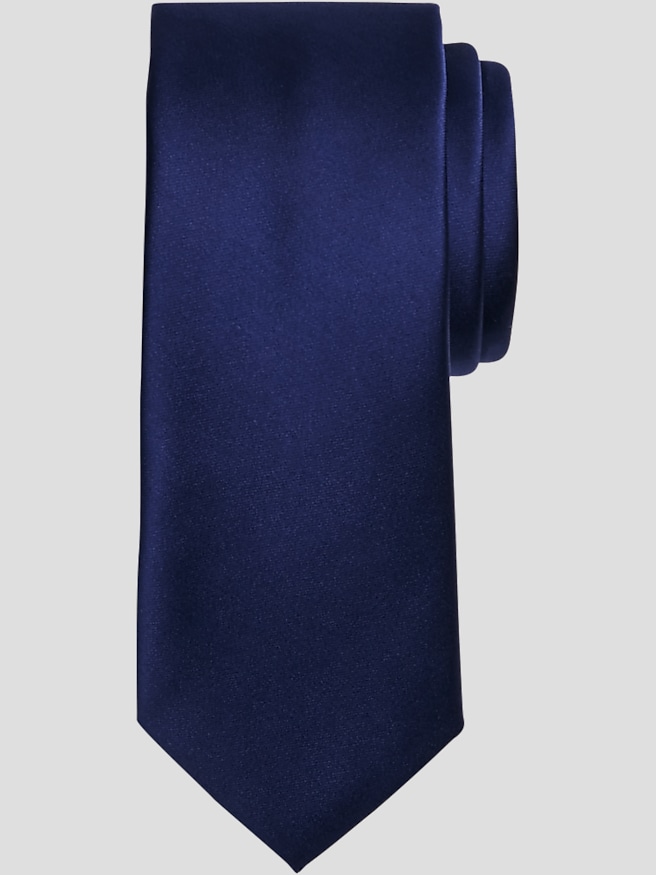
Textured ties add dimension to an outfit through the surface of the fabric, whether that means a raised knit, a fine diagonal weave, or the irregular threads of slubbed silk. Unlike a tie that relies mainly on a printed pattern, a textured tie can create visual interest within a single color. Navy, burgundy, charcoal, and olive take on extra depth when light catches the weave, making these accessories useful for men who prefer understated details over bold graphics. Texture does not necessarily mean a rough finish or a completely matte appearance; some woven silk ties combine a tactile surface with a soft sheen. Knit ties are made with interlocking loops and often have a squared-off end, giving them a relaxed character that works well with a blazer or sport coat. Grenadine, an open-weave fabric commonly made from silk, has a distinctive mesh-like structure that adds dimension while retaining a refined appearance. Shantung silk is known for irregular slubs, the small variations in the yarn that give its surface character. Wool ties can have a softly brushed, heathered, or closely woven finish, while linen and linen blends may show visible fibers and a less uniform surface. Polyester and other blended fabrics can also create raised patterns or crosshatched effects; the fiber label and construction help explain how a tie will feel and drape. Herringbone brings a repeating zigzag weave, while a small basket weave gives a solid color a subtle grid-like appearance. These differences matter at close range: a tie that appears plain across a conference table may reveal considerable detail when someone stands beside it. Fabric weight, lining, and weave density also affect the result. A loosely knitted tie may feel flexible, while a densely woven tie can have more structure. The appeal is not simply added thickness, but the way a textured surface gives familiar tailoring a more individual finish without demanding a complicated outfit.
A textured necktie can bridge the gap between crisp business clothing and more relaxed tailoring. With a navy suit and a white shirt, a fine burgundy weave adds depth while keeping the overall impression clean and professional. Against a gray jacket, a dark blue knit brings a softer contrast than a glossy finish, especially when the shirt has the visible grain of an Oxford cloth. The relationship between fabrics is often more important than matching every surface exactly. A subtly textured tie can complement a smooth worsted suit, while a more pronounced knit or wool weave often looks comfortable beside a substantial sport coat. Combining several strong textures can make an outfit feel busy, so a quiet shirt gives the tie room to stand out. Pattern scale matters, too. A small woven motif is usually easier to distinguish against broad shirt stripes than against another tiny, tightly repeated pattern. Solid textured ties are especially practical when a jacket already has a windowpane check or another noticeable design. Color provides another way to connect the pieces: a tie can pick up a muted shade in the jacket without duplicating it precisely. For office meetings, interviews, ceremonies, and wedding guest attire, a restrained woven texture can add personality while keeping attention on the wearer. A squared-end knit generally reads as less formal, making it a natural companion to chinos, a button-down shirt, and a tailored jacket in settings where a full suit is unnecessary. A pointed woven tie with a fine surface can feel dressier, although texture alone does not determine formality. The invitation or workplace dress code remains the deciding factor, and a necktie is not a substitute for the bow tie traditionally associated with a tuxedo at a black-tie event. For a different kind of visual interest, Graphic Ties emphasize recognizable designs and motifs rather than relying primarily on the fabric’s surface. Texture offers a quieter expression, with details that become more noticeable up close rather than dominating the outfit from a distance.
The right proportions help a textured tie look intentional rather than bulky. Tie width generally works best when it relates to the jacket’s lapels, the shirt collar, and the wearer’s frame; a very narrow tie can look disconnected from broad lapels, while an unusually wide tie may overwhelm a trim jacket. Once tied, the front tip typically reaches around the belt buckle or waistband. Taller men or those who need more length for their chosen knot may benefit from a longer tie, while a thicker fabric uses more length within the knot itself. A four-in-hand often suits substantial knits and textured weaves because its compact shape limits excess bulk. Finer fabrics may accommodate a larger knot, provided it fits comfortably between the collar points. A small dimple beneath the knot adds definition, but the fabric should not need forceful pulling to sit neatly. Care is equally important because raised yarns and open weaves can catch on rough surfaces, jewelry, or an exposed zipper. Untying the knot after wear helps prevent lasting creases; reversing the tying steps is gentler than dragging the narrow end through a tight knot. Woven ties can generally rest on a suitable tie hanger or be loosely rolled, while knit ties are often better stored flat to avoid stretching. Any care instructions attached to the tie take priority. Silk, wool, and blended fabrics do not all respond the same way to water, heat, or cleaning products, so stains should not be scrubbed or treated casually. Prompt professional attention may be appropriate when the label calls for dry cleaning. Thoughtful storage and careful handling help preserve both the surface detail and the tie’s shape. As a gift for a father, partner, graduate, or colleague, a textured tie offers a useful way to refresh familiar shirts and jackets. A versatile color, suitable width, and fabric that matches the recipient’s usual level of dress make it more likely to become a regular part of their wardrobe.