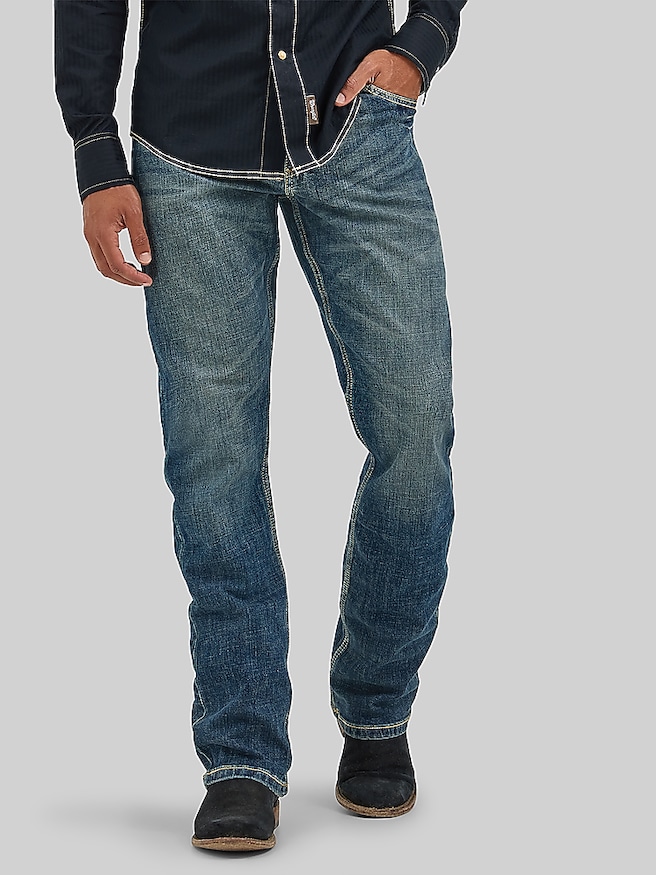
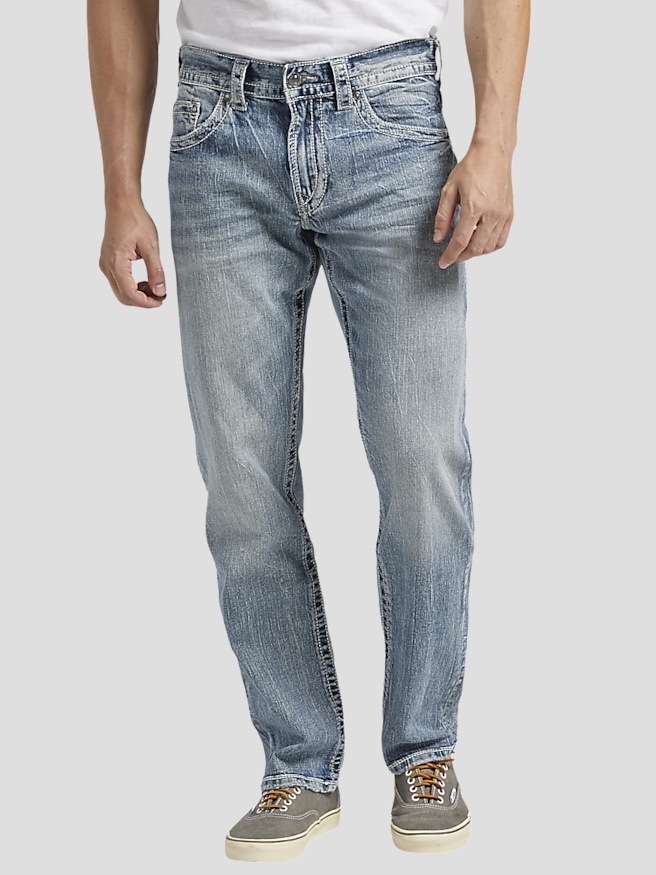
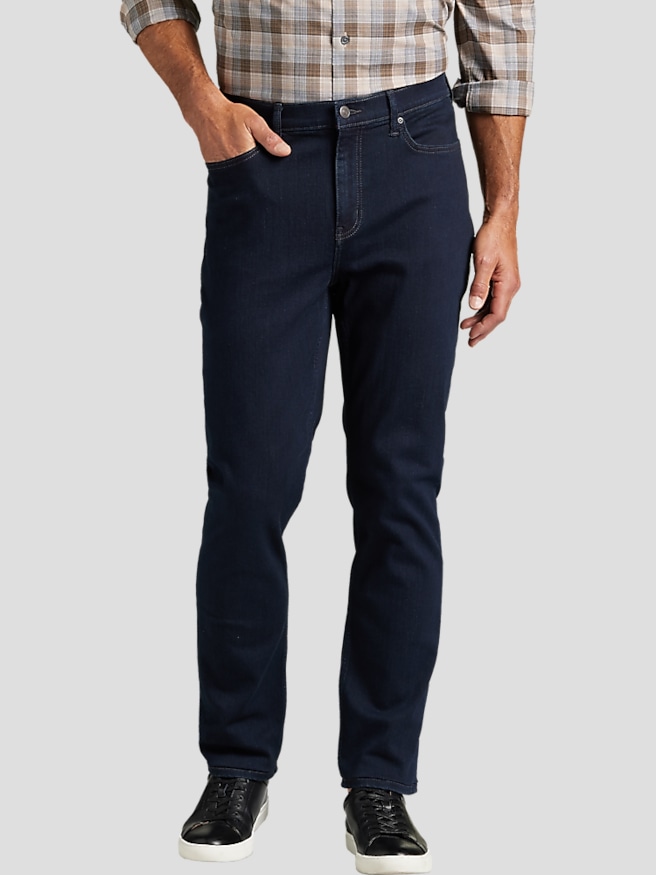
Tapered athletic fit jeans combine extra room through the seat and thighs with a leg that narrows toward the ankle, creating a streamlined shape without requiring a close fit all the way down. That balance makes them especially useful for muscular builds, fuller thighs, and anyone who finds standard slim jeans restrictive above the knee but straight-leg denim too loose at the hem. The defining feature is the proportion: space where the body needs it, followed by a gradual taper that keeps the lower leg neat. Athletic describes the cut, not a requirement to have a particular physique or exercise routine. Someone who spends much of the day seated may appreciate the same thigh room as someone who lifts weights or cycles. Rise also affects how the jeans feel, with a mid-rise cut typically sitting near or just below the natural waist, though measurements vary by style. A comfortable waistband should stay in place without digging in when seated, while the front pockets should lie reasonably flat rather than pulling open. Across the thighs, the denim should allow sitting, stepping onto a curb, and bending to tie a shoe without a strong tug at the seams. Below the knee, the taper should follow the leg without gripping the calf so tightly that the fabric catches with each step. For a closer look at this fit category, Tapered Jeans For Muscular Legs brings the focus to denim proportions suited to stronger thighs and a narrower hem. Waist size alone does not tell the whole story; rise, thigh width, calf room, and inseam work together to determine the finished fit. Getting those proportions right helps avoid sizing up at the waist simply to gain space through the upper leg, which can leave excess fabric beneath a belt and an uneven fit through the seat.
Fabric gives tapered athletic fit jeans much of their character, from the sturdy hand of traditional denim to the easier movement of a cotton blend with stretch. Cotton provides denim’s familiar texture, while a small amount of elastane or another stretch fiber can help the material flex when sitting, climbing stairs, or getting into a car. Some blends also include fibers selected to support shape retention or durability, but the fabric composition alone cannot fully predict how jeans will feel. Denim weight, weave, finishing, and garment construction all matter. Stretch is helpful, yet it should complement a well-proportioned cut rather than compensate for jeans that are too tight. Fabric stretched taut across the thighs can create pronounced pull lines and place added stress on seams. Nonstretch denim tends to feel firmer at first and may soften with wear, while stretch denim often feels more forgiving from the first try-on. Heavier denim can offer a substantial feel during the cooler months; lighter denim may be more comfortable in heated indoor spaces or through a long day of travel. Neither weight is automatically more durable, since yarn quality, construction, fit, and care also influence wear. Secure stitching at pocket edges, belt loops, and high-stress seams is worth attention, particularly for jeans that will become part of a regular rotation. Areas where fabric repeatedly rubs, including the inner thighs, benefit from enough ease to reduce unnecessary strain. A dark, even wash gives the silhouette a crisp appearance, while faded denim highlights the texture and creates a more relaxed impression. Whiskering, abrasion, and other finishes affect the visual character but do not define an athletic taper. The most useful choice is one that feels comfortable through ordinary movements and settles back into shape after sitting, rather than looking right only while standing still in front of a mirror.
The clean lower leg makes tapered athletic fit jeans easy to wear across everyday settings, from a casual office that permits denim to a weekend lunch or a relaxed evening out. A dark wash works naturally with an Oxford shirt and an unstructured jacket, giving the outfit definition without the formality of dress trousers. Medium and lighter washes pair comfortably with a knit polo, a sweatshirt, or a flannel shirt layered over a plain T-shirt. During the cooler months, a textured sweater and a simple outer layer add warmth without obscuring the shape of the jeans. Footwear changes the effect: low-profile sneakers keep the hem light, while leather boots add visual weight and a more rugged finish. The leg opening should clear the footwear comfortably, especially with boots that have a wider shaft. Inseam makes a noticeable contribution here. A hem that meets the top of the shoe with a slight break usually preserves the taper, whereas a much longer leg can bunch around the ankle and hide it. A small cuff can suit casual styling, provided the folded denim does not become bulky. For travel, dinners with friends, or daily errands, the appeal is the same: upper-leg comfort paired with a shape that looks considered. Jeans can also make a practical gift when the recipient’s preferred waist, inseam, rise, and fit are known; measurements from a well-fitting pair are more useful than waist size alone. To maintain the fabric and finish, follow the garment’s care label, turn jeans inside out before washing, and use cool water when recommended. Wash dark denim with similar colors, since some dyes can transfer, particularly during early wear and laundering. Avoid unnecessary high heat, which can contribute to shrinkage and affect stretch fibers. Air-drying when permitted, rotating between pairs, and addressing loose stitching before it spreads can help support longer wear. With thoughtful care and enough room through the seat and thighs, athletic taper denim can become a dependable foundation for a casual wardrobe.