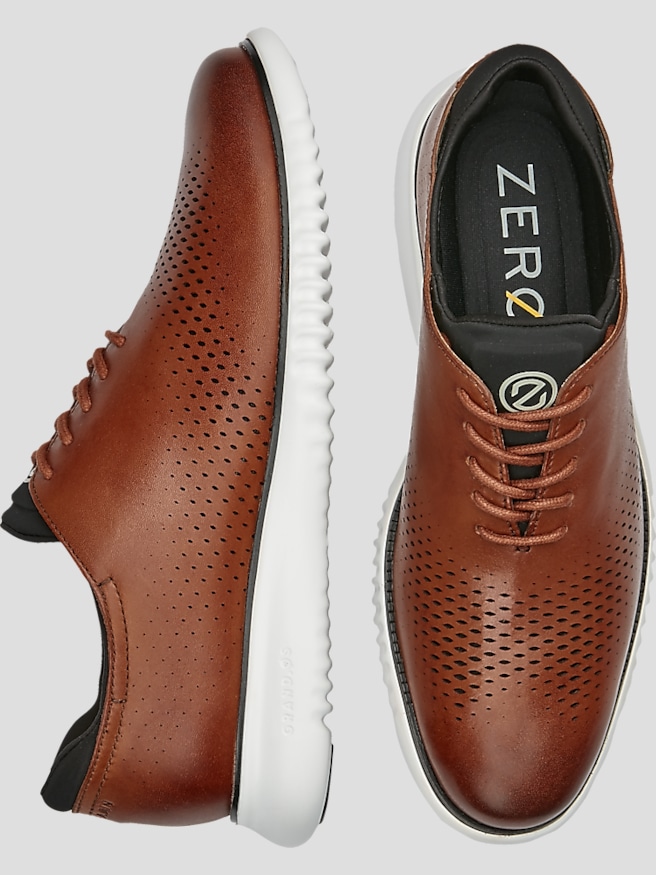
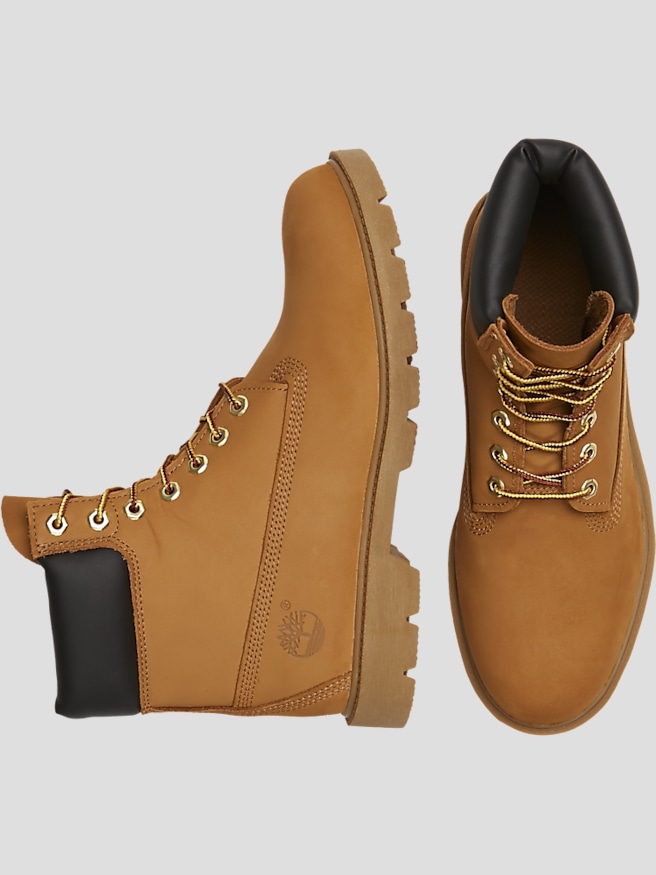
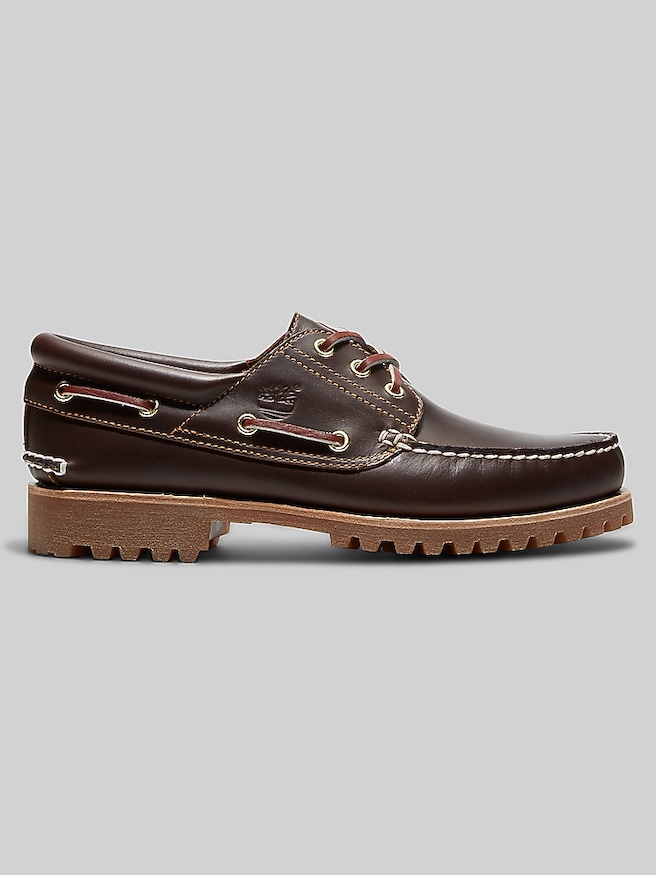
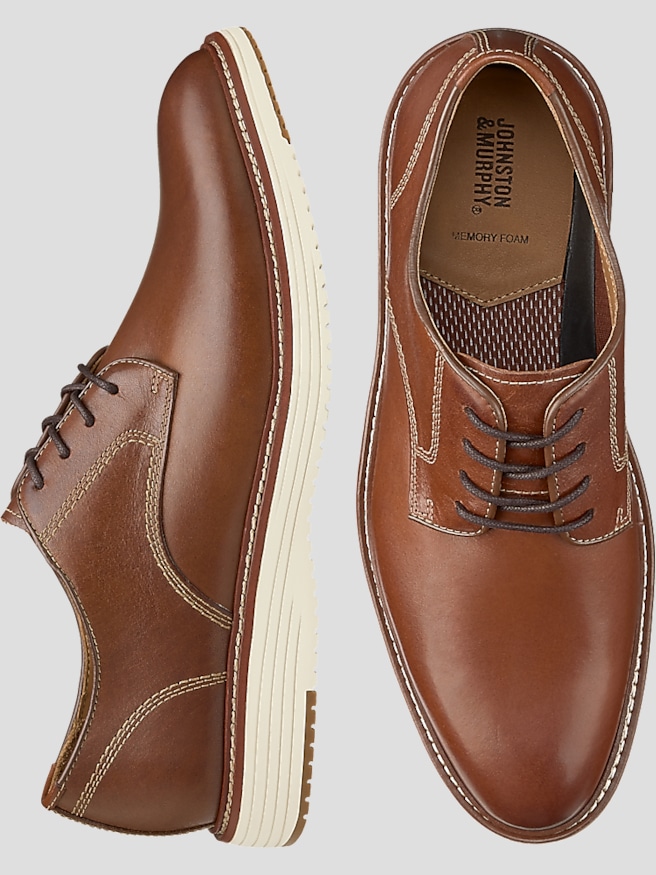
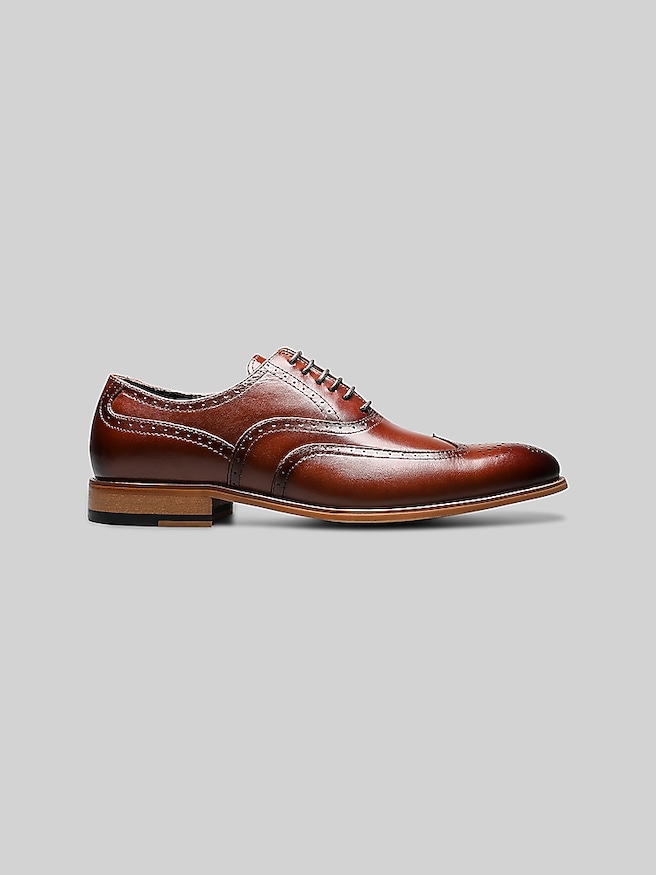
Tan wingtip shoes are dress shoes defined by a W-shaped toe cap whose pointed center and curved sides extend back along the shoe, creating the winglike outline that gives the style its name. Most feature broguing, the decorative perforations along the seams and around the toe that add texture to an otherwise tailored silhouette. Wingtip describes the shape of the toe cap, while brogue describes the decorative detailing; the two often appear together but are not interchangeable terms. In tan leather, these details stand out clearly, giving the shoes character without relying on bold colors or oversized accents. Shades can range from light sandy brown to deeper golden tan, with some finishes showing subtle variations that become more noticeable as the leather develops a patina. That warmth makes tan wingtips a useful complement to navy tailoring, medium-gray trousers, olive chinos, and dark denim. A navy suit with a white shirt and tan wingtip shoes has a crisp, approachable look suited to many daytime weddings, business gatherings, and celebratory dinners. With charcoal trousers, the contrast is stronger and draws more attention to the footwear; a medium-gray pair creates a softer transition. For a relaxed office outfit, tan wingtips bring definition to chinos and an unstructured sport coat without making the combination feel overly formal. Their decorative character generally places them below a plain black dress shoe in formality, so they are not the conventional choice for black-tie attire or the most conservative professional dress codes. Within business casual and smart casual wardrobes, however, they offer considerable flexibility. A belt in a similar tan or brown shade helps connect the outfit, though an exact color match is less important than a consistent level of polish. Trousers with a clean hem and little excess fabric allow the toe detailing to remain visible. Socks that echo the trousers usually create a continuous line, while a restrained pattern can pick up the warmth of the leather without competing with it.
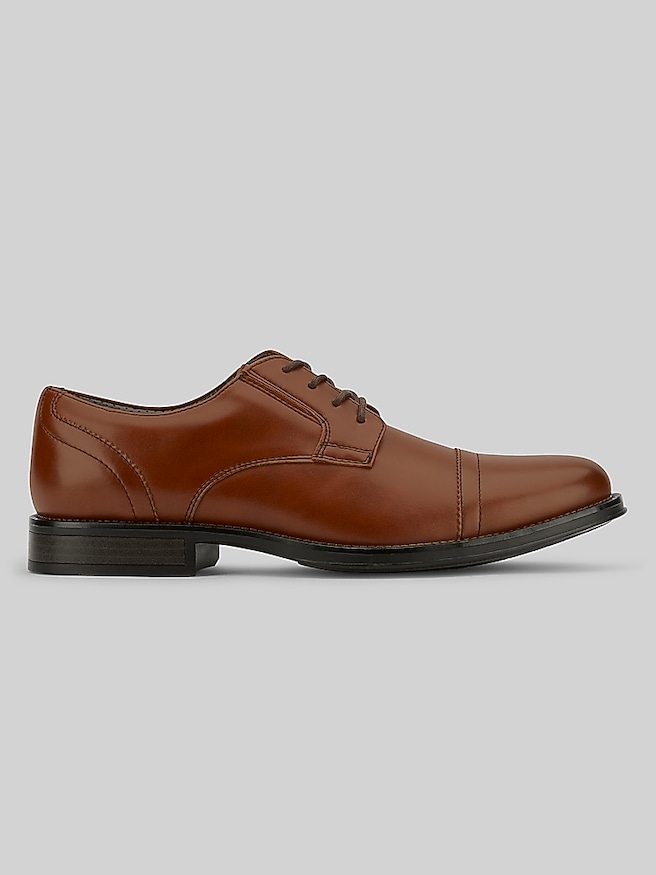
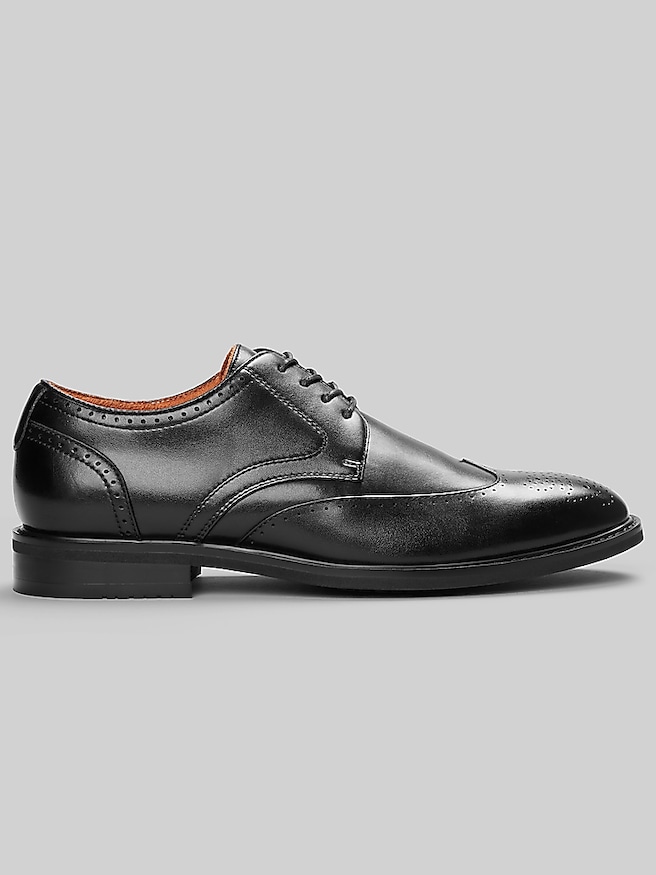
Materials and construction influence how tan wingtip shoes look, feel, and wear over time. Smooth leather gives the perforations a crisp outline and can usually be polished to a soft glow or a higher shine, depending on the finish. Full-grain leather retains the hide’s natural surface and may develop visible character with regular wear, though the leather’s quality, thickness, and finishing all matter. Suede has a softer, textured appearance that works especially well with chinos and less structured tailoring. Nubuck is also velvety, but its texture comes from lightly buffing the outer surface of the hide rather than using the underside. Neither should be treated with standard cream polish intended for smooth leather. The lacing design also changes the impression and fit. On an Oxford, the eyelet sections sit beneath the vamp, creating a closed-lacing arrangement with a neat profile. On a derby, those sections are attached over the vamp, allowing the opening to spread more freely; that can be helpful for some higher insteps, although the actual fit depends on the shoe’s shape. Shortwing designs curve back toward the middle of the shoe, while longwing designs extend the decorative wing line toward the heel. Sole choices bring another practical distinction. Leather soles have a traditional appearance, while rubber soles can provide useful traction and flexibility, depending on their tread and composition. Cushioning may soften the feel underfoot, but it cannot compensate for a shoe that pinches or slips. For a day that includes a commute, several meetings, and dinner afterward, secure heel contact and comfortable forefoot space matter more than softness alone. Toes should have room to move without pressing against the upper, and the widest part of the foot should align with the widest part of the shoe. Trying shoes with the socks intended for regular wear gives a more realistic sense of fit. The broader Good Wingtip Shoes category offers another point of comparison for the silhouettes, finishes, and construction details that distinguish this style.
Tan wingtip shoes reward consistent, material-appropriate care because lighter brown surfaces can make scuffs, dust, and uneven polish more noticeable. After wear, a soft brush or clean cloth removes surface debris before it becomes worked into the finish. The small perforations deserve gentle attention, since heavy layers of cream or wax can collect in them and obscure the detailing. For smooth leather, occasional conditioning with a compatible product can help maintain suppleness; polish should be applied sparingly and tested in an inconspicuous area first. A close color match helps preserve the original tone, while darker polish may gradually deepen it or leave uneven patches. Suede and nubuck call for brushes and cleaners designed for their textured surfaces, following the footwear maker’s care directions. If shoes become damp, allowing them to dry naturally away from direct heat helps protect the upper and its shape. Cedar shoe trees can support the leather between wears and help absorb residual moisture, and alternating pairs gives the interior time to dry fully. Durability depends on more than the upper: worn heel edges, separating soles, and frayed laces are useful signs that maintenance is due. Some stitched constructions can be resoled by a qualified cobbler, but repair options depend on how the entire shoe is built. For someone who wears dress shoes frequently, that distinction may be worth considering alongside comfort and appearance. Tan wingtips can also make a thoughtful gift for a graduate starting a professional wardrobe, a partner who enjoys tailored clothing, or someone marking a career milestone, provided the recipient’s size, width, and style preferences are well understood. A familiar shoe size is only a starting point, since fit varies across shapes and constructions. For regular wear, the strongest choice is a pair whose proportions suit the wardrobe and whose fit feels secure without pressure. The appeal is in that balance: a warm leather tone, recognizable wingtip detailing, and enough visual interest to give a straightforward outfit a considered finish.