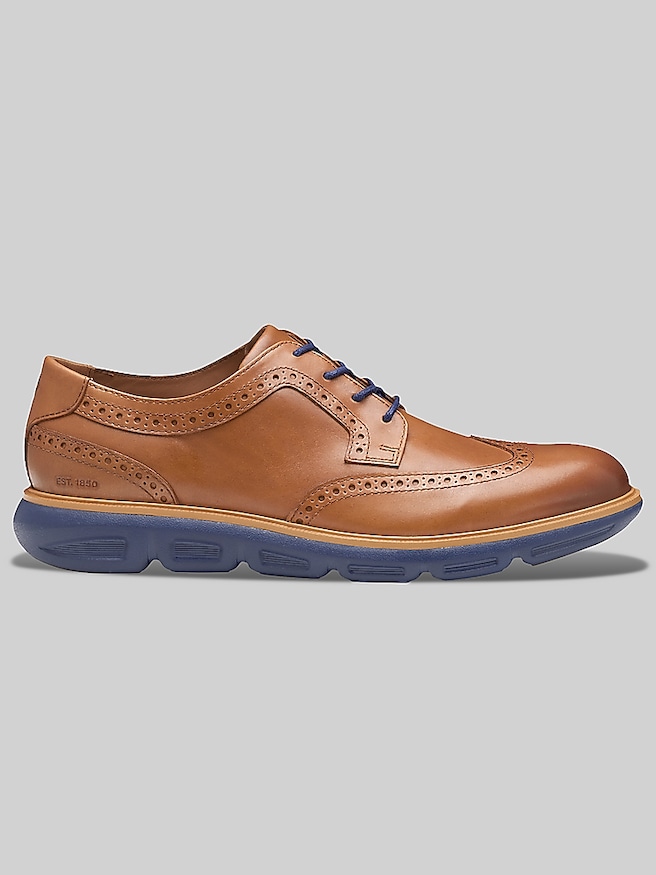
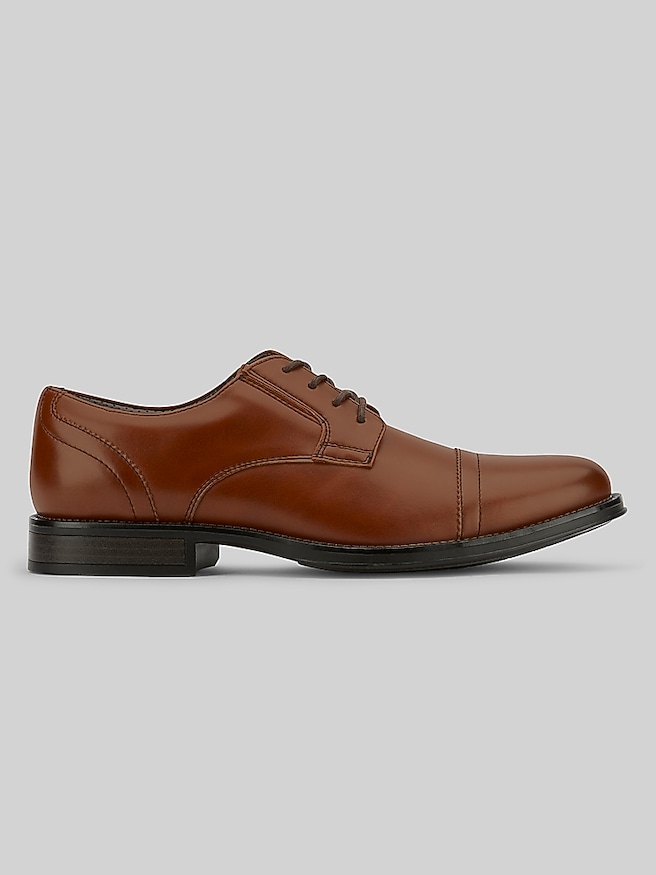
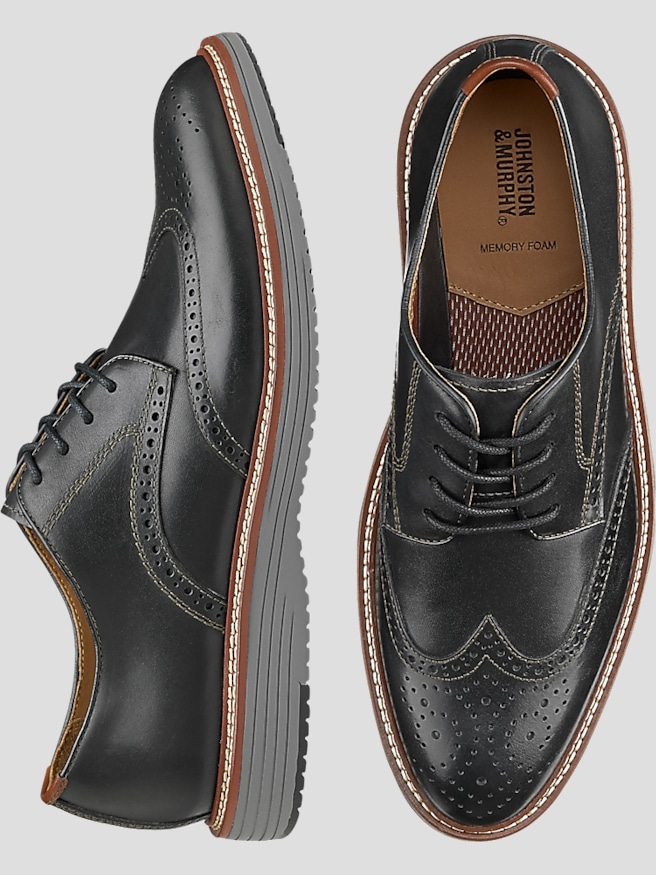
Leather wingtip shoes bring a distinctive balance of structure and ornament to a dressed-up wardrobe. Their defining feature is a toe cap with a central point and sweeping extensions along either side, creating the wing-shaped outline that gives the style its name. Decorative perforations, known as broguing, often trace those edges and may form a medallion across the toe. The result has more visual texture than a plain-toe dress shoe, yet still looks composed beneath tailored trousers. Wingtip describes the toe design rather than the lacing system: an Oxford has closed lacing for a compact appearance, while a Derby has open lacing that allows more adjustment across the instep. Either can carry wingtip detailing, and the distinction matters as much for comfort as for appearance. A slim profile with restrained perforations feels at home with a business suit; a fuller shape with substantial soles makes an easy companion to chinos, corduroy trousers, or dark denim. Black leather gives the pattern a crisp, graphic quality, especially when paired with charcoal or gray tailoring. For a closer look at that classic color, men's black wingtip shoes offer a focused expression of the style. Brown shades emphasize the leather’s depth and the edges of the decorative work, with darker tones looking more reserved and lighter tones drawing attention to the shoes. Burgundy adds richness without requiring an exact color match elsewhere in the outfit. Leather wingtips suit office presentations, graduation ceremonies, dinner reservations, and many wedding dress codes, though heavily decorated versions are generally less formal than plain-toe or cap-toe dress shoes. For a tuxedo or an event with a strict black-tie requirement, traditional formal footwear is usually the more appropriate choice. Within everyday tailoring, however, wingtips give simple outfits a deliberate finish: a clean trouser hem, a belt in a compatible leather tone, and a well-kept pair can make a jacket and trousers feel considered without looking overly coordinated.
Leather quality and construction influence how wingtip shoes look on the first wear and how they develop over time. Full-grain leather retains the hide’s natural surface characteristics and can develop a varied patina with regular use and appropriate care. Top-grain leather has been refined for a more consistent surface, while corrected-grain finishes may create a particularly uniform appearance. None of those labels alone tells the whole story; leather thickness, finishing, stitching, lining, and the shape of the shoe all contribute to the experience on foot. Smooth leather shows off the perforated pattern clearly and responds well to compatible cream and polish. Pebbled leather adds another layer of texture, making the shoe feel somewhat more relaxed. A burnished finish creates shading around areas such as the toe and heel, though aggressive polishing can alter that effect. Inside, a smooth lining and neatly finished seams help reduce distracting friction during a long workday or an extended reception. Fit deserves particular attention because a sharply pointed silhouette can look spacious from above while narrowing too quickly around the toes. The ball of the foot should sit near the shoe’s widest point, with room for the toes to move and a heel that feels secure without pinching. Leather may soften and conform with wear, but a tight shoe should not be expected to become the correct size through stretching alone. Trying shoes with the dress socks intended for regular wear provides a more useful assessment than relying only on the size marked inside. Walking, turning, and standing for several minutes can reveal pressure across the instep or rubbing at the heel. Open lacing may accommodate a higher instep more comfortably, although the underlying shape remains important. For someone moving between a desk, conference rooms, and client appointments, a stable fit and a comfortable flex point will matter more than decorative flourishes. Cushioning can add comfort, but it cannot compensate for a shoe that squeezes the forefoot or slips with every step.
Sole construction helps determine where leather wingtip shoes feel most useful. Leather soles provide a traditional appearance and can become more flexible with wear, while rubber soles often add cushioning and traction, depending on their compound and tread. A low-profile rubber sole can preserve a dressy outline; a thicker sole gives the same wingtip pattern a sturdier, more casual character. Welted construction may allow resoling when the upper remains sound, extending the useful life of a well-maintained pair, although repair options depend on the particular construction and a cobbler’s assessment. Cemented construction can offer a lighter feel, but replacing the sole may be less practical. Whatever the construction, consistent care is what keeps the detailing sharp rather than tired. A soft horsehair brush removes dust along the seams and perforations before it works into the finish. Wiping smooth leather with a lightly damp cloth, allowing it to dry naturally, and applying a suitable conditioner sparingly can help maintain suppleness. A compatible cream polish refreshes color, while a small amount of wax can add shine at the toe and heel. Testing care products on a discreet area is especially useful with burnished or unusually finished leather. Heavy buildup can obscure broguing, so thin applications are preferable to thick coats. Cedar shoe trees help support the shape between wears and absorb some residual moisture; alternating pairs also gives the interior time to dry. A shoehorn protects the heel structure, and loosening the laces before removal avoids unnecessary strain. Those small habits are particularly worthwhile for shoes worn repeatedly to work, religious services, family celebrations, or evenings out. Leather wingtips can also make a thoughtful gift for a graduate, a parent, or someone building a professional wardrobe, provided the recipient’s size, width, and preferred fit are known. The strongest choice is not necessarily the most ornate one, but the pair whose shape, color, and construction fit naturally into the wearer’s life.