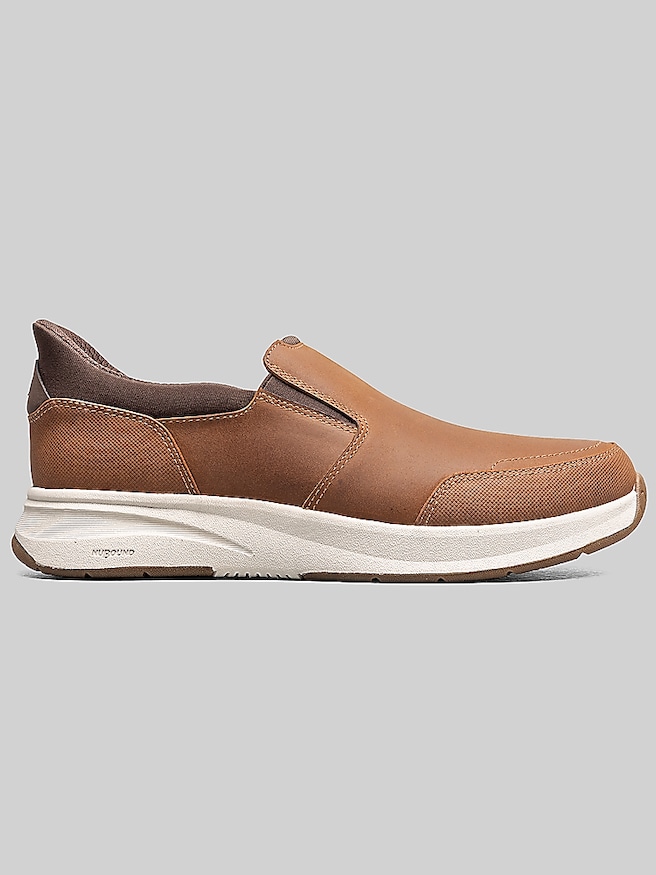
Tan shoes are light-brown footwear that spans dress shoes, loafers, sneakers, and boots, offering a softer alternative to black and a lighter look than dark brown. Shades can range from pale sand and beige-tan to honey and warm caramel, with the finish influencing how the color appears: smooth leather often looks richer, while suede has a muted, textured appearance. For men building a versatile wardrobe, tan shoes pair naturally with navy, medium gray, olive, cream, and blue denim. A navy suit with polished tan lace-ups has clear contrast without looking overly stark; tan loafers with straight-leg chinos and a tucked-in shirt create a more relaxed outfit for an office with a business-casual dress code. The shape of the shoe matters as much as its color. Oxfords have closed lacing and a streamlined profile suited to tailored clothing, while derbies use open lacing for a slightly less formal appearance. Brogue detailing adds visual interest through decorative perforations, but the amount of ornamentation, sole thickness, and overall silhouette help determine how dressy the shoe feels. Loafers keep the outline clean without laces, and low-profile tan sneakers work well with casual trousers or dark jeans when a dress shoe would feel out of place. Tan boots bring more coverage and a substantial profile to everyday outfits, particularly when paired with denim or textured pants. For office presentations, dinners, graduations, and weddings where a suit is appropriate, polished leather styles can provide a finished look, provided they suit the event’s dress code. Black-tie occasions call for formal black footwear rather than tan shoes. Belt coordination is simplest when the leather tones are reasonably close, though an exact color match is not essential. A restrained trouser break also helps show the shoe’s shape without fabric gathering heavily over the upper. These small relationships between color, texture, and proportion make tan footwear useful across wardrobes, from someone establishing a first professional outfit to someone adding variety to familiar navy and gray tailoring.
Materials and construction influence how tan shoes feel, age, and fit into daily routines. Smooth leather offers a defined surface that can be cleaned, conditioned, and polished, making it a practical choice for footwear worn with tailored pants. Full-grain leather retains the hide’s natural grain and may develop subtle creasing and changes in character with wear; those marks are not necessarily signs of poor durability. Leather quality, thickness, finishing, and the shoe’s construction all contribute to long-term performance. Suede has a soft nap that gives tan tones depth, especially alongside denim, cotton chinos, and knitwear. Nubuck has a similarly velvety appearance but is made by lightly buffing the outer surface of the leather. Both textures need care suited to their finish rather than the same polish used on smooth leather. Textile and synthetic uppers can offer other combinations of weight, flexibility, and maintenance needs, with performance depending on the particular material rather than its category alone. Inside the shoe, the lining, footbed, and seams affect comfort during a full day of meetings or an evening spent standing at a reception. A smooth lining and neatly finished interior reduce potential rubbing points, while cushioning can help soften repeated steps. Outsole design deserves equal attention. Slim leather soles create a traditional dress profile, while rubber soles can add flexibility and traction; actual grip depends on the tread, compound, and walking surface. A thicker sole may feel appropriate with casual pants but look heavy beneath slim suit trousers. Construction also affects repair options. Some stitched shoes can be resoled, depending on their design and condition, while other constructions are less suited to that kind of repair. For daily commuting or frequent travel, the balance of weight, flexibility, secure footing, and support can matter more than decorative details. For occasional dress wear, a refined shape and an upper that responds well to careful maintenance may carry more weight in the decision.
A comfortable fit gives tan shoes their real usefulness, whether they are worn through a workday, across a busy airport, or for several hours at a celebration. Length alone does not determine fit: width, toe shape, instep height, and heel hold all influence how a shoe sits on the foot. Toes need room to move without pressing against the front or sides, and the ball of the foot should align comfortably with the shoe’s widest area. A rounded toe may feel more accommodating than a tapered silhouette, though the underlying shape and size remain decisive. Lace-ups allow adjustment across the instep, while loafers depend more heavily on the relationship between the opening, heel, and foot shape. Significant heel movement or persistent pressure should not be dismissed as something that wear will automatically fix. Leather may soften, but a shoe that is too short or narrow is unlikely to become a comfortable fit. Trying footwear with the socks intended for it helps account for thickness, and checking the fit on both feet matters because small size differences are common. For routines centered on longer stretches on foot, Tan Walking Shoes bring the focus toward everyday walking rather than a dress-oriented silhouette. Care helps preserve both appearance and usefulness. Loose dirt should be removed before it settles into seams, smooth leather benefits from suitable conditioning when needed, and a tan or neutral polish should be chosen with the finish in mind and tested discreetly first. Suede responds better to an appropriate brush and material-specific cleaner. Shoes that become damp need time to dry naturally away from direct heat; cedar shoe trees can help maintain shape and manage moisture between wears. Regularly checking heels and soles for uneven wear can reveal when attention is needed before discomfort develops. Tan shoes can also make a thoughtful gift for a graduate, a professional marking a career milestone, or someone refining an everyday wardrobe, especially when their preferred style and accurate size are already known.