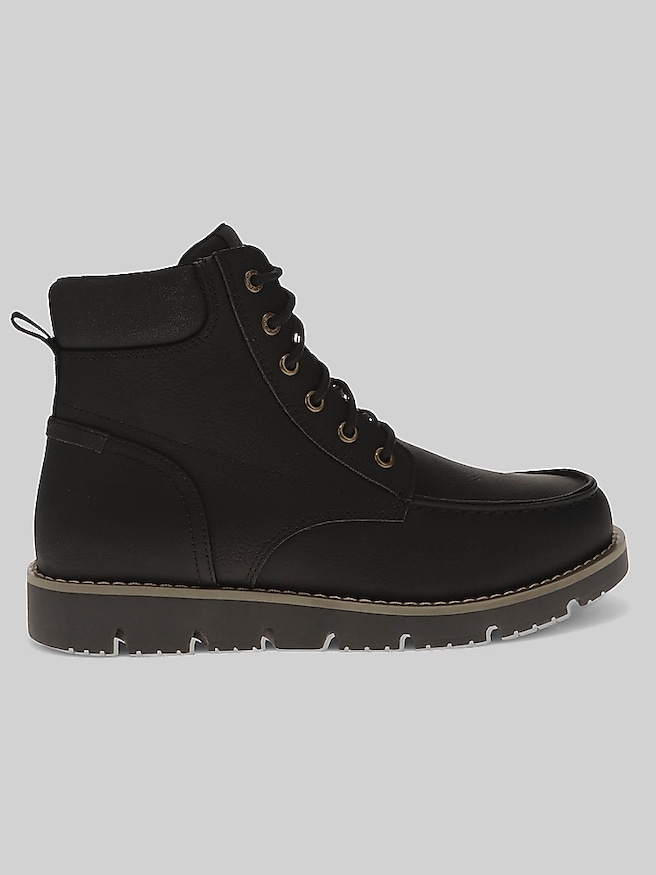
Tan faux leather boots pair a warm, versatile color with a leather-like finish that can complement everything from dark denim to tailored chinos. Tan sits between pale beige and deeper brown, so its character changes with the finish: a smooth, lightly polished surface looks more refined, while a matte or subtly textured upper feels relaxed. Faux leather is a manufactured material rather than animal hide, commonly made with a polyurethane or PVC surface over a backing such as fabric. The exact construction matters more than the label alone. Thickness, flexibility, lining, and the quality of the surface coating all influence how a boot feels and how well its appearance holds up with repeated wear. A leather-like upper also does not establish that the entire boot is vegan; anyone seeking animal-free footwear should check the materials used throughout, including linings, trim, and adhesives. Within the broader Leather Look Boots category, tan offers a lighter alternative to black without requiring a bold outfit. A clean ankle-height silhouette with navy chinos and a tucked-in shirt can work for a business-casual office, while a lace-up shape with straight-leg jeans suits an informal dinner or a day spent moving between appointments. Chelsea-inspired shapes keep the profile simple, and western-influenced stitching or a squared toe adds more personality. Rounded and almond-shaped toes generally blend easily with everyday clothing, while a sleeker profile can look more at home beneath tailored trousers. The hem makes a noticeable difference: pants that meet the top of the boot with little bunching let the shape remain visible. A tan belt in a similar color family can bring the outfit together without an exact match. For men who prefer a compact footwear wardrobe, these boots can bridge relaxed and polished looks, provided their shape and finish suit the setting. They are not a substitute for formal footwear when an occasion calls for a strict dress code.
Fit determines whether tan faux leather boots become an easy everyday choice or remain a pair worn only briefly. Synthetic uppers may soften with use, but they should not be expected to stretch or mold to the foot in the same way as some natural leathers. A comfortable starting fit is especially important across the widest part of the foot, over the instep, and around the ankle. Toes need room to lie naturally without touching the front, and the heel should feel secure rather than sliding noticeably with each step. Trying boots with the socks intended for regular wear gives a more useful impression than relying on the size printed inside. Walking, turning, and sitting can reveal pressure points that standing still will not, particularly where the upper bends over the toes or where the shaft meets the ankle. Lace-up construction offers adjustment through the instep, while elastic side panels or zippers can make getting dressed more convenient; neither feature guarantees a good fit on its own. Underfoot details deserve equal attention. Cushioning can soften the initial feel, but support, interior space, sole flexibility, and overall weight all contribute to lasting comfort. A thick-looking sole is not automatically supportive, and a deep tread does not guarantee grip on every surface. Smooth office floors, stairs, and long stretches of standing place different demands on footwear. A stable heel and a sole that bends comfortably at the forefoot can make ordinary movement feel more natural. Removable footbeds may be useful for someone who wears an insert, as long as there is enough depth after the insert is added. For commuting, casual workplace use, meals out, or travel, consider how much walking the day involves rather than choosing by appearance alone. Fashion boots should not be treated as safety footwear unless their stated specifications meet the requirements of the job. Purpose-built protection requires more than a substantial-looking toe or rugged sole.
Caring for tan faux leather boots is largely about protecting the surface coating and keeping buildup from settling into seams and textured areas. Light-colored finishes can make dark scuffs and transferred dye more noticeable, particularly where denim rubs against the shaft. A soft, dry cloth removes loose dust; for ordinary marks, a slightly damp cloth is often the next step, following the maker’s care directions. If mild soap is permitted, use only a small amount, remove any residue, and test first on a discreet area. Soaking, aggressive scrubbing, and strong household cleaners can damage the finish. Let boots air-dry away from direct heat, and do not use a hair dryer to speed the process. Traditional leather oils, waxes, and conditioners may not suit a synthetic coating and can leave residue or alter its appearance, so use only treatments identified as compatible with the material. Durability varies with construction and use. Flexible uppers, neatly finished seams, secure eyelets, and well-attached soles are useful details to examine, but no single feature predicts an exact lifespan. Repeated sharp folding, abrasion at the toe, and pulling boots off by stepping on the heel can put unnecessary stress on the upper and sole attachment. Loosening laces or opening zippers fully before removal helps preserve the shape and reduces strain around closures. Store boots upright with enough space to avoid crushing, and use gentle support inside the shaft if needed without forcing the material outward. Peeling and cracking in a synthetic surface are generally harder to restore than a superficial mark, making routine care more useful than attempting a heavy treatment after damage appears. Tan faux leather boots can also be a thoughtful gift for someone who enjoys versatile footwear, especially when their usual size, preferred width, and favorite silhouette are already known. A recipient who wears streamlined chinos may favor a quieter ankle boot, while someone drawn to denim and casual jackets may appreciate more visible stitching. Familiarity with those everyday habits helps make the choice feel personal, with fit, comfort, and practical use carrying as much weight as the color.