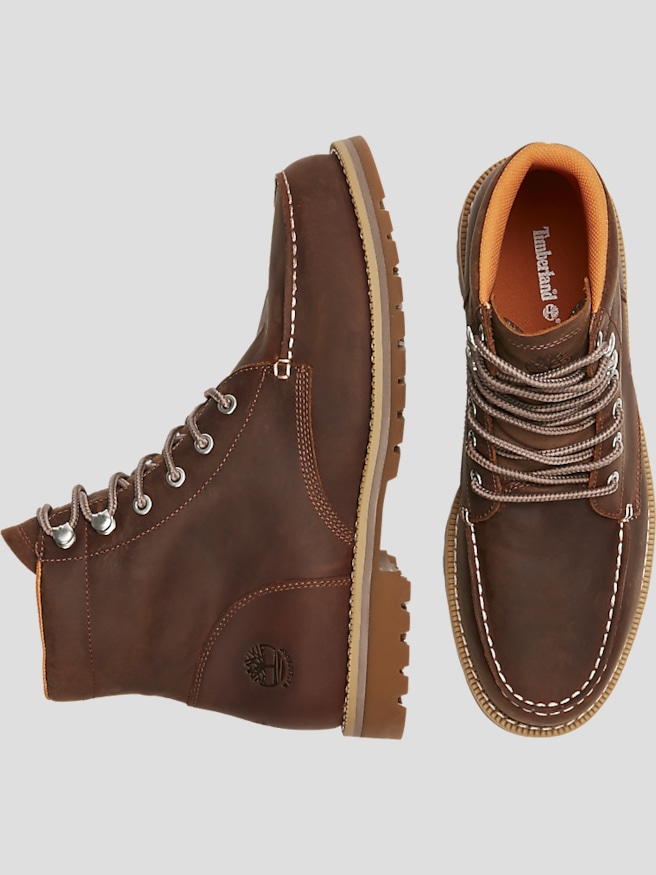
Tan boots for men bring a warm, grounded finish to everyday outfits, with styles ranging from streamlined Chelsea boots and ankle-height chukkas to lace-up service boots and Western-inspired silhouettes. Their appeal comes from the balance between character and versatility: tan has more visual presence than a dark brown shade, yet remains neutral enough to complement denim, chinos, and many tailored separates. The color can read as sandy beige, golden honey, or rich saddle brown, with each variation creating a slightly different effect. Lighter shades offer a relaxed contrast against dark blue jeans, while deeper tan leather feels especially natural beside olive chinos or navy trousers. Cream, white, burgundy, and muted blue also work well with this earthy palette. Smooth leather generally gives an outfit a cleaner, more structured finish, while suede adds a soft texture that suits casual shirts, knit polos, and unstructured jackets. Chelsea boots have an uncluttered profile, with elastic side panels that make them easy to pull on and remove. Chukkas typically sit near the ankle and have a small number of eyelets, giving them a relaxed appearance without the bulk of a taller boot. Lace-up designs provide more adjustment through the instep and can range from refined plain-toe shapes to substantial styles with pronounced soles. Western details, including shaped shafts and angled heels, create a more distinctive look that works particularly well with straight-leg denim. Within the broader Boots For Men collection, tan offers a useful middle ground between understated footwear and a noticeable outfit detail. For a business-casual setting, a slim leather boot can sit neatly beneath chinos and a sport coat. For dinner or a casual gathering, a suede ankle boot adds texture beside dark denim and a tucked-in shirt. Trouser shape matters, too: a narrow opening works best with a slim shaft, while fuller cuts accommodate more substantial boot profiles without catching at the top.
Materials and construction influence how tan boots look, feel, and develop with repeated wear. Full-grain leather retains the hide’s natural surface, often showing subtle variations that become part of the boot’s character. With appropriate care, it can soften at flex points and develop a patina rather than maintaining a perfectly uniform appearance. Other smooth leathers may have a more consistent finish, which can suit a polished wardrobe. Suede has a brushed nap that gives tan shades depth, sometimes appearing lighter or darker as the fibers move. Nubuck also has a velvety surface, though it is made by sanding the outer side of the hide rather than using the underside commonly associated with suede. These textures benefit from care products intended for their particular finish. Synthetic materials offer another option, with performance and maintenance needs depending on their composition. Underfoot, rubber outsoles often provide flexibility and useful traction on everyday surfaces, while leather soles have a traditional appearance and a different feel during walking. Tread pattern, heel height, and sole thickness all contribute to the experience; a substantial lug sole feels and looks different from a low-profile dress sole. Welted construction can make resoling possible in some designs, while cemented construction bonds the sole to the upper and may create a lighter, more flexible boot. Neither construction method alone determines comfort or lifespan. Fit, workmanship, materials, and care all matter. A comfortable fit leaves enough space for the toes to move without allowing the foot to slide forward with every step. The ball of the foot should align with the boot’s widest area, and the instep should feel supported rather than squeezed. Lace-up styles allow adjustments that slip-on designs do not, making foot shape particularly important with Chelsea and pull-on boots. A small amount of heel movement can occur in a new pull-on boot, but substantial lifting or rubbing suggests a fit issue. Trying boots with the socks normally worn with them gives a more realistic impression of both volume and comfort. Leather may relax through wear, but a break-in period should not be expected to correct pinched toes or an unsuitable width.
The best use for tan boots depends on their shape and construction rather than color alone. A sleek ankle boot can support a wardrobe built around office days, restaurant outings, and casual celebrations, while a heavier lace-up style feels at home with sturdy denim and relaxed layers. A rugged appearance does not automatically make a boot suitable for demanding work: jobs that require protective footwear call for the relevant safety features and ratings. Similarly, a cushioned footbed may improve everyday comfort, but long periods of standing also make fit, arch support, and sole design important considerations. Tan boots can be a thoughtful gift for someone who enjoys classic menswear, wears jeans and chinos regularly, or appreciates footwear that gains character over time. An established preference for lace-up or slip-on styles is often a better clue than appearance alone, and knowing the recipient’s usual size and width helps avoid an uncomfortable match. Once boots become part of a regular rotation, modest care helps preserve their finish. Dust and surface grit can be removed from smooth leather with a soft brush or cloth before applying a suitable conditioner when needed. Tan leather deserves particular care when selecting polish or treatment, since some formulas darken the surface or alter its tone; testing an inconspicuous area helps reveal that effect before treating the entire boot. Suede and nubuck generally need dedicated brushes and compatible cleaners rather than conventional leather cream. After cleaning, boots should dry naturally away from direct heat. Cedar shoe trees can help maintain shape and absorb residual moisture from wear, while alternating footwear gives linings time to dry between outings. Scuffs, creases, and softened edges are normal signs of use, particularly on lighter leather, and often contribute to a well-worn appearance. Loose stitching, uneven heel wear, or a separating sole deserve attention before they become larger problems. With a suitable fit and consistent upkeep, tan boots offer an easy connection between practical everyday footwear and a more considered personal style.