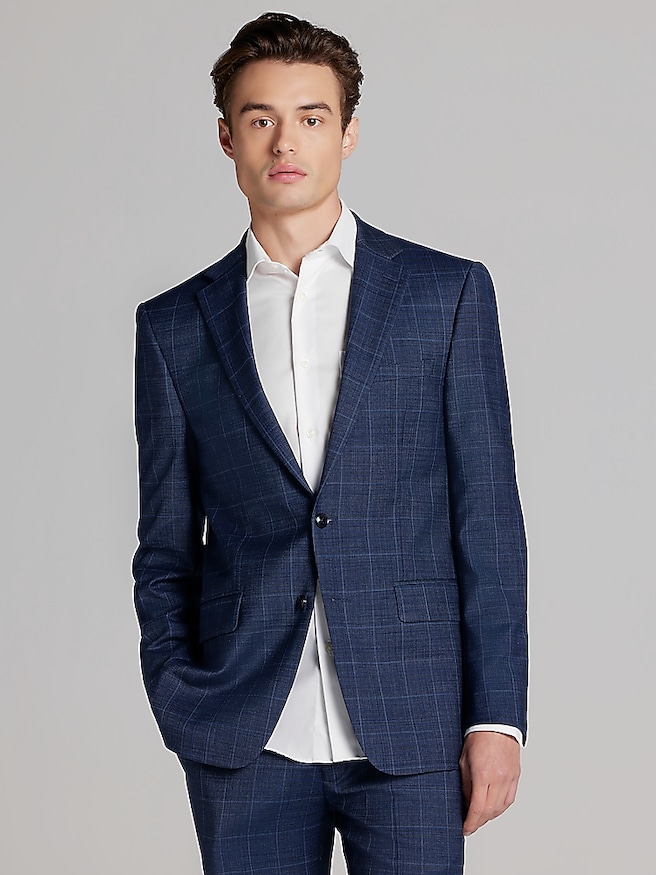
Tall wedding guest outfits work best when the entire silhouette is proportioned for a longer frame, rather than simply adding length at the trouser hem. A well-balanced outfit gives the jacket, shirt, trousers, and accessories enough room to sit where they belong, creating clean lines from the shoulders to the shoes. Tall sizing generally addresses added body and sleeve length, while big and tall sizing may also accommodate a fuller build; height alone does not determine which cut will feel right. A slender guest with long arms may need a very different fit from someone of the same height with broad shoulders and a longer torso. Jacket shoulders should lie smoothly without extending noticeably beyond the natural shoulder, and the collar should rest against the shirt collar without a visible gap. The jacket body needs enough length to cover the seat appropriately, while its waist should close without pulling into pronounced diagonal creases. Sleeve length matters just as much: a small glimpse of shirt cuff creates a deliberate finish without leaving the wrists exposed when reaching for a glass or greeting another guest. Trousers need a comfortable rise as well as sufficient inseam length, especially for sitting through a ceremony or spending time on the dance floor. A tall frame does not automatically call for an oversized jacket or loose trousers; excess fabric can obscure good proportions rather than improve them. The invitation provides the clearest direction for formality. Black tie generally calls for a tuxedo with appropriate formal accessories, while cocktail attire often suits a tailored suit and tie. More relaxed wedding settings may allow coordinated separates, provided the invitation supports that level of dress. Navy, charcoal, and other understated shades offer a versatile foundation, and subtle texture can add interest without competing with the wedding party. The strongest starting point is an outfit that respects the occasion and fits comfortably through an entire celebration.
Fabric and construction help determine how tall wedding guest outfits look after hours of sitting, standing, and moving. Wool suiting is valued for its drape and resilience, giving longer jacket fronts and trouser legs a clean line without requiring a rigid feel. A smooth worsted weave has a refined appearance suited to formal celebrations, while a subtly textured weave can bring dimension to a less formal outfit. Wool blends vary considerably, so fiber content, fabric weight, and the care label are more useful than assumptions about any single material. A small amount of stretch can support movement, but it cannot compensate for a jacket that is tight across the back or trousers that pull through the seat. Linen has a distinctive, relaxed texture and develops visible creases with wear; cotton can offer a more structured casual appearance, though it may also wrinkle at the lap and elbows. These qualities are part of the fabric’s character and should align with the wedding’s dress code. Shirt fabric deserves similar attention. Smooth cotton broadcloth looks crisp beneath a suit, while a fine twill provides subtle texture and a substantial feel. For a taller wearer, sufficient shirt body length helps keep the hem tucked during handshakes, seated dinners, and dancing. Sleeve length should allow the cuffs to stay near the wrists when the elbows bend, without bunching heavily under the jacket. Collar fit should leave comfortable breathing room while maintaining its shape beneath a tie. Details such as secure buttons, even stitching, smooth linings, and neatly finished seams contribute to durability, particularly in clothing intended for repeat wear. Trying the full outfit on together reveals more than checking each piece separately: a jacket may look balanced alone but appear too short over trousers with a lower rise, and a shirt cuff can disappear once the arms move. These relationships matter more than the size label by itself.
Finishing details bring a tall wedding guest outfit into focus without making height the center of attention. A tie should reach approximately the waistband rather than stopping several inches above it, and extra-long proportions can help when a longer torso or a larger knot uses more fabric. Tie width is most effective when it relates to the jacket lapels and the wearer’s build, rather than following a rule based only on height. A pocket square can introduce a restrained accent without matching the tie exactly, while a belt or suspenders should support the trousers without drawing attention away from the outfit. Trouser hems deserve a final check with the shoes intended for the celebration. A slight break can create a traditional finish, while little or no break produces a cleaner line; excessive fabric pooling over the shoes usually looks accidental. There should also be enough length for the trousers to fall neatly after sitting down. Dress shoes need to suit the outfit’s formality and feel comfortable over several hours, with socks long enough to maintain coverage when seated. For a broader look at dress codes and outfit combinations, Ideas For Wedding Guest Outfits provides additional context. Thoughtful care helps tailored clothing retain its shape for future celebrations. Following each garment’s care label, addressing marks promptly with fabric-appropriate methods, and allowing clothing to air after wear can reduce unnecessary cleaning. A supportive hanger helps a jacket keep its shoulder shape, while trousers stored neatly are less likely to develop distracting folds. Shirts benefit from the washing and pressing method recommended for their fabric, with particular attention to collars and cuffs. Before the event, a final fitting that includes sitting, walking, and reaching can reveal whether small alterations are needed. Sleeve and trouser adjustments may refine the finish, but major shoulder or torso corrections are more involved, making sound proportions from the start especially valuable. The result is clothing that feels appropriate at the ceremony, comfortable at dinner, and ready for the celebration that follows.