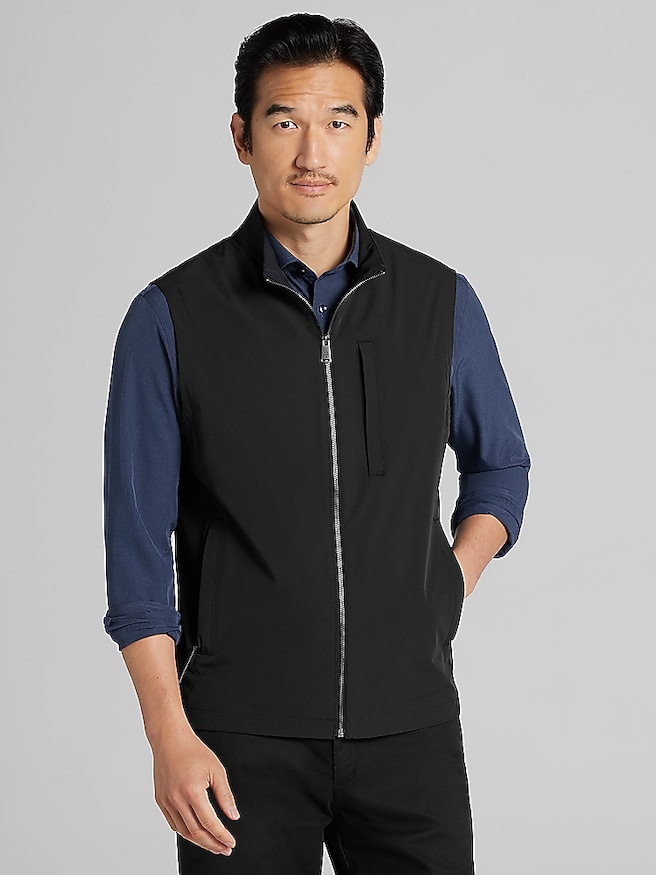
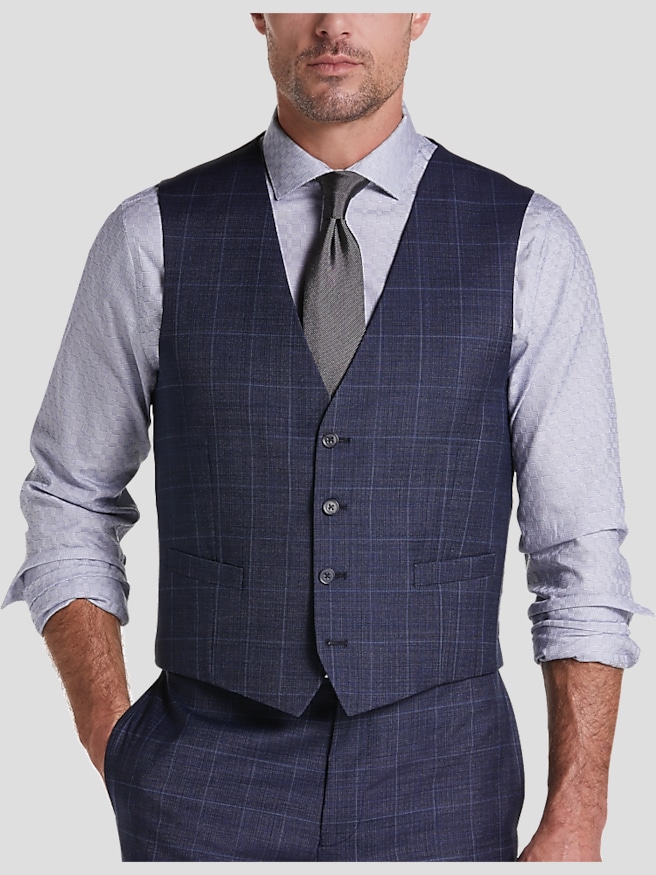
Tall men's vests are designed to give longer torsos the coverage and balance that a standard-length vest may lack, without requiring extra room through the chest and waist. The distinction is especially noticeable with tailored clothing: a vest that fits across the chest can still look too short if its front hem leaves shirt fabric visible above the trouser waistband. A well-proportioned tall vest bridges that space, creating a continuous line from the shirt and tie to the trousers. Length is only part of the fit, though. The shoulders should lie flat, the neckline should sit close without pulling, and the armholes should allow comfortable movement without exposing excessive fabric at the sides of the shirt. Across the front, buttons should close smoothly rather than creating horizontal tension lines or causing the lower edges to flare. For someone with a long torso and a lean build, added length matters more than added width; someone with a broader frame may need both. That distinction also matters when considering Men's XL Vests, since XL generally describes a larger body size rather than a dedicated tall proportion. Size charts and garment measurements help clarify the relationship between chest size, waist size, and body length, particularly because tall sizing can vary by maker and cut. Trouser rise also affects how a vest sits: a lower waistband requires more coverage than a waistband positioned closer to the natural waist. The most convincing fit works while seated as well as standing, whether the setting is a desk, a dinner table, or a wedding ceremony. An adjustable back strap can refine the waist on designs that include one, but it cannot correct a vest that is too short or too tight through the chest. Tall proportions should look intentional, with enough length to cover the waistband and enough shape to avoid a loose, boxy outline beneath a jacket.
The appeal of tall men's vests extends beyond completing a three-piece suit. A tailored vest brings definition to a dress shirt and trousers, making an outfit feel finished even when the jacket comes off at a reception or business dinner. For office presentations, interviews, and other professional settings, smooth fabrics and restrained colors create a composed appearance without demanding elaborate accessories. Charcoal, navy, and gray are versatile foundations, while subtle checks and textured weaves add depth when the rest of the outfit stays simple. A coordinated suit vest creates the most continuous look when its fabric, color, and finish match the jacket and trousers. A contrasting vest makes a separate statement, so the contrast usually looks more deliberate when it is clear rather than an almost-match between two similar shades. Texture can do much of that work: a softly textured vest against smooth trousers gives the outfit dimension without relying on a bold pattern. For weddings, graduations, anniversary dinners, and other celebrations, a vest can provide a polished focal point while leaving room for a tie, pocket square, or boutonniere to carry the occasion's color. Formal waistcoats belong to a more specific tradition and should complement the tuxedo and stated dress code rather than serve as a casual substitute for formalwear. Less structured woven or knit vests offer another direction, bringing shape to an open-collar shirt and chinos without the formality of a complete suit. The neckline influences the overall effect, too: a deeper opening reveals more of the shirt and tie, while a higher opening puts more emphasis on the vest itself. Button placement, pockets, and the shape of the front points all contribute to its visual balance on a taller frame. With a jacket, the vest should sit comfortably beneath the lapels without bunching at the armholes. Worn on its own, it benefits from a neat shirt fit, since excess fabric gathered around the waist can interrupt an otherwise clean silhouette.
Materials and construction help determine how a tall vest feels, holds its shape, and stands up to repeated wear. Wool is valued in tailored clothing for its drape and resilience, making it a useful choice when a crisp outline matters. Wool blends can combine those qualities with other performance characteristics, depending on their fiber content and construction. Cotton offers a familiar feel and a more relaxed character, while linen brings visible texture and natural creasing that suit an intentionally less formal outfit. Polyester blends may resist wrinkles, and a small amount of stretch can add flexibility when sitting, reaching, or moving through a long event. Neither fiber content nor stretch alone guarantees comfort; the cut, lining, seam placement, and weight of the fabric matter just as much. A smooth lining helps the vest move over a shirt, while secure buttons, even stitching, and neatly finished pocket openings are useful signs of careful construction. On a tall frame, a longer garment still needs balanced shaping so that added fabric does not collect at the lower back. Durability also depends on wearing the right size, since constant strain at buttons and side seams can shorten a garment's useful life. Care should follow the sewn-in label, especially for lined and structured vests whose outer fabric and interior components may respond differently to washing. Machine washing is appropriate only when the care instructions allow it; tailored pieces may require professional cleaning. Between cleanings, suitable fabrics can benefit from gentle brushing, airing, and prompt attention to small marks using the recommended care method. Hanging a structured vest with its shape supported helps prevent avoidable creasing, while knit styles may call for folded storage to limit stretching. As a gift, a tall vest can be a thoughtful addition for someone who regularly wears dress shirts, attends formal events, or appreciates a more finished everyday outfit. Confirming both chest size and torso length makes that choice more personal and practical, giving the recipient a piece that fits their proportions rather than simply a larger version of a standard size.