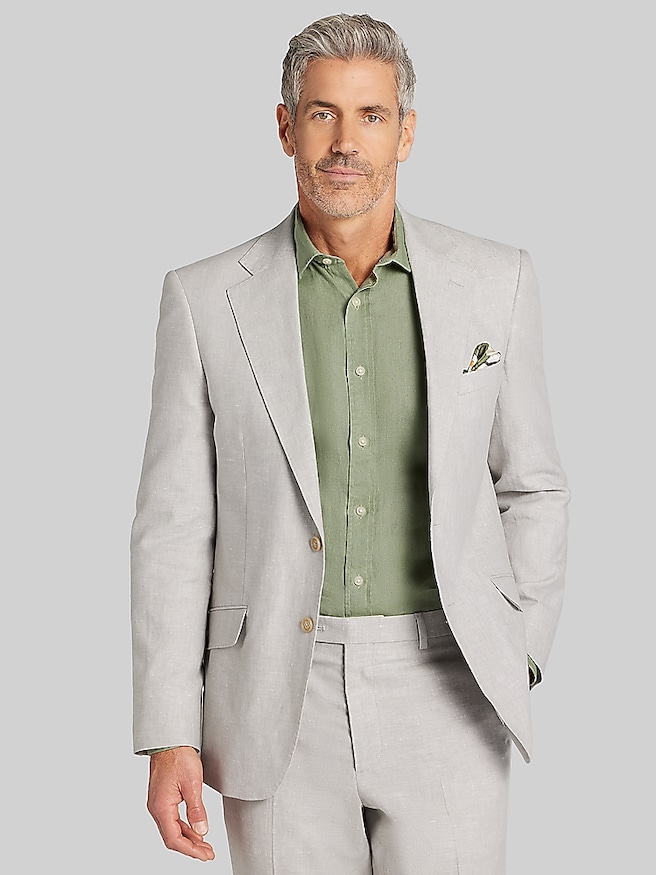
Tailored business suits bring a polished sense of purpose to the work wardrobe, balancing professional structure with the comfort needed for long days, commutes, presentations, and client meetings. In this collection, the word “tailored” describes a clean, refined fit rather than a single design formula: the jacket should follow the natural line of the shoulders, the chest should lie smoothly without pulling, and the trousers should sit securely while allowing easy movement. A well-proportioned suit can make an ordinary morning feel more organized, from the quiet routine of buttoning a shirt before sunrise to the confident stride into an important meeting. Charcoal gray and deep navy remain dependable choices because they pair easily with white, blue, and subtly patterned shirts while moving comfortably between formal offices, conferences, dinners, and professional celebrations. Black can offer a more traditional, dress-forward appearance, while medium gray and understated patterns add variety without becoming distracting. When choosing among tailored business suits, consider the rhythm of the wearer’s schedule, the formality of the workplace, and the rest of the wardrobe already hanging in the closet. A versatile suit should work with several shirts, ties, shoes, and belts, giving it a useful place in a weekly rotation rather than reserving it for rare occasions. Those building a first professional wardrobe may appreciate a classic solid color and a restrained silhouette, while someone with several dependable staples may prefer a subtle texture, windowpane, or refined stripe for added character. For further inspiration across contemporary cuts and polished proportions, explore Modern Tailored Suits.
Fabric plays a major role in how a suit looks, feels, and performs throughout the day. Worsted wool is a long-standing choice for business wear because its smooth finish, resilience, and natural breathability suit a wide range of indoor environments and changing conditions. Wool blends can offer added ease of care, stretch, or lighter weight, which may be helpful for frequent travelers and busy schedules. During the cooler months, a substantial wool cloth can create a comfortable, composed appearance when layered over a dress shirt and beneath a topcoat. As temperatures shift indoors and out, lighter constructions and breathable fabrics can help maintain comfort without sacrificing a crisp silhouette. Look closely at the jacket’s construction as well as its fabric. A half-canvas or full-canvas interior can give the front of the jacket a natural drape and allow it to settle more gracefully over time, while a fused construction may offer a neat profile and accessible ease of care. Details such as notch or peak lapels, flap or welt pockets, jacket vents, and trouser pleats influence the overall impression. Notch lapels and a two-button front often create an adaptable business profile; peak lapels bring a more pronounced, formal line; and a center or side vent can affect how the jacket moves when walking or sitting. The best choice depends on personal preference, workplace expectations, climate, and how often the suit will be worn. A tailored suit should look composed from every angle, with sleeves ending near the wrist so a small edge of shirt cuff shows, trousers breaking neatly over the shoes, and jacket buttons closing without strain. These small proportions are what turn a good-looking garment into one that feels natural to wear.
Fit remains the most important consideration, especially when comparing ready-to-wear silhouettes with made-to-measure or more extensively customized options. Ready-to-wear sizing provides a practical starting point, and modest adjustments to the sleeves, trouser hem, waist, or jacket sides can make a meaningful difference. Made-to-measure services typically begin with a standard pattern that is adjusted using individual measurements, offering more control over dimensions, fabric, and styling details. Bespoke tailoring goes further by creating a new pattern for the wearer and refining the fit through multiple fittings, a process suited to someone seeking a highly personalized garment and a long-term wardrobe investment. Whichever approach fits the occasion and budget, take measurements carefully and consider how the suit will be worn in real life. A jacket that looks excellent while standing should also allow the wearer to reach for a briefcase, sit through a meeting, climb stairs, and move through a busy station without feeling restrictive. Tailored business suits can support many professional milestones, including a first office role, a promotion, an interview, a conference, or a significant presentation. They can also make a thoughtful gift for someone beginning a new career or preparing for an important transition, particularly when the giver knows the recipient’s preferred fit, color, and workplace setting. Pairing the suit with a clean shirt, a restrained tie, polished leather shoes, and a coordinated belt creates a complete appearance without unnecessary effort. With proper care—regular brushing, airing between wears, careful pressing, and professional cleaning only when needed—a well-chosen suit can remain a dependable part of the wardrobe through changing seasons and evolving responsibilities.