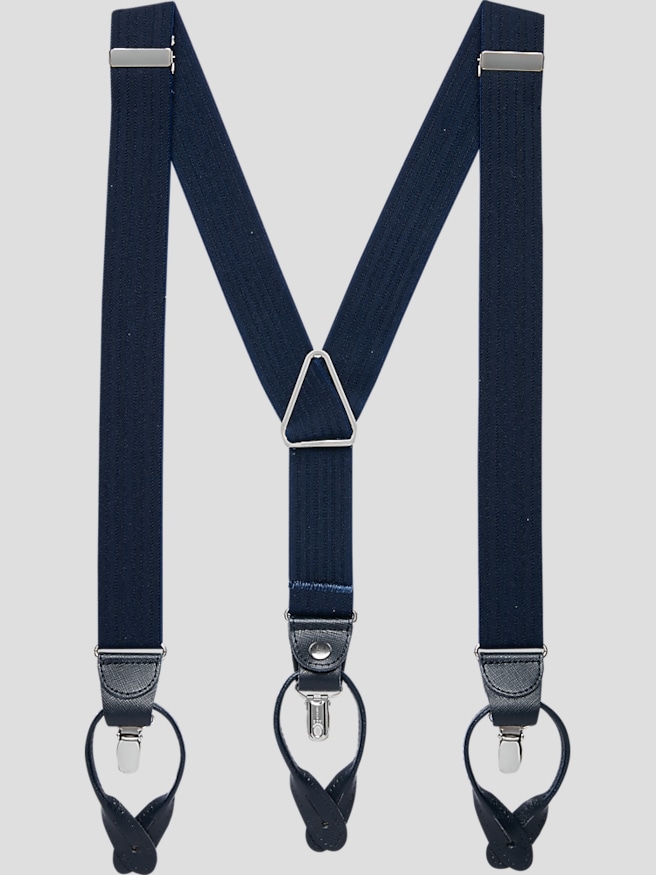
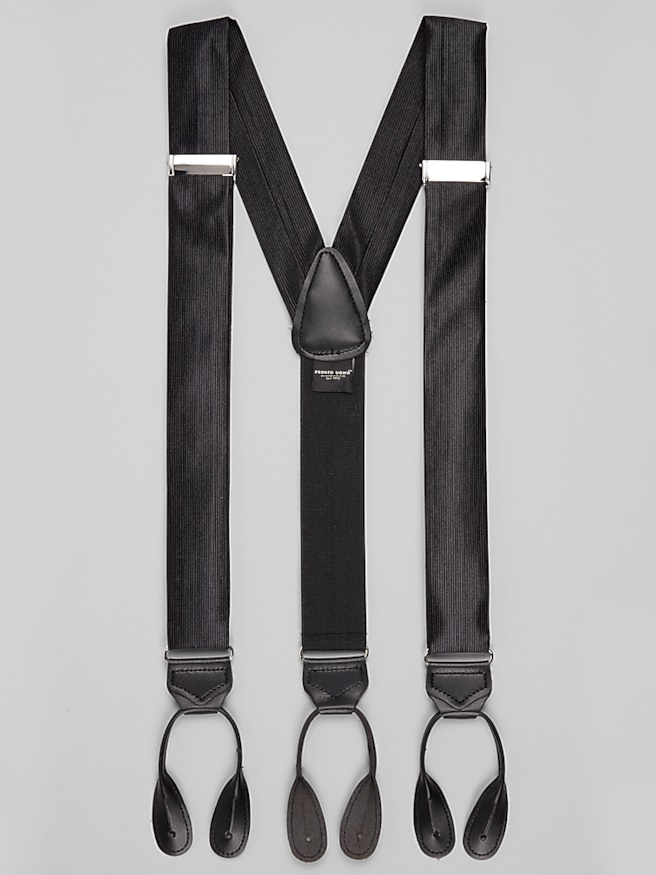
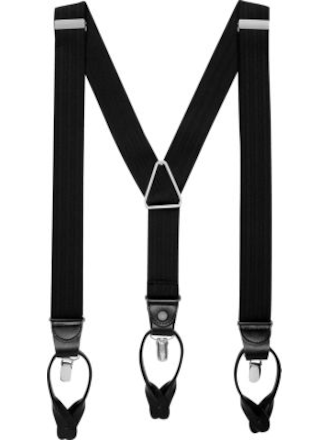
Suspenders for suits combine practical support with a distinctive finishing detail, keeping trousers comfortably positioned while adding a clean vertical line to a tailored outfit. Unlike a belt, which holds the waistband around the hips, suspenders support trousers from the shoulders. That difference can be especially useful with higher-rise dress trousers, a fuller-cut suit, or a waistband that feels comfortable standing but needs extra stability when sitting. The result should feel secure rather than tight: the straps rest against the shirt, the waistband stays level, and the trouser legs hang without being pulled upward. Adjustable straps help accommodate torso length, trouser rise, and the way an outfit moves through an ordinary day. A well-balanced fit matters during a presentation, a long dinner, or a wedding ceremony, when constantly adjusting a waistband would interrupt an otherwise composed appearance. Button-on suspenders connect to buttons secured at the trouser waistband, often on the inside, creating a traditional attachment that works particularly well with tailored clothing. Clip-on styles attach directly to the waistband and can be convenient for trousers without suspender buttons, although the clips should grip securely without excessive pressure on the fabric. Some dress trousers include the necessary buttons; others may need a tailor to add them in positions that distribute tension evenly. Y-back designs bring the straps together at one rear attachment, while X-back designs cross behind the shoulders and use two rear attachment points. Both can work with a suit, with comfort depending more on strap placement, adjustment, and the individual’s proportions than on the shape alone. Strap width also changes the overall impression. Narrow straps create a lighter visual accent, while wider straps offer a more substantial look and spread contact across a broader area of the shoulders. Because suspenders already support the trousers, a belt is generally unnecessary and can add visual clutter. Worn beneath a jacket, the straps remain discreet; when the jacket comes off, they become part of the outfit rather than an afterthought. That flexibility makes them useful for professional settings, celebrations, and anyone who appreciates traditional tailoring with a personal touch.
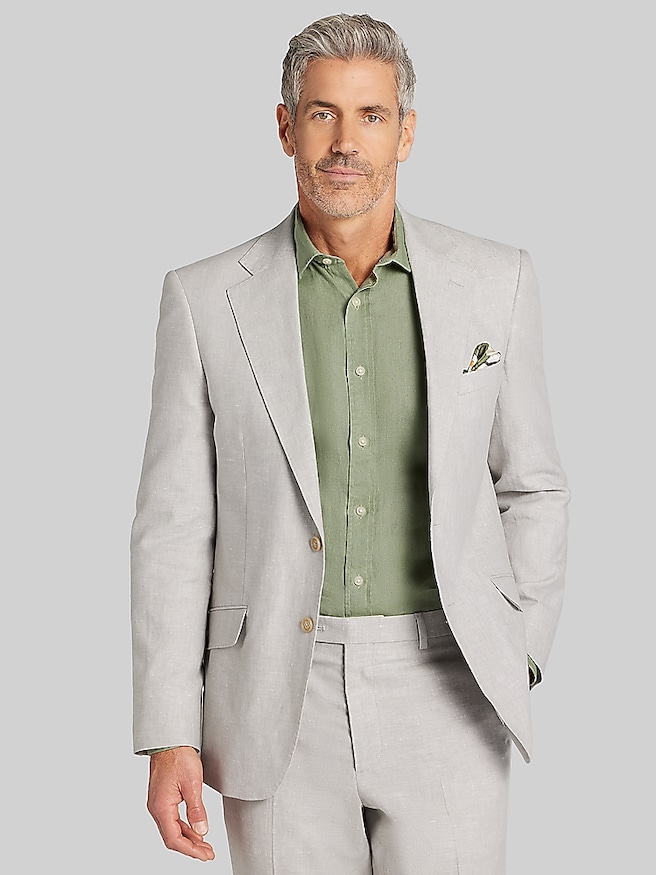
Materials and construction influence how suit suspenders feel, how they hold their shape, and how naturally they pair with the rest of an outfit. Elastic straps provide give during movement, which can make sitting, reaching, and walking more comfortable. Woven straps can offer a firmer feel, sometimes with an elastic section at the back to provide flexibility. Depending on their construction, straps may incorporate polyester, cotton, silk, or other fibers, each bringing its own texture and surface character. A smooth finish tends to sit quietly against a dress shirt, while a textured weave adds depth when the suspenders are visible. Leather attachment tabs lend a traditional appearance to button-on styles, and their flexibility helps them lie neatly at the waistband. Metal adjusters and clips should feel sturdy, with smooth edges and mechanisms that remain in place after adjustment. Reinforced stitching at attachment points is another useful construction detail, since these areas handle repeated tension as the wearer moves. Color can either blend into the outfit or introduce a controlled accent. Navy suspenders with a blue suit create a cohesive effect, while burgundy against a pale shirt adds definition without overwhelming the tailoring. Black works well with many dressier combinations, and subtle stripes or small repeating patterns can echo the scale of a tie or pocket square. Exact matching is not essential; a shared color or compatible pattern often looks more considered than making every accessory identical. For wedding receptions and formal dinners, Formal Party Suit Suspenders complement outfits built around polished tailoring and carefully chosen details. The intended dress code still matters, particularly when deciding between a business suit and more formal evening attire. Suspenders can remain largely hidden beneath a jacket or waistcoat, allowing a distinctive color to be personal rather than prominent. With a patterned shirt, quieter straps give the outfit room to breathe; with a plain shirt, a more expressive weave or color has a clear backdrop. The strongest combinations feel connected from the shoulders to the shoes without requiring every detail to compete for attention.
Everyday comfort and long-term durability depend on both fit and care, especially when suspenders become a regular part of a suit wardrobe. Straps should follow a natural path over the shoulders rather than sit close to the neck or slide toward the upper arms. Too much tension can pull at the waistband and make the shoulders feel constrained; too little can leave the trousers shifting during movement. A useful fit feels consistent while standing, sitting, and taking a few normal steps, with enough flexibility to avoid tugging at the shirt. For someone who spends much of the day at a desk, that seated comfort may matter more than how the straps look in a mirror. For someone attending a ceremony followed by several hours of dining and dancing, secure attachments and balanced adjustment become especially valuable. Suspenders cannot correct trousers that are substantially too large or too small, so a comfortable waistband and appropriate trouser rise remain the foundation. Care should follow the instructions provided for the material and construction, since elastic, woven fabric, leather, and metal components may require different treatment. Spot cleaning can address a small mark without soaking the entire accessory, when permitted by those instructions. Excessive heat can damage elastic and affect some finishes, making gentle drying and sensible storage important. Leather tabs should not be left damp, and metal clips benefit from being kept clean and dry. Hanging suspenders without stretching them, or storing them loosely arranged, helps avoid unnecessary strain and sharp creases. Periodic checks of stitching, adjusters, and attachment points can reveal wear before it interferes with dependable support. As a gift, suit suspenders suit a graduate preparing for interviews, a groom refining wedding attire, or a father who enjoys a well-tailored wardrobe. The recipient’s usual trouser style is worth considering, particularly whether the waistband has buttons and how much strap length is needed. A restrained color can become a versatile wardrobe addition, while a distinctive pattern may feel more personal for someone who already wears suspenders. Whether chosen for a milestone occasion or repeated professional use, the appeal lies in the same combination: comfortable support, durable construction, and a finishing detail that feels intentional.