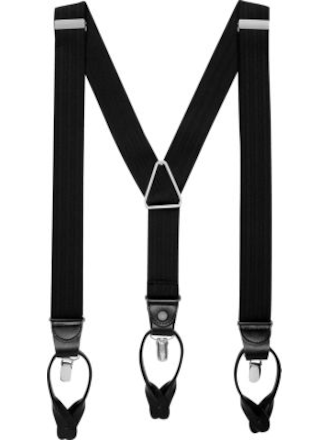
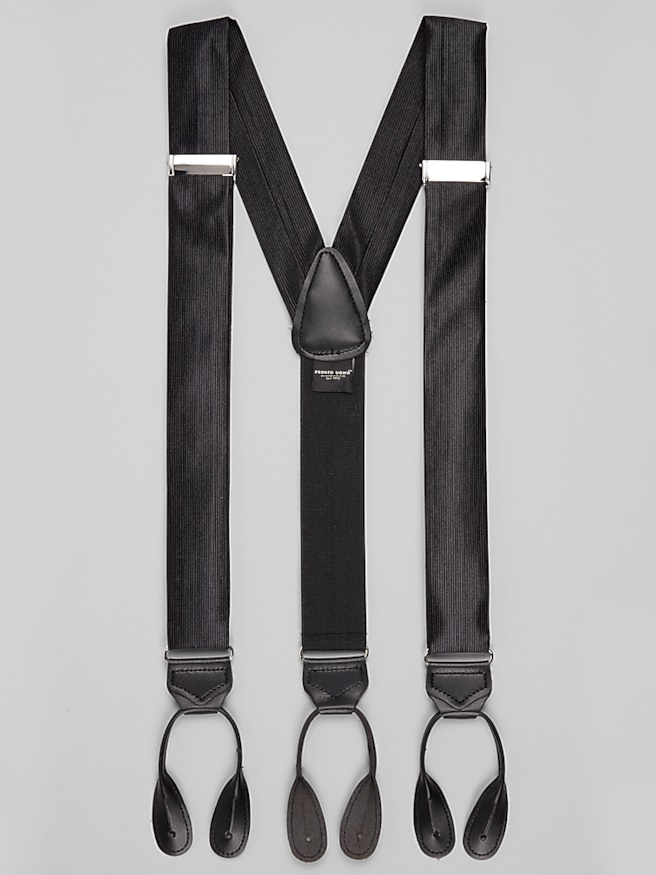
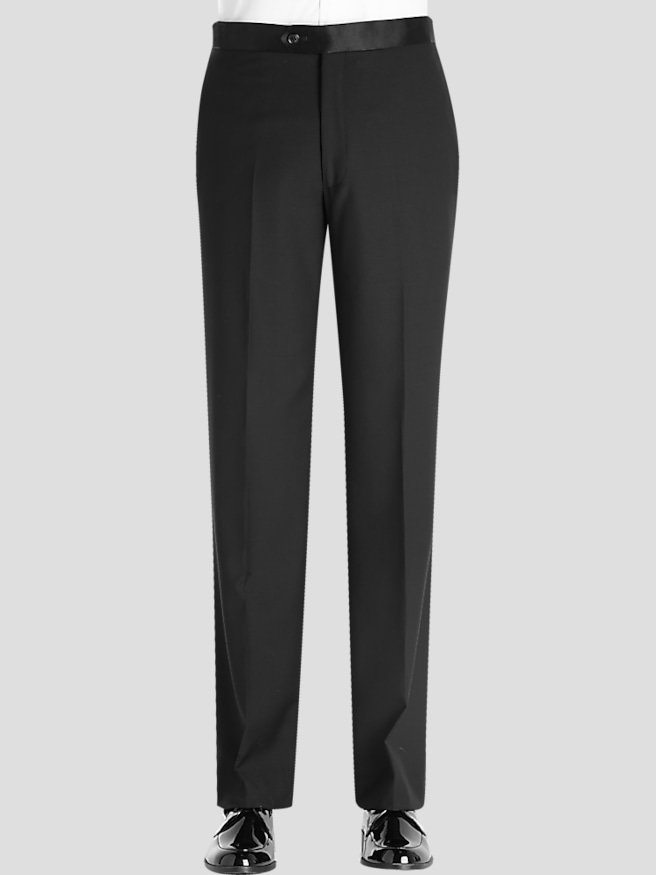
Suspenders for tuxedos, also called formal braces, support tuxedo trousers from the shoulders so the waistband stays level and the fabric hangs cleanly. They are a traditional choice for formal trousers, which are often made without belt loops and sit higher on the waist than everyday pants. Rather than tightening a belt around the middle, braces help maintain the intended line from the waistband through the leg, with enough ease for sitting through a ceremony or moving across a dance floor. A well-adjusted pair should hold trousers in position without pulling the waistband upward or drawing the straps tightly into the shoulders. The effect is understated: a steady waistband, a clean trouser line, and less need to readjust between photographs, dinner, and dancing. For a black tuxedo, black suspenders are the most straightforward choice, while similarly restrained colors can complement midnight blue or other formal tailoring. Suspenders are usually concealed beneath the jacket, and a cummerbund or formal waistcoat helps cover the waistband and front attachments. They do not need to become another matching accent alongside the bow tie and pocket square. A satin finish can echo the sheen of satin lapels, while a ribbed grosgrain surface relates naturally to grosgrain lapel facings. These connections work best as subtle similarities rather than a requirement that every fabric look identical. White braces also have a place in formal dress, particularly with white-tie attire, although that dress code calls for a tailcoat rather than a standard tuxedo. For weddings, black-tie celebrations, charity galas, and formal performances, a quiet, purposeful design generally suits the setting better than a novelty pattern. A groom and wedding party can keep their visible accessories coordinated while choosing suspenders for individual comfort underneath. Formal braces should complement the tailoring and support the trousers, not compete with the rest of the outfit.
Attachment style is an important detail when comparing tuxedo suspenders. Button-on designs connect to buttons sewn into the inside of the trouser waistband, creating a discreet attachment without metal clips on the fabric. A common arrangement uses six buttons: four at the front and two at the back. Button Suspenders are particularly well suited to trousers already fitted with suspender buttons, and a tailor can often add properly positioned buttons to a compatible waistband. The placement matters as much as the presence of the buttons; straps should rise cleanly rather than pull the front of the trousers inward or twist around the sides. Clip-on designs can be useful when the waistband has no buttons, but the clips should close securely and sit flat without crushing the fabric. Some convertible designs accommodate either attachment method, offering flexibility across trousers with different waistbands. Materials influence both appearance and feel. Silk offers a refined look and soft hand, while synthetic woven fabrics can provide a similarly polished appearance with different care requirements. Satin describes a smooth, lustrous weave rather than a single fiber; grosgrain has a distinct ribbed texture that gives the straps more visual definition. Elastic sections allow some movement, and a woven front paired with an elastic back can combine a dressy appearance with flexibility. Leather or fabric button tabs should be neatly finished and securely joined to the straps. Smooth adjustment hardware, consistent stitching, and tidy edges are practical signs of careful construction, especially at the points that carry tension. A Y-back brings the shoulder straps together into one rear strap, while an X-back crosses behind the shoulders and continues to two rear attachment points. Neither shape guarantees a better fit; the more useful comparison is how the straps lie on the body and how evenly they support the waistband. Comfortable construction matters most once the jacket is on and attention turns to the occasion.
Fit depends on both torso length and the rise of the trousers, not height alone. Someone with a longer torso or lower trouser waistband may need more strap length than another person of the same height. Adjustable straps should offer room to fine-tune the position without leaving the slides pressed awkwardly near the shoulders or against the waistband. Strap width also affects the feel: a moderate width can spread pressure comfortably, while a very narrow strap may feel more noticeable over a long evening. A formal pair should lie flat over a dress shirt and stay clear of the neck, with the front and back balanced rather than one side doing all the lifting. Trying suspenders with trousers at their intended rise makes it easier to judge both standing and seated comfort. Straps that become taut when seated may need more length, while persistent pulling can indicate that the trousers themselves need adjustment. Suspenders and a belt are not meant to be worn together; trousers that already fit well through the waist and seat give braces the best foundation. For repeat wear, the material-specific care label takes priority over a general cleaning routine. Silk, elastic, leather tabs, and metal hardware may require different treatment, so a mixed-material design deserves particular attention. Spot cleaning only when permitted, avoiding prolonged heat exposure, and letting any dampness dry fully can help preserve the finish and stretch. Flat storage or hanging without sharp folds helps keep straps neat. Checking stitching, tabs, buttons, and fasteners before an important event is especially useful for a pair worn only on formal occasions and put away between events. As a gift for someone preparing for a wedding, attending black-tie functions, or building a formal wardrobe, suspenders are most useful when the attachment style and adjustable length suit the recipient’s trousers and build. The best pair becomes a reliable part of dressing: comfortable through the evening and unobtrusive in the finished look.