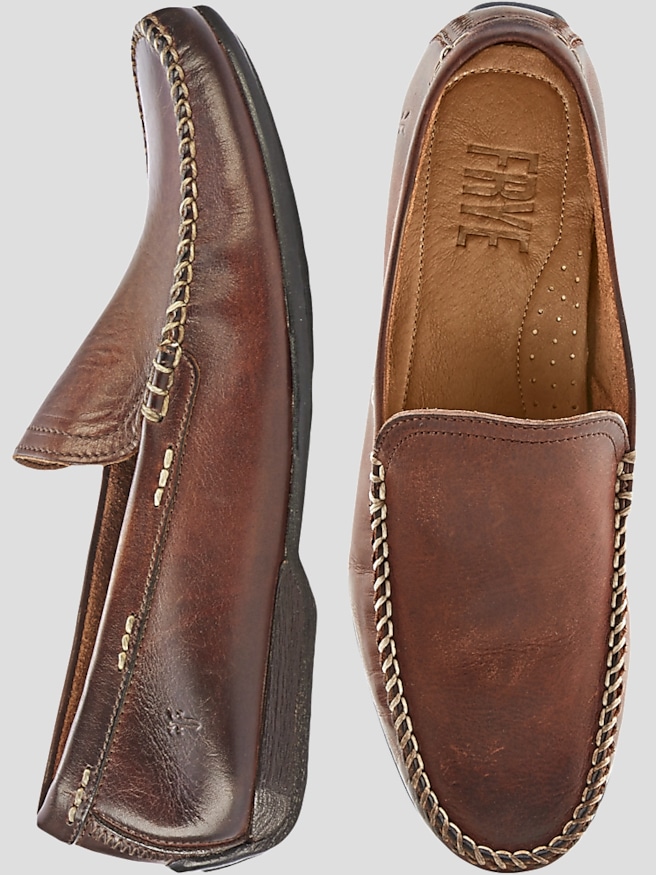
Summer leather loafers bring some of the polish of a dress shoe to outfits built around lighter fabrics and simpler layers. Their slip-on shape leaves more of the ankle exposed than most lace-ups, so the cut of the trousers and the finish of the leather have an especially noticeable effect. A smooth brown penny loafer works with cotton chinos on a patio and with a navy suit at an outdoor reception where the dress code allows. A slim black loafer with a low-profile sole looks more at home with a pressed trouser in an office. Rounded toes, visible stitching, and thicker soles give a loafer a more casual look that holds its own with straight-leg chinos or dark jeans. A sleeker toe and a close-trimmed sole sit neatly under tailored trousers without competing with the crease. Smooth leather can take a light polish for dressier occasions, while grained leather has enough texture to fit in with everyday cotton and denim and can make small scuffs less noticeable. Suede is leather, too: Its brushed surface softens the look of even a dark shoe. The soft nap of Men's Summer Suede Loafers pairs well with the visible weave of linen trousers or an open-collar shirt. Color changes the effect as much as texture does. Tan keeps the contrast low with stone or cream trousers, while burgundy adds depth to navy without the formality of glossy black. For a daytime wedding with a relaxed dress code, dark brown leather can give a pale linen suit some definition; for a more formal ceremony, a lace-up may still be the better match. Trouser length matters, too. A hem that just meets the top of the shoe shows the shape of the loafer, while extra fabric can bunch over the vamp and hide the details that set it apart from other dress shoes.
Fit matters more in a loafer than it might in a lace-up because there are no laces to tighten across the top of the foot. The vamp, or the part of the shoe that covers the instep, needs to hold the foot securely without pressing down. The widest part of the foot should sit where the shoe is widest and where it naturally bends during a step. There should still be enough room to move the toes without brushing the front or squeezing them together. A little heel movement can happen when the sole is new and stiff, but a heel that rises substantially with each step is likely to rub. Leather may soften and ease across the forefoot with wear, but it will not gain meaningful length. Trying loafers with the socks intended for regular wear gives a better sense of fit than relying on the number alone. Low-cut liners preserve the look of a bare ankle and add a layer between skin and leather, while fine dress socks make sense with tailored trousers or for long stretches indoors. Feet can swell after hours of standing or walking, so a snug fit that feels fine first thing in the day may be less forgiving by dinner. Construction also changes how a loafer feels when it has been on the foot for several hours. An unlined upper may feel lighter and bend more readily, while a lined shoe generally has a more structured feel; padding and sole thickness also play a part. A slim leather sole keeps the profile neat for dressier settings, though a smooth sole can be slippery on slick tile. For a day that involves station stairs, long sidewalks, or a reception on uneven pavement, a rubber sole with some tread can provide more grip without making the shoe look bulky. A cushioned footbed can be welcome on those days, but it cannot make up for a heel that slips or a toe box that pinches.
A pair of leather loafers can keep its shape and finish through repeated summer wear with some simple upkeep. Dust collects around the stitching and along the edge of the sole, where a soft brush can reach more easily than a cloth. For smooth leather, a wipe with a slightly damp cloth is often enough after ordinary wear. A small amount of conditioner suited to the finish can help when the leather begins to feel dry, and a compatible polish can tidy up scuffs on a dressier pair. It makes sense to test either one in a less visible spot first, since some finishes darken. Suede needs a lighter touch: Let it dry fully before brushing, and use a suede brush rather than smooth-leather cream, which can flatten the nap and leave a mark. If a pair gets damp on a walk home, letting it air-dry away from direct heat is kinder to the leather than setting it beside a vent. Giving shoes a day to dry between wears helps the lining air out, especially after a long day in low-cut socks. Shoe trees that fit without stretching the upper help the leather hold its shape in storage. For pairs worn often, catching heel wear before it reaches the upper can make a repair simpler, and some sole constructions allow for resoling. As a gift, summer loafers make the most sense for someone whose shoe size and fit preferences are familiar. A person who dresses up for work might get more use from smooth leather in a color that matches the trousers already in rotation. Someone who spends weekends in chinos and knit polos might favor a softer upper and a less formal sole. Even when the size is known, the shape of a favorite pair is a useful clue: A little more room across the toes or a closer fit at the heel can make the difference between a shoe that looks right with an outfit and one that stays comfortable through the whole day.