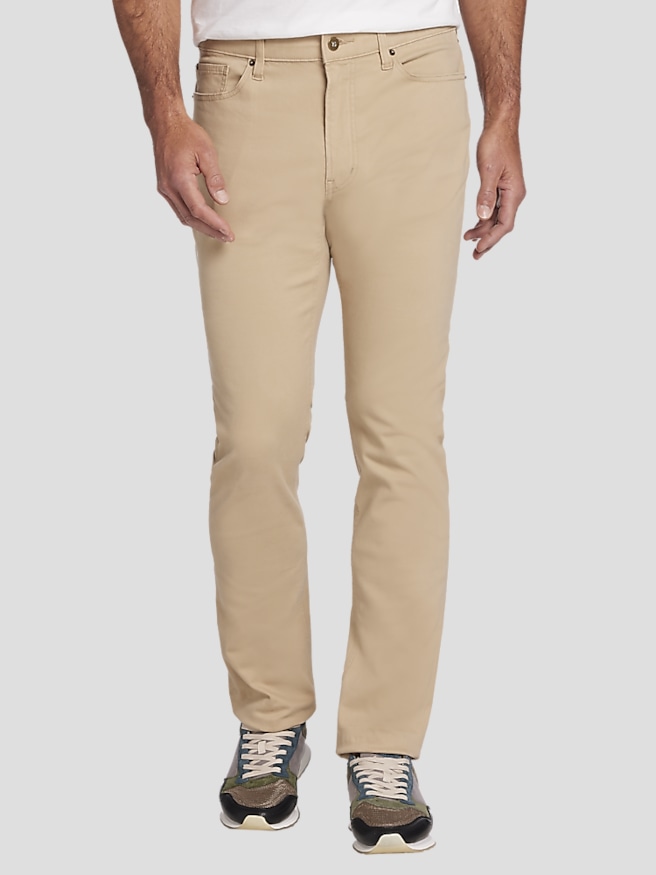
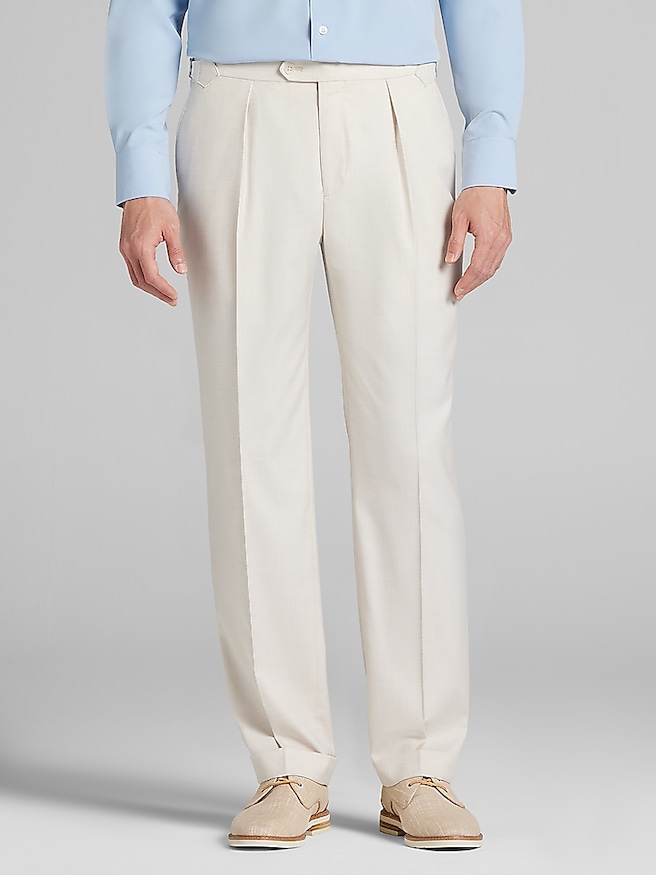
The best summer fashion trousers pair breathable, lightweight fabric with enough room through the seat and thighs for air to circulate. Linen has an airy feel and a slightly uneven texture, and the creases that develop across the lap are part of its relaxed look. Lightweight cotton offers a smoother finish, though the weave matters as much as the fiber: a light cotton twill can feel easy to wear in the heat, while a tightly woven, heavier twill can feel more substantial. Seersucker has a puckered surface that sits away from the skin, so it tends to cling less on humid days. Linen blends can soften the texture or hold a crease better than pure linen, depending on what’s blended with it. For dressier settings, lightweight wool in an open weave offers airflow and a clean drape without looking as casual as linen. Fabric weight only tells part of the story. A dense weave or full lining can make even a thin trouser feel warmer, while an open weave or partial lining can help it feel less stuffy. Light colors such as stone and sand have a relaxed look with a knit polo or an open-collar shirt, but some pale fabrics become more sheer in direct sun. Pocket outlines are a useful clue to how much coverage the cloth offers. Midtone shades such as olive or slate can keep the outfit understated, while navy or charcoal work well with a tailored jacket for an office or a dressier dinner. Surface texture makes a difference, too: the same shade of navy can look crisp in smooth wool and more laid-back in slubby linen. That distinction is especially useful when the trousers need to look polished beside a jacket but still feel at home with shirt sleeves rolled up.
A relaxed leg can feel noticeably cooler on a long walk, but summer trousers don’t have to be wide from hip to hem. A straight cut offers room throughout the leg, while a gentle taper keeps some space at the thigh and narrows toward the ankle for a neater line. A waistband that sits securely without digging in is especially useful on a flight or through a long dinner. Pleats can give the fabric room to open across the lap when seated, while a flat front offers a simpler profile. Whichever cut suits the occasion, the front pockets should lie flat when standing, and the fabric should move freely when sitting or taking a full stride. If the pockets pull open or the cloth catches across the thighs, a roomier cut through the seat and upper leg will usually feel better than sizing up at the waist alone. Hem length matters most with the shoes that will actually be worn. A hem that just grazes the top of a loafer looks tidy with a jacket; a slightly shorter hem can keep the fabric from bunching over a low-profile sneaker. For a vacation with plenty of walking, a backyard cookout, or an afternoon on the patio, Casual Summer Pants are a natural fit with polos, tees, and unstructured shirts. A smooth fabric and a clean hem make lightweight trousers easier to pair with a button-down at the office. For an outdoor wedding or a formal event, the dress code takes priority: a linen trouser may fit a relaxed venue, while a more structured fabric with a pressed crease better suits a tailored outfit. A little extra room at the thigh can be just as useful through a ceremony and dinner as it is on a walk through town.
Care and construction affect how well lightweight trousers hold up, particularly when a pair gets packed for trips or worn several days in a week. A thin fabric can still be durable when the seams are even and the pocket openings and belt loops are reinforced. Those small details matter if the pockets regularly carry a phone or keys. For machine-washable cotton and linen, a cool wash and air-drying can help limit shrinkage and keep the finish looking even, but the care label takes precedence. Some tailored trousers call for professional cleaning to protect the fabric, waistband, or lining. Linen doesn’t need to look freshly pressed to look intentional; hanging it after wear can soften the deeper folds, and light steaming, if the label allows, can freshen the finish without removing all of its texture. Lightweight wool often benefits from a brush and time on a hanger between wears. For travel, fabric that springs back after being folded is helpful when there’s no time to press an outfit before dinner. For a workweek rotation, a cloth that can handle repeated sitting and keeps its shape at the knees may be a better choice than the lightest possible fabric. Summer trousers can also make a practical gift for someone planning a warm-weather trip or building a wardrobe for a more relaxed office. A known waist size and inseam are a good start, but the rise and cut of a pair the recipient already wears comfortably can tell more about what will fit. The most useful pair suits the setting and feels good through the whole day, whether that means walking a few extra blocks for lunch, sitting through a reception, or heading straight from the office to an outdoor table.