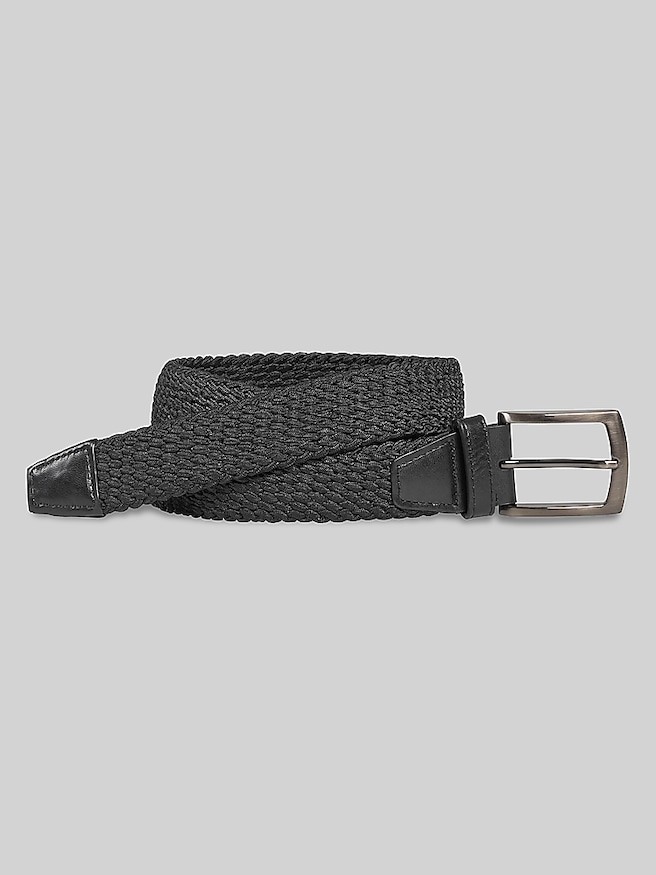
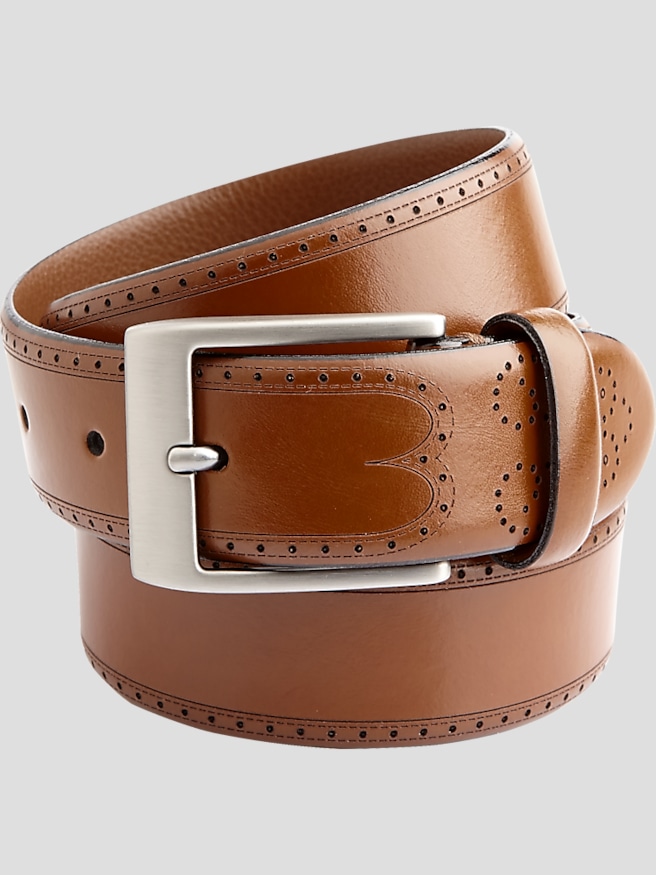
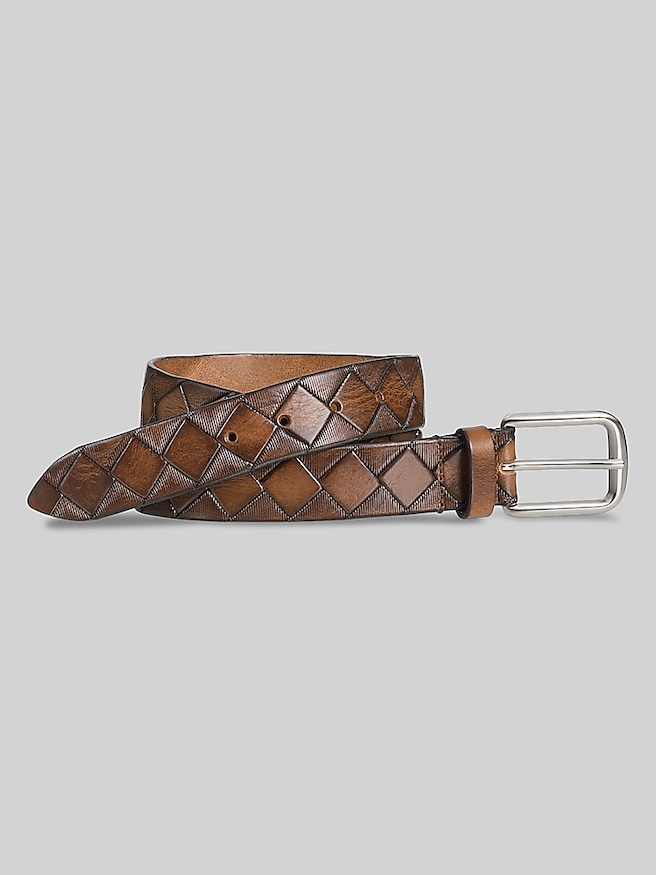
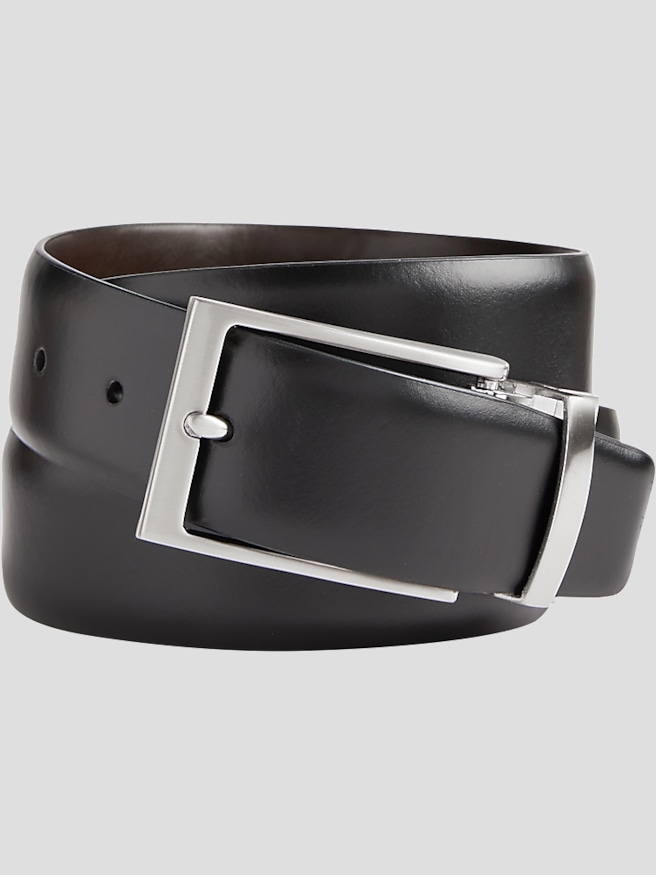
Summer belts bring lighter textures, flexible construction, and understated hardware to outfits built around linen trousers, cotton chinos, shorts, and relaxed denim. Their defining qualities are less about a strict season and more about proportion: a belt should support the waistband without adding unnecessary bulk to lightweight clothing. Woven canvas, braided leather, and stretch webbing offer distinct ways to achieve that balance, while smooth leather with a slim profile keeps dressier outfits looking clean. Canvas has a matte, casual finish that works naturally with washed cotton and canvas sneakers. Braided leather adds depth through its interlaced texture, making it a useful bridge between tailored trousers and an open-collar shirt. Stretch-woven construction can provide a little give while sitting, walking, or traveling, although the amount of stretch depends on the material and design. Neither a woven surface nor a lighter appearance guarantees breathability; backing, thickness, and fiber content also shape how a belt feels against the waistband. Tan, cognac, medium brown, navy, and muted neutral shades complement the softer colors often associated with warm-weather clothing. A tan belt against stone chinos creates a gentle contrast, while dark brown leather gives pale linen trousers a more defined finish. Black remains a practical choice for charcoal trousers, dark denim, and outfits anchored by black shoes. Smaller buckles and flatter straps tend to sit comfortably beneath an untucked shirt without creating a pronounced bump. Brushed metal offers a quieter finish, while polished hardware can suit a more dressed-up setting. For an outdoor gathering, a textured belt can echo the relaxed character of loafers and a cotton shirt; for an office day, smooth leather keeps the transition from waistband to tucked shirt crisp. These details make men's summer belts useful beyond hot afternoons, especially when lightweight trousers remain in rotation beneath a sweater or casual jacket.
Fit determines whether a belt feels like a natural part of an outfit or something that needs adjusting throughout the day. The strap should pass easily through the belt loops, lie flat, and fasten securely without pulling the waistband into folds. A belt supports well-fitting trousers; it cannot fully correct a waist that is several sizes too large. Width matters as much as length. Narrower straps often work well with tailored trousers and smaller loops, while moderately wider straps have enough visual weight for chinos, shorts, and denim. Actual loop openings are a better reference than garment labels alone, since even casual trousers can have compact loops. Belt sizing also varies by maker and fastening style. A common starting point is a labeled belt size about two inches above the trouser waist size, but the size chart and a measurement from a comfortably worn belt provide a more reliable check. For a conventional buckle, measuring from the point where the strap meets the buckle to the most-used hole helps establish the working length. A comfortable fit generally leaves room to adjust in either direction and enough strap to tuck neatly into the keeper without a long, loose tail. Some braided designs allow the buckle prong to pass between the strands, offering smaller adjustments than fixed holes; others use reinforced holes and should be fastened only as designed. That flexibility can be welcome during a long flight or an afternoon that moves from a seated lunch to a walk outdoors. For dressier occasions, coordinating the belt and shoes by color family and formality usually matters more than achieving an exact shade match. Brown loafers and a brown leather belt can look cohesive even when their tones vary slightly. With sneakers, the belt can instead pick up a color from the trousers or shirt. As a birthday or graduation gift, a belt is most useful when its size, buckle style, and texture reflect what the recipient already wears.
Materials and finishing influence how a summer belt wears over time, particularly when it is exposed to perspiration, humidity, and repeated bending. Leather can develop a softer feel and subtle surface character with use, but its performance depends on the hide, thickness, finish, and construction rather than color alone. Even stitching, securely attached buckles, neatly finished edges, and a sturdy keeper are useful details to consider. On braided leather, the strands should form a consistent pattern without loose ends or sharp edges that could catch on a shirt. Canvas and webbing should have tidy edges and secure stitching at stress points, especially around the buckle attachment. Elastic styles benefit from gentle handling because repeated overstretching can reduce their recovery. For travel, a flexible strap with modest hardware takes up little space and can work across several outfits, from chinos at dinner to shorts on a sightseeing walk. A refined texture or distinctive buckle can also add personality to otherwise simple clothing; Unique Belts offers another direction for an accessory that serves as a subtle focal point. Whatever the style, care should follow the material and the maker's instructions. Smooth leather generally benefits from a soft, dry cloth after wear and occasional use of a suitable conditioner when recommended. Suede needs a suede brush and material-specific treatment rather than ordinary leather cream. Fabric straps may permit gentle spot cleaning, but leather tabs, adhesives, and metal fittings can make soaking or machine washing unsuitable. After a humid day, allowing a belt to air-dry away from direct heat helps protect its shape and finish. Hanging it straight or storing it in a loose coil avoids the sharp bends that can leave lasting creases. Rotating belts also gives each strap time to dry between wears. With sensible care and a proportion that suits the clothing, lighter-textured belts remain practical during cooler months, adding an easy contrast to corduroy, brushed cotton, and fine-gauge knitwear without looking out of place.