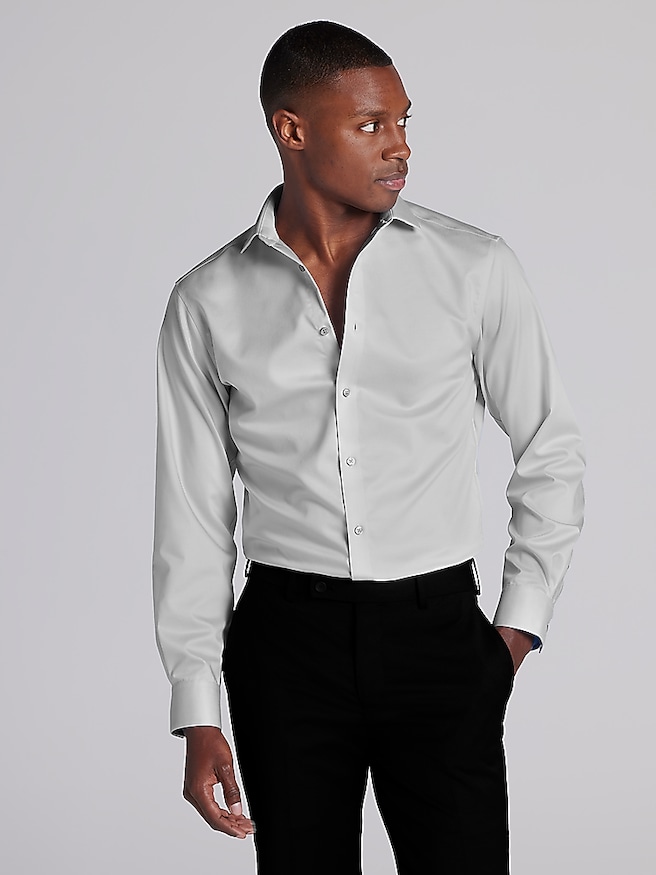
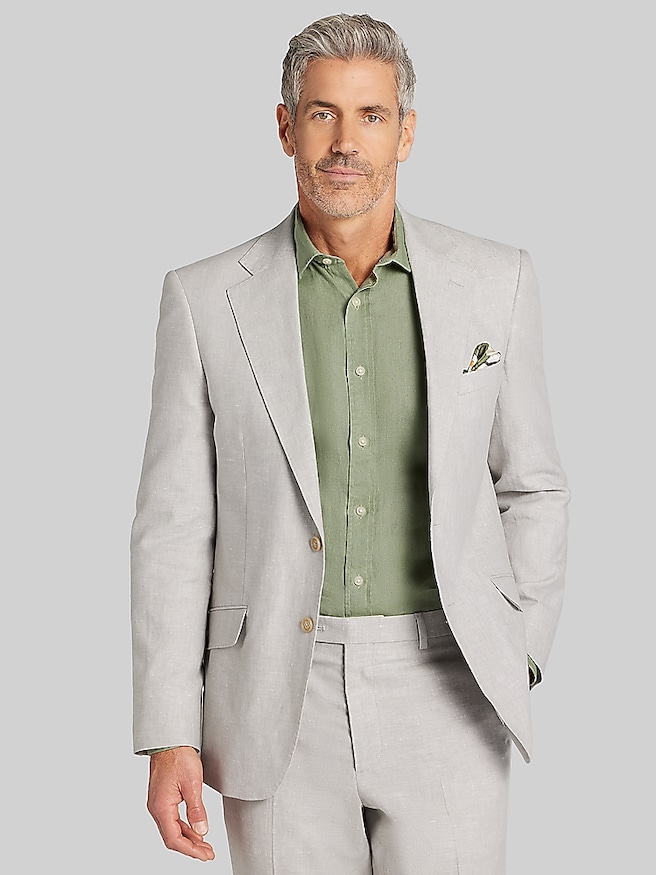
Navy blue, charcoal gray, and light gray suits are classic choices to wear with a pink shirt. Navy creates a crisp contrast, charcoal gives pink a more understated setting, and light gray produces a softer, lighter combination. The shade of the shirt helps set the mood: pale pink feels restrained enough for many offices, while a stronger rose shade brings more color to a dinner or celebration. A navy suit with a pale pink dress shirt is especially versatile because the deep blue anchors the outfit without making it look severe. With dark brown leather shoes and a navy tie, the combination looks polished for a client meeting; with black shoes and a burgundy tie, it takes on a richer evening character. Charcoal suits offer a similarly adaptable foundation, particularly when the shirt has a cool pink undertone. The contrast feels deliberate but quiet, making it useful for presentations, business receptions, and weddings where a suit is appropriate. Light gray suits work well with blush and pastel pink shirts, and their character depends as much on fabric as color. Smooth, lightweight gray cloth looks airy, while a softly textured gray wool makes the same palette feel at home during the cooler months. Beige, tan, and khaki suits also complement pink, particularly for daytime gatherings and less formal celebrations. Muted pink works especially well against these earth tones, keeping the overall effect relaxed rather than bright. Dark brown suits offer another option, pairing naturally with dusty pink and oxblood leather accessories. Black suits can work with a pale pink shirt, although their sharper contrast generally feels dressier and less relaxed than navy or gray. Across these combinations, a subdued shirt shade makes coordination easier. When the pink is more saturated, a solid, dark suit and restrained accessories leave room for the color without making the outfit feel busy.
Fabric and fit influence how a suit with a pink shirt looks throughout the day, not just when it first goes on. Wool is a useful starting point for regular suit wear because it offers breathability, drape, and natural resilience. A smooth worsted wool suit has the clean surface associated with business dressing, while wool flannel adds a soft, slightly fuzzy texture that suits cooler weather. A charcoal flannel jacket against a pale pink cotton shirt creates depth without relying on a bold pattern. Wool blends can offer practical benefits, though the fiber mix, weave, and construction matter more than the word “blend” alone. Added stretch may make sitting and reaching more comfortable, while a well-constructed lining helps the jacket move smoothly over a shirt. Cotton suits have a more relaxed character and develop visible creases with wear; linen is even more textured and crease-prone, which makes it better suited to occasions where a less structured appearance is welcome. For the shirt, cotton poplin gives pink a smooth, crisp finish, while twill has a subtle diagonal texture and often a slightly fuller feel. Oxford cloth lends a more casual note, especially with a button-down collar and an open neckline. A shirt should close comfortably at the neck, lie flat across the chest, and allow movement without pulling between the buttons. Under a properly fitted jacket, the collar sits neatly against the shirt collar, the shoulders follow the body’s natural shape, and the lapels stay flat when the jacket is buttoned. Slim, tailored, and classic fits describe broad silhouettes rather than a universal sizing standard, so comfort through the chest, seat, and thighs matters more than the label. Trousers should hang cleanly without strained pockets or excess fabric bunching at the shoes. A small amount of visible shirt cuff gives the pink a second point of presence, tying the outfit together even when the jacket is closed.
Accessories help adapt these suit colors and pink shirts to the setting. Navy, burgundy, and dark green ties provide enough depth to balance a light pink shirt without competing with it. A solid or subtly textured tie is particularly useful when either the suit or shirt has a pattern. With a pinstripe suit, a plain pink shirt keeps the combination clear and intentional; with a finely striped pink shirt, a solid suit gives the eye somewhere to rest. Patterns can work together when their scales are distinct, such as a small shirt stripe beneath a widely spaced tie motif. A white pocket square adds a clean accent, while a patterned square can pick up a little pink without matching the shirt exactly. For someone building a work wardrobe, navy and charcoal suits with pale pink shirts create several combinations suitable for meetings, office celebrations, and dinners after work. A wedding guest might choose light gray and blush for a daytime ceremony or navy and soft pink for an evening reception, always with the stated dress code in mind. Pink dress shirts are not a substitute for traditional formal shirting when an invitation calls for black tie. An open-collar pink shirt can also soften a suit for a restaurant gathering, provided the collar holds its shape beneath the lapels. For additional color combinations around the same versatile foundation, What Color Shirt Goes With A Navy Suit? offers a related starting point. Good care helps preserve both the suit’s shape and the shirt’s color. Follow each garment’s care label, use a broad hanger for the jacket, and let a worn suit air before returning it to the closet. Gentle brushing removes surface dust, while pressing and professional cleaning should follow the fabric’s needs rather than an automatic after-every-wear schedule. Wash pink shirts with compatible colors as directed, treat collar marks promptly, and avoid excessive dryer heat. Rotating suits and shirts gives fabrics a rest between wears and helps a thoughtfully chosen combination remain dependable through a busy calendar.