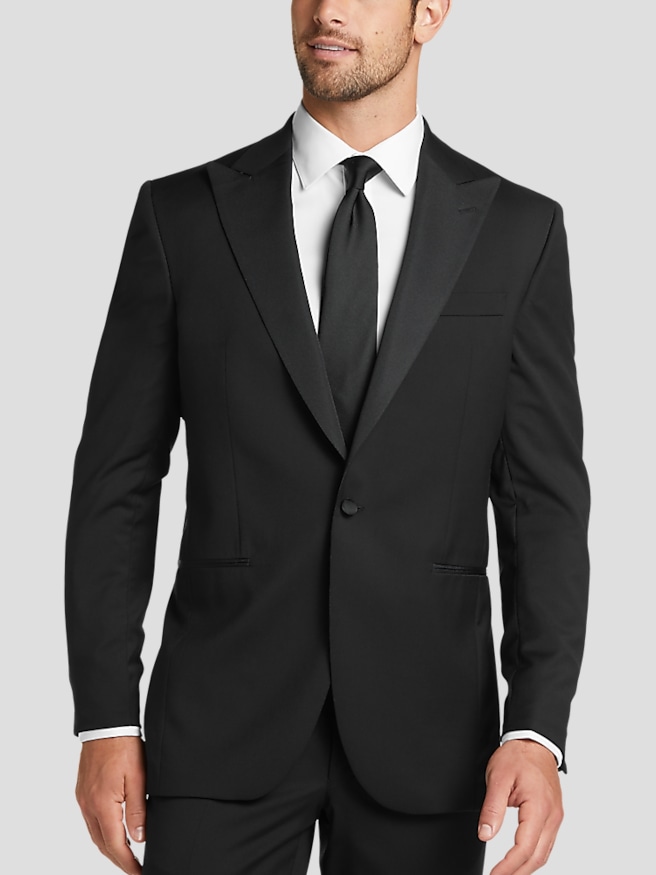
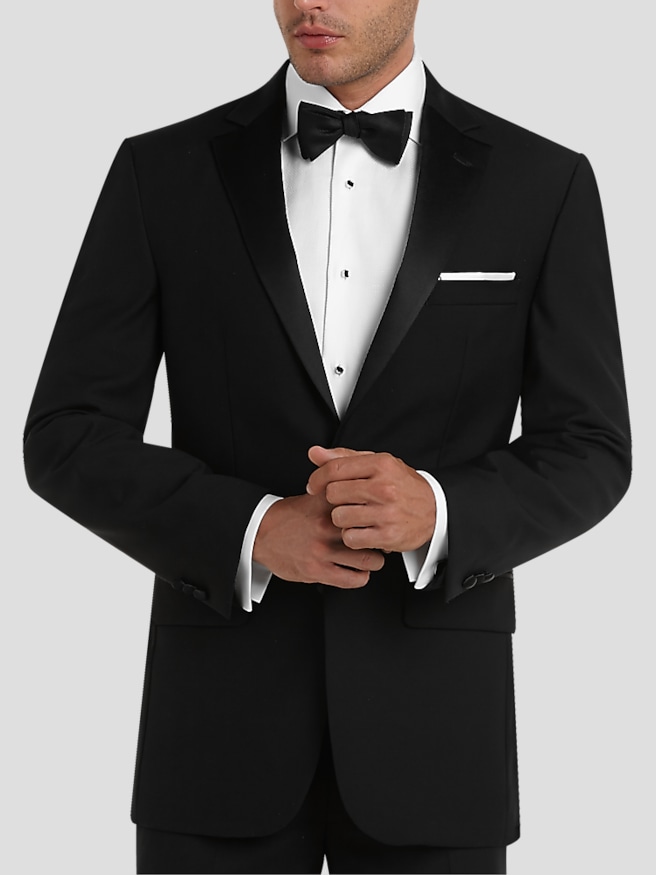
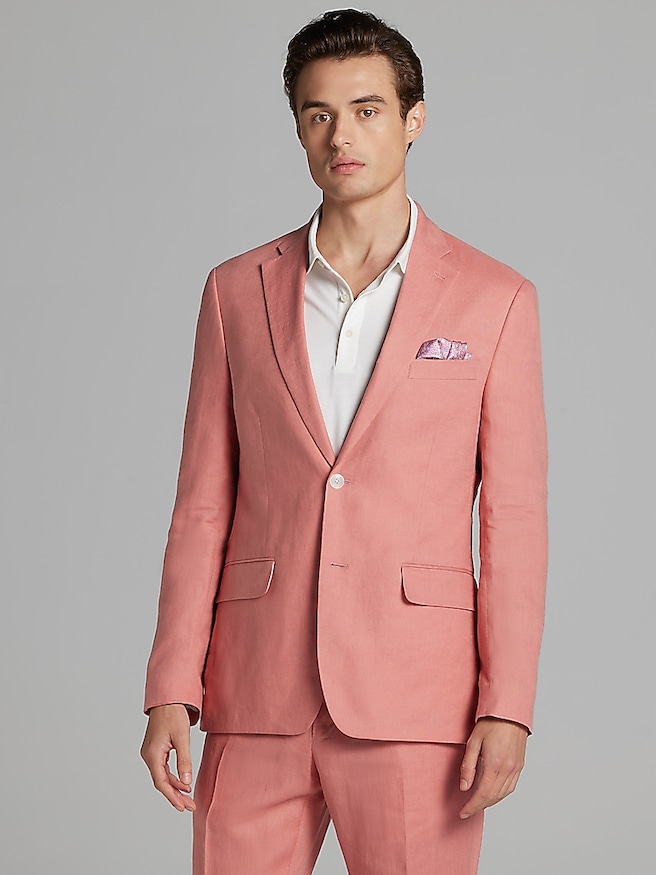
A father of the bride suit should match the wedding’s dress code, complement the groom’s attire, and feel comfortable through the ceremony, photographs, and reception. Navy and charcoal are versatile choices for many weddings, while a black suit can work for dressy celebrations that do not require black tie. Light gray and tan offer a softer look for less formal daytime settings when they fit the couple’s plans. The goal is coordination rather than an exact copy of the groom’s outfit: a similar level of formality helps the family look cohesive, while a distinct tie, pocket square, or suit shade gives the father his own presence. In portraits, a solid or subtly textured suit provides a clean backdrop beside wedding attire without drawing attention away from the couple. A fine pattern can add depth, but strong checks and high-contrast stripes make a more noticeable statement. Two-piece suits offer a straightforward, polished look, and three-piece suits add a vest that keeps the outfit composed when the jacket comes off at the reception. Notch lapels have a familiar, versatile appearance; peak lapels create a sharper, more formal impression. These details matter most when they support the character of the celebration, whether that means a quiet ceremony at city hall, a traditional service, or a reception in a grand ballroom. The father’s role also shapes how the suit will be worn. Walking a daughter down the aisle, greeting guests, standing for family portraits, and delivering a toast all call for clothing that looks assured without feeling restrictive. An understated suit can carry that entire day, with accessories providing the personal connection to the wedding colors. A navy suit with a muted burgundy tie, for example, can acknowledge the floral palette without duplicating every detail of the wedding party’s outfits. A pocket square with a restrained border can make the same connection more subtly. For a celebration with a black-tie dress code, explore Father Of The Bride Tuxedos for formalwear suited to that level of dress.
Fabric and construction influence both the appearance of father of the bride suits and how they feel over several hours of wear. Wool is a classic suiting material because it drapes cleanly, offers natural resilience, and can recover from light creasing with rest between wears. Worsted wool typically has a smooth surface that works well for dressier occasions, while a more visible weave gives the fabric added texture. Wool blends can combine that traditional appearance with other performance qualities, depending on their composition. Fabrics with a small amount of stretch may make sitting, reaching, and moving across the dance floor more comfortable, although stretch does not replace a properly fitted jacket and trousers. Lining, pocket construction, and internal structure also affect the experience of wearing a suit. A structured shoulder creates a defined outline, while softer construction gives a more relaxed shape; neither should feel oversized or collapse awkwardly on the wearer. The jacket’s shoulder seam should sit close to the natural shoulder, and the lapels should lie flat rather than pull away from the chest. With the jacket buttoned, the front should look smooth without pronounced tension lines. Enough room through the back and upper arms makes a handshake or an embrace feel natural. Slim, tailored, and classic fits describe broad silhouettes, not rules based on age. A father who prefers a closer outline may appreciate a tailored fit, while someone who values additional room may feel more at ease in a classic cut. The best result follows the wearer’s proportions rather than forcing a particular shape. Trousers should sit securely at the waist, lie smoothly through the seat, and allow comfortable movement when seated. Their hem can have a slight break or a cleaner finish, depending on the cut and personal preference, but should not bunch heavily above the shoes. Jacket sleeves that reveal a small amount of shirt cuff add a finished detail. A fitting three to four months before the wedding can leave room for alterations, with a final check closer to the event. Bringing the intended shirt and dress shoes helps establish sleeve and trouser lengths accurately.
The supporting pieces give a wedding suit its finished character without needing to compete with it. A crisp white dress shirt creates clear contrast with navy, charcoal, and black, while a pale blue shirt can soften the appearance when the dress code allows. The collar should sit comfortably when fastened and support the tie knot without large gaps or visible strain. A silk tie with a restrained pattern adds texture, and a solid tie makes coordination with wedding colors straightforward. A pocket square does not need to match the tie exactly; a complementary shade or a simple white fold often looks more considered than an identical pattern. A boutonniere belongs on the left lapel, where it can connect the father’s outfit to the ceremony flowers. Polished dress shoes complete the silhouette, with black leather offering a traditional pairing for charcoal and black suits and dark brown often working well with navy when the occasion permits. Socks that relate to the trousers keep the line of the leg visually continuous, especially during seated portraits. Comfort matters here, too: shoes worn briefly beforehand are less likely to distract during a long reception than an unfamiliar pair worn for the first time. After the wedding, thoughtful care helps the suit remain useful for anniversaries, milestone dinners, and other dressed-up occasions. The garment’s care label should determine cleaning methods, and professional cleaning is generally more appropriate than home washing for structured suits. Excessive cleaning can wear on fabric and construction, so light brushing and airing after wear can help maintain the suit between necessary cleanings. A broad, supportive hanger preserves the jacket’s shoulders, while trousers should be hung neatly to limit creasing. Before storage, the suit should be clean and fully dry, with a breathable garment bag providing protection. Small problems, such as a loose button or an opening seam, are easier to address before the next occasion. A well-fitted father of the bride suit becomes more than a wedding-day outfit: it is clothing that holds its shape, feels familiar, and brings back the memory of a proud walk down the aisle.