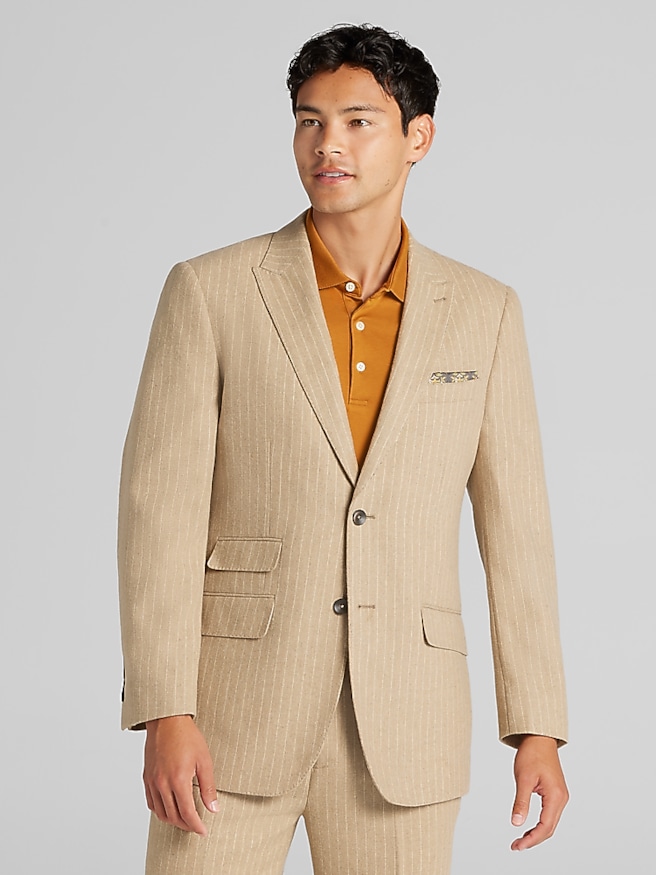
Striped suits are matching jackets and trousers patterned with vertical lines, most commonly in pinstripe or chalkstripe designs. Long associated with business dress and traditional tailoring, they offer more visual texture than a solid suit while maintaining a polished, coordinated appearance. Pinstripes are narrow, precise lines that often resemble a series of tiny woven dots; chalkstripes are generally broader and softer at the edges, with the slightly blurred appearance of a chalk mark. The distinction matters because stripe width, spacing, and contrast all influence how noticeable the pattern feels. A charcoal suit with fine gray stripes can look nearly solid from across a conference room, revealing its detail only at closer range. Widely spaced white stripes against a dark background make a stronger impression, especially across the jacket’s shoulders and lapels. Neither pattern is inherently more formal in every setting: the fabric, color, cut, and accompanying shirt and shoes also shape the overall effect. Navy and charcoal are familiar choices for professional settings, while lighter gray and more pronounced blue tones can give the same vertical pattern a more expressive character. For a color-focused interpretation, men's blue stripe suits combine the versatility of blue tailoring with the definition of a repeated stripe. A restrained navy-and-blue combination works comfortably with a white shirt and dark shoes, while a brighter ground color or sharper stripe creates a more noticeable outfit. These distinctions make striped suits relevant to a range of occasions, from client meetings and presentations to graduation ceremonies, receptions, and dinners with a dress code. They are especially well suited to settings where a complete suit is appropriate but a little pattern feels welcome. For events that specify black tie, however, a striped business suit is not a substitute for the expected evening attire. The strongest impression comes from a pattern that belongs in the setting rather than one chosen solely for its visual impact.
Fabric and fit determine how a striped suit feels through a full day of sitting, standing, walking, and reaching. Wool is a traditional suiting material because of its drape, natural resilience, and ability to recover from some everyday creasing. Smooth worsted wool gives fine stripes a crisp outline, while a brushed wool surface can soften the edges of a chalkstripe and add depth to the cloth. Wool blends combine characteristics from multiple fibers, with the exact composition affecting texture, wrinkle resistance, breathability, and care requirements. A small amount of stretch can add ease of movement, although it does not replace a comfortable cut or correct sizing. Fabric weight also influences the silhouette: a substantial cloth may hold a defined trouser line, while a lighter cloth can create a more fluid shape. The lining, internal structure, and finishing contribute to how the jacket settles over the body, so fiber content alone does not tell the entire story. On a well-fitting jacket, the shoulders sit cleanly, the collar rests close to the shirt collar, and the front closes without pulling into an obvious X around the button. Vertical stripes make tension and twisting easier to notice, which makes a balanced fit particularly important. Through the trousers, enough room at the seat and thigh allows the fabric to fall rather than cling, keeping the stripe lines relatively smooth when standing. A slim fit follows the body more closely, while a classic fit generally provides additional room; either can look sharp when its proportions suit the wearer. Jacket length, trouser rise, and hem length also affect the finished silhouette. A slight trouser break creates a familiar tailored appearance, while a cleaner, shorter hem shows more of the shoe. For someone who spends hours at a desk before heading directly to a dinner, comfort through the waist, upper back, and knees can matter as much as the view in a mirror. Thoughtful alterations can refine these details without turning a close fit into a restrictive one.
The pattern already gives a striped suit a clear focal point, so the surrounding pieces often work best when they provide balance. A plain white or pale blue shirt creates a clean background for the jacket, and a solid tie allows the stripes to remain distinct. Patterned ties can work as well, particularly when their scale is noticeably larger or smaller than the suit’s stripe spacing. For example, a tie with a broad, open motif is less likely to compete with a fine pinstripe than another tightly spaced linear pattern. Smooth leather lace-up shoes reinforce a businesslike appearance; a simple loafer can feel more relaxed where the occasion permits. Black shoes give charcoal and dark navy a crisp finish, while dark brown can add a softer contrast to blue. A pocket square with a restrained edge or subtle texture adds detail without needing to duplicate the tie. Because a striped jacket has a strong connection to its matching trousers, wearing the complete suit usually creates the most cohesive result, particularly with pronounced pinstripes. Keeping both pieces on the same care schedule also helps preserve a consistent color and finish over time. The care label remains the authority for cleaning, since fiber blends, linings, and construction vary. Many tailored suits require professional dry cleaning, but that does not necessarily mean cleaning after every wear. Gentle brushing, time to air out, and storage on a supportive jacket hanger can help remove surface dust and maintain the shape between cleanings. Trousers benefit from hanging neatly rather than remaining folded over a chair, and a breathable garment bag helps protect the suit during longer storage. Excessive heat or heavy pressure can leave unwanted shine, making careful pressing important. For a graduate beginning a professional role or someone marking a career milestone, a striped suit can also be a meaningful gift when measurements, preferred fit, and likely dress requirements are known. Its lasting usefulness comes from a combination of comfortable construction, an appropriate pattern, and care that keeps the matching pieces looking composed together.