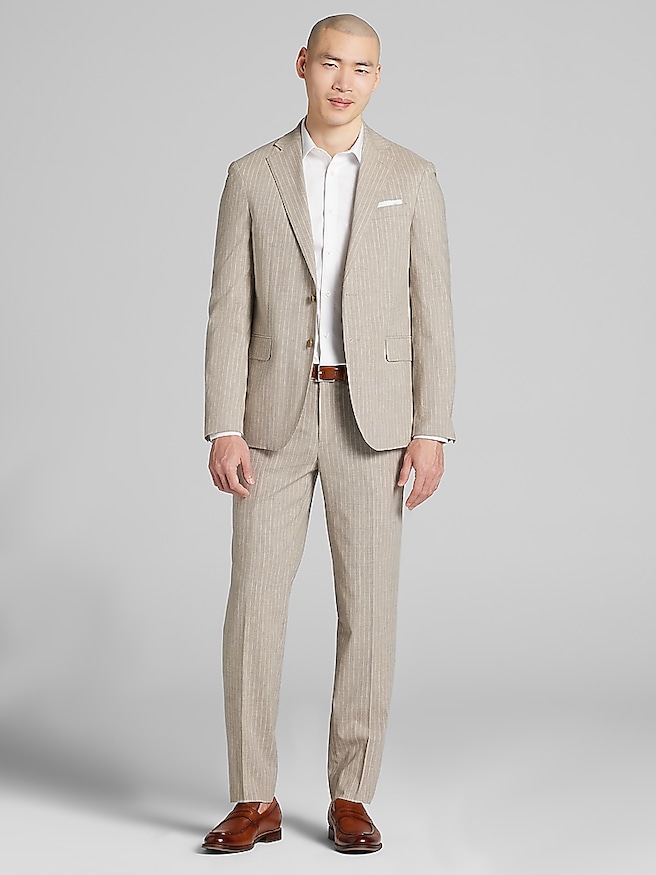
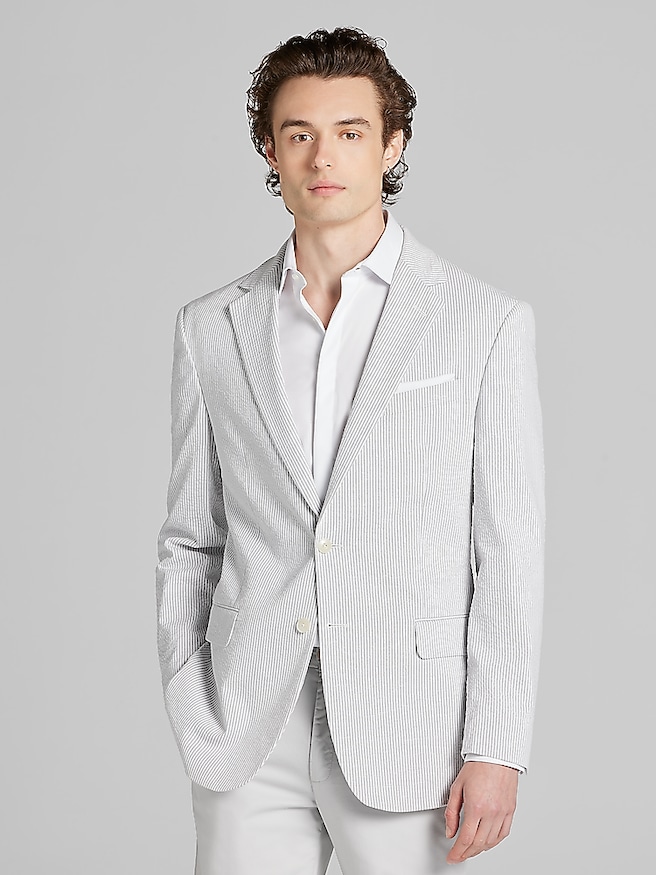
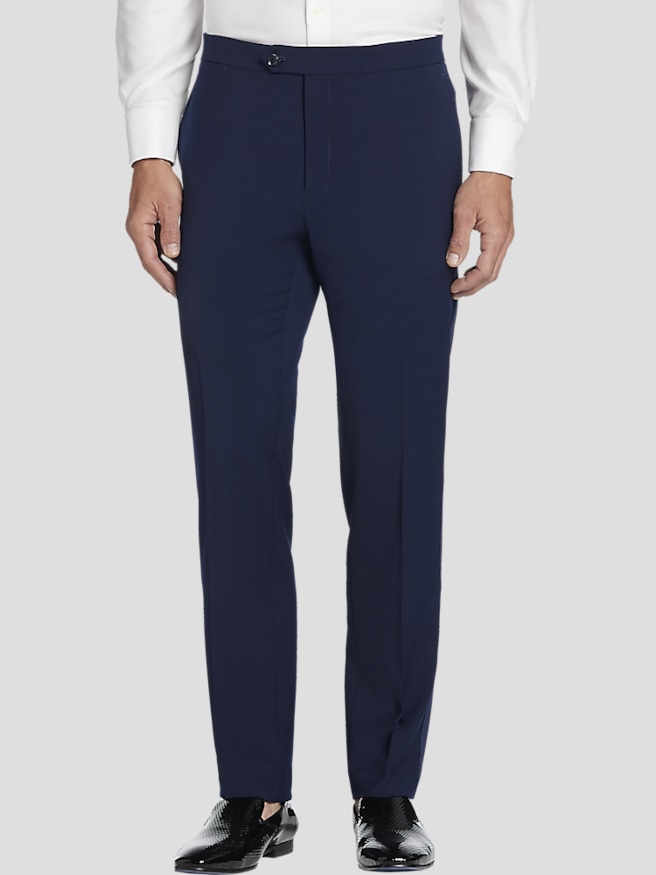
A pinstripe suit is defined by fine vertical lines set against a contrasting background, creating a tailored pattern that reads as understated from a distance and more detailed up close. Unlike a chalk stripe, which typically has a softer, broader appearance, a pinstripe is narrow and sharply defined. Stripe spacing and contrast vary, so two suits in the same color can make very different impressions. Closely spaced, low-contrast lines offer a quiet alternative to solid fabric, while brighter or more widely spaced stripes make the pattern more noticeable. Navy, charcoal, and black are familiar foundations, often paired with light gray or white lines. Navy has an approachable business character, charcoal feels restrained and versatile, and black with a distinct stripe creates a more pronounced graphic effect. Long associated with banking, law, and corporate offices, pinstripe tailoring also suits client meetings, presentations, professional dinners, and weddings where the dress code calls for a suit and tie. It is not a substitute for a tuxedo when an invitation specifies black tie. The vertical pattern draws the eye along the body, emphasizing the jacket’s shape and the line of the trousers without requiring bold accessories. A two-piece, single-breasted suit offers a straightforward expression of the look; a double-breasted jacket gives the stripes a broader canvas and creates a more structured impression. A three-piece configuration adds a matching vest, keeping the outfit composed when the jacket comes off. Notch lapels tend to feel familiar and adaptable, while peak lapels bring a stronger visual accent. For someone building a professional wardrobe, a subtle pinstripe can add variety alongside solid suits without feeling overly decorative. For an experienced suit wearer, a more defined stripe can express personality while retaining the discipline of traditional tailoring. The strongest choice reflects both the setting and how comfortable the wearer feels carrying a visible pattern.
Fabric and fit determine how a pinstripe suit performs beyond its first impression. Wool is a traditional choice because it offers breathability, natural resilience, and a drape that supports a clean jacket front and trouser line. Worsted wool has a smooth surface that helps fine stripes look crisp, while more textured cloth gives the pattern a softer appearance. Fabric weight, weave, and finishing all affect the feel; fiber content alone does not establish how substantial or durable a suit will be. Wool blends can combine wool’s drape with other performance characteristics, depending on their composition, and a small amount of stretch may add flexibility. Stretch does not replace adequate room through the shoulders, seat, and thighs. Synthetic blends may offer wrinkle resistance, though breathability and comfort vary with the fabric’s construction and lining. For someone who spends hours at a desk or moves between appointments, comfortable reach and easy sitting matter as much as a sharp standing silhouette. A well-fitting jacket rests smoothly across the shoulders, with lapels lying flat and the front closing without pulling into an X around the button. The collar should sit close to the shirt collar rather than leaving a visible gap. Slim fits generally follow the body more closely, while classic fits allow more ease; neither should restrict ordinary movement. Jacket length, sleeve length, and trouser rise also shape the overall proportions. Pinstripes make distortion easier to notice, so lines that bend sharply across the chest or spread around the pockets can signal tension in the fabric. Trousers should hang cleanly without gripping the seat or bunching through the thighs. A slight break creates a traditional finish over dress shoes, while little or no break gives a cleaner, more contemporary line. Thoughtful alterations can refine sleeves, hems, and waist shaping, but the jacket’s basic shoulder fit deserves particular attention from the outset. For frequent wear, comfortable ease and a resilient cloth are more useful than an extremely narrow silhouette.
Styling a pinstripe suit works best when the surrounding pieces give the pattern room to register. A white dress shirt creates clear contrast and suits presentations, ceremonies, and other occasions that call for a crisp finish. Pale blue softens the effect, especially with navy or charcoal, while a solid tie adds color without introducing another competing pattern. A burgundy tie against navy, for example, feels considered without pulling attention away from the suit. Patterned shirts and ties can also work when their scale differs noticeably from the suit’s stripes; closely matched patterns tend to look busy. A small dotted tie or a broad, restrained motif can provide separation from fine vertical lines. For a lighter alternative to a dark background, Gray Striped Suits offer a related expression of striped tailoring, with the shade and stripe contrast influencing how dressy the outfit feels. Black leather shoes create a precise finish with charcoal or black, while dark brown often pairs naturally with navy and many gray tones. Simple accessories—a neatly folded pocket square, an understated watch, and a belt that relates to the shoes—keep the overall impression cohesive. A pinstripe suit can also be a thoughtful gift for a graduate entering a suit-focused profession or someone marking a career milestone, provided measurements, fit preferences, and an opportunity for alterations are part of the decision. Once in regular use, careful handling helps preserve both the fabric and the silhouette. A broad, shaped hanger supports the jacket’s shoulders, and trousers hung neatly along their creases are less likely to develop unnecessary folds. Emptying pockets prevents stretching, while gentle brushing removes surface dust before it settles into the cloth. Airing the suit between wears and rotating it with other tailoring gives the fabric time to recover. Care should follow the garment label, with professional cleaning as needed rather than automatically after every outing. Having the jacket and trousers cleaned together helps maintain a consistent appearance. Attention to fit, fabric, and upkeep allows the suit’s defining stripes to remain crisp without making the outfit feel rigid or overworked.