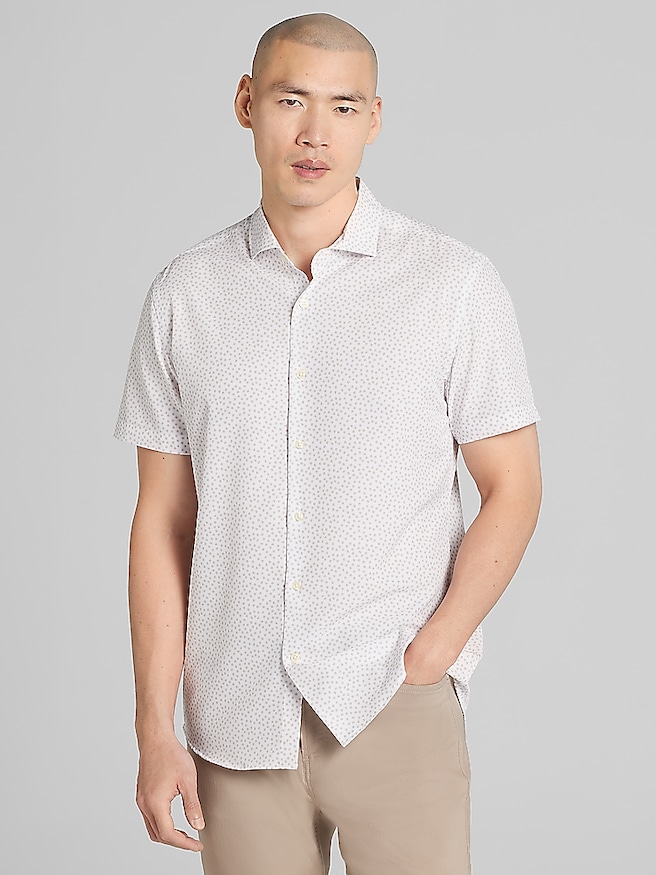
Stretch fit men’s dress shirts combine the polished appearance of a traditional button-front shirt with fabric that gives as the body moves. That flexibility can make a noticeable difference when reaching across a conference table, carrying a garment bag, or sitting through a long reception. Stretch describes the fabric’s ability to extend and recover; it does not necessarily mean the shirt has a slim or close-fitting cut. Many stretch fabrics combine cotton with elastane, also known as spandex, to balance a familiar feel with added give. Others incorporate polyester or nylon, which can influence smoothness, drying time, and shape retention. Some woven fabrics achieve flexibility through their construction rather than an added elastic fiber. Fiber percentages help explain a shirt’s composition, but they do not tell the whole story: yarn, weave, fabric weight, and finishing also affect how it feels and moves. A cotton-rich blend may appeal to someone who enjoys the softness and absorbency of cotton, while a smoother synthetic blend may suit someone who prioritizes easy maintenance. Neither composition guarantees better durability or comfort on its own. A fine, smooth weave creates a clean backdrop for a patterned tie, while a subtle twill texture adds visual depth without making an outfit feel busy. White and light blue remain versatile foundations, and restrained stripes or small checks introduce pattern while keeping the overall appearance professional. Stretch is also central to Mens Performance Stretch Dress Shirts, although benefits such as moisture management and wrinkle resistance depend on the particular fabric and finish rather than stretch alone. A flexible shirt is not automatically wrinkle-free, breathable, or quick-drying. Those distinctions matter for anyone balancing appearance with the practical demands of commuting, desk work, business travel, or an event that begins with a ceremony and ends on the dance floor.
A comfortable stretch dress shirt still needs the right proportions through the neck, shoulders, chest, and sleeves. The fabric should provide ease during movement rather than compensate for a size that is too small. Shoulder seams generally sit near the natural edge of the shoulders, while the front should lie smoothly without pulling between the buttons. Horizontal tension lines across the chest or a placket that opens when seated usually signal that more room is needed. A slim silhouette follows the torso more closely, while a roomier cut allows additional space through the chest and waist; either can include stretch. The right choice depends on body shape, preferred appearance, and how the shirt will be worn. Under a closely tailored jacket, excess fabric can collect around the waist and interrupt the clean line of the outfit. For someone who spends much of the day seated or frequently reaches and lifts, adequate room through the upper back and arms matters just as much as a neat standing fit. A collar worn with a tie should button comfortably without pressing into the neck, and cuffs should close securely without restricting the wrist. Sleeve length should allow natural arm movement, with the cuff meeting the wrist rather than retreating well up the forearm. A shirt intended to stay tucked benefits from enough length to remain anchored when sitting or raising an arm. Details also influence how easily a shirt moves between occasions. A spread or point collar pairs naturally with tailored clothing, while a button-down collar can support a more relaxed office outfit. A solid shirt with a dark suit creates a composed look for interviews and presentations; the same shirt with dress pants can feel appropriate for a client lunch or anniversary dinner. Fine patterns bring interest to otherwise simple combinations, especially when the jacket and tie are understated. For weddings and other dressed-up gatherings, smooth fabric, a well-balanced collar, and an unstrained fit help the entire outfit look intentional.
Care and construction have a lasting effect on how stretch fit men’s dress shirts perform beyond the first wear. Stretch fibers can be sensitive to excessive heat, so the garment’s care label is the most useful reference for washing, drying, and pressing. A shirt labeled machine washable may still require a gentle cycle, a particular water temperature, or a lower drying setting. Where the instructions permit, removing the shirt promptly after drying and placing it on a hanger can reduce creasing and make the next wear easier. Iron temperature also matters: a setting suitable for plain cotton may be too hot for a blend containing elastic or synthetic fibers. Wrinkle-resistant finishes can reduce maintenance, but they do not eliminate every crease or override the care instructions. Consistent, appropriate care helps preserve the fabric’s surface and recovery, while repeated overheating or aggressive treatment can shorten its useful life. Durability also depends on details beyond the fiber blend, including even stitching, secure buttons, and neatly finished seams. Collar edges, cuffs, and elbows receive regular friction, making those areas worth attention over time. Allowing enough room in the fit reduces unnecessary stress on seams and buttonholes, and rotating shirts gives each garment time for care between wears. For frequent travelers, a shirt that combines comfortable movement with manageable care requirements can simplify dressing for meetings away from home, though packing can still leave folds that need attention. Stretch dress shirts can also make practical gifts for a graduate preparing for interviews, a partner building a professional wardrobe, or someone who regularly attends dressed-up occasions. A known neck size, sleeve length, and preferred cut make the choice more personal and useful than relying on a general size alone. Across those settings, the strongest foundation is the same: fabric with suitable flexibility, proportions that sit naturally on the body, and care requirements that fit the wearer’s routine.