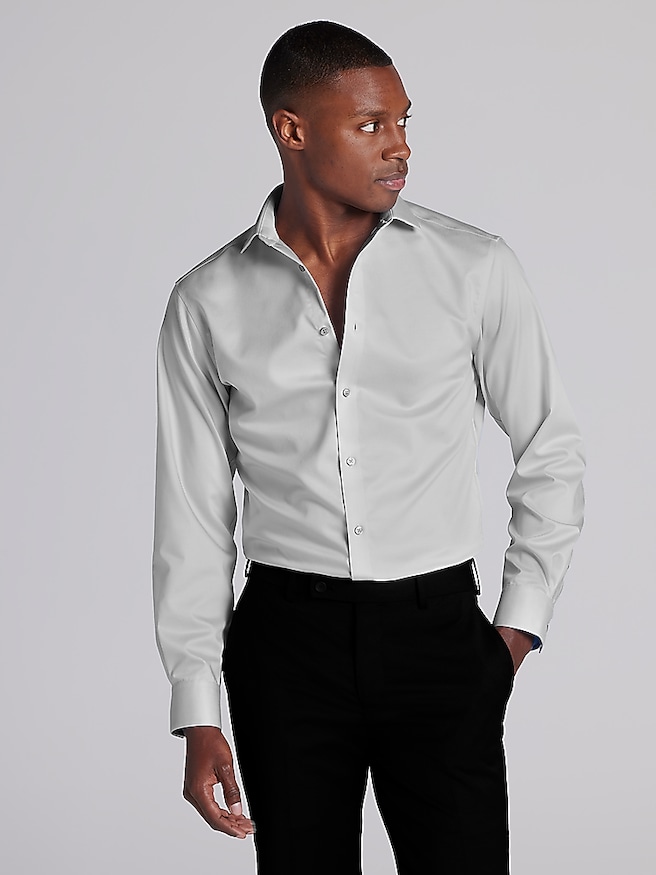
Men’s performance stretch dress shirts bring the clean lines of traditional business attire together with fabrics designed to move more comfortably through a full day. A structured collar, button front, and finished cuffs maintain a dressed-up appearance, while flexible fabric gives at the shoulders, elbows, and torso as you reach for a briefcase, sit through a presentation, or raise a glass at a reception. The defining feature is stretch, which may come from elastane or spandex blended with other fibers, from the fabric’s construction, or from a combination of both. Cotton blends can offer a familiar, soft hand with added flexibility; polyester and nylon blends often emphasize smoothness, resilience, and efficient drying. Fabric composition alone does not tell the whole story, though. Yarn, weave, knit structure, weight, and finishing treatments all influence how a shirt feels against the skin and how neatly it hangs beneath a jacket. Performance features also vary. Moisture-wicking fabric helps move perspiration away from the skin, while wrinkle-resistant construction or finishes can reduce the creasing that develops through sitting, packing, and repeated movement. Neither feature should be assumed simply because a shirt stretches. Two-way stretch generally provides give along one axis, while four-way stretch provides give both lengthwise and crosswise; the practical benefit depends on where that flexibility is needed and how well the shirt recovers its shape. Good recovery matters as much as initial softness, helping elbows and the waist avoid a stretched-out appearance after hours of wear. These qualities make performance stretch dress shirts useful for office routines, business travel, interviews, presentations, and celebrations that call for polished clothing without an unnecessarily restrictive feel. A matte surface and a fine, even texture usually look understated with tailored clothing, while a subtle woven pattern can add depth without competing with a tie. The result is still a dress shirt, with flexibility serving its appearance and everyday function rather than replacing either.
Fit determines whether that flexibility feels natural or merely compensates for a shirt that is too small. A well-proportioned performance dress shirt lies smoothly across the chest, with the button placket resting flat rather than pulling into small gaps. Shoulder seams generally sit close to the point where the shoulder meets the upper arm, and the back should allow a comfortable forward reach without excessive fabric gathering beneath a jacket. Slim fits tend to follow the torso more closely, classic or regular fits usually provide additional room, and athletic fits may accommodate broader shoulders with a more shaped waist, although those terms vary by maker. Neck and sleeve measurements remain important even in highly flexible fabrics. A collar worn with a tie should close comfortably without pressing into the neck, and cuffs should meet the wrist without sliding far over the hand. Stretch can make movement easier, but it cannot correct an overly tight collar or insufficient sleeve length. Body length deserves equal attention: a shirt intended for tucking needs enough fabric below the waistband to stay secure when seated or reaching overhead. Excess length or width, on the other hand, can bunch beneath trousers and interrupt an otherwise clean silhouette. For a closely related take on this balance of shape and movement, Stretch Fit Men’s Dress Shirts share the emphasis on flexibility within a tailored wardrobe. White and pale blue create a straightforward foundation for suits and ties, while fine stripes and restrained checks bring variety to recurring office outfits. Collar shape changes the overall impression, too: a spread collar leaves room for a fuller tie knot, while a point collar creates a narrower frame. For open-collar wear, enough structure to keep the collar from collapsing helps preserve a finished appearance. Under a suit jacket, smooth fabric and sleeves with manageable fullness reduce bunching; worn with dress trousers alone, a clean tuck and balanced proportions keep the shirt looking intentional from the first appointment through dinner afterward.
Long-term satisfaction with men’s performance stretch dress shirts depends on care as well as comfort. Machine-washable construction is common in this category, but the care label is the authority for washing, drying, pressing, and professional cleaning. Fiber blends and applied finishes can require distinct treatment, even when two fabrics feel similar. Excessive heat may affect elastic fibers, and an iron setting suitable for an all-cotton shirt may be too hot for a synthetic blend. When permitted by the label, prompt removal from the washer or dryer and careful hanging can help limit deep creases and keep the collar, cuffs, and front placket orderly. Wrinkle resistance means reduced wrinkling, not a guarantee that a shirt will emerge perfectly smooth under every condition. Likewise, stretch does not make seams, buttons, or collar edges immune to wear. Durable construction shows in secure stitching, tidy buttonholes, firmly attached buttons, and fabric that returns to its original shape after gentle movement. Areas that see repeated friction, especially cuffs and the collar fold, benefit from attention before soil becomes firmly set. Following any restrictions on bleach or fabric softener can also help protect the fabric and its performance properties. For travel, folding along natural lines and unpacking upon arrival can make it easier to maintain a presentable finish, though pressing needs will depend on the material. In a regularly worn wardrobe, rotating shirts gives each one time for proper cleaning and drying rather than repeated rushed care. Performance stretch dress shirts can also be thoughtful gifts for a recent graduate starting an office job, a professional whose schedule includes frequent presentations, or someone who enjoys dressing well for dinners and special gatherings. Accurate neck and sleeve measurements, a familiar fit preference, and an understanding of the recipient’s usual colors make the gift more personal and practical. Whether worn several days a week or reserved for occasions that require a suit, the most useful shirt balances comfortable movement, appropriate coverage, dependable construction, and care requirements that fit naturally into everyday life.