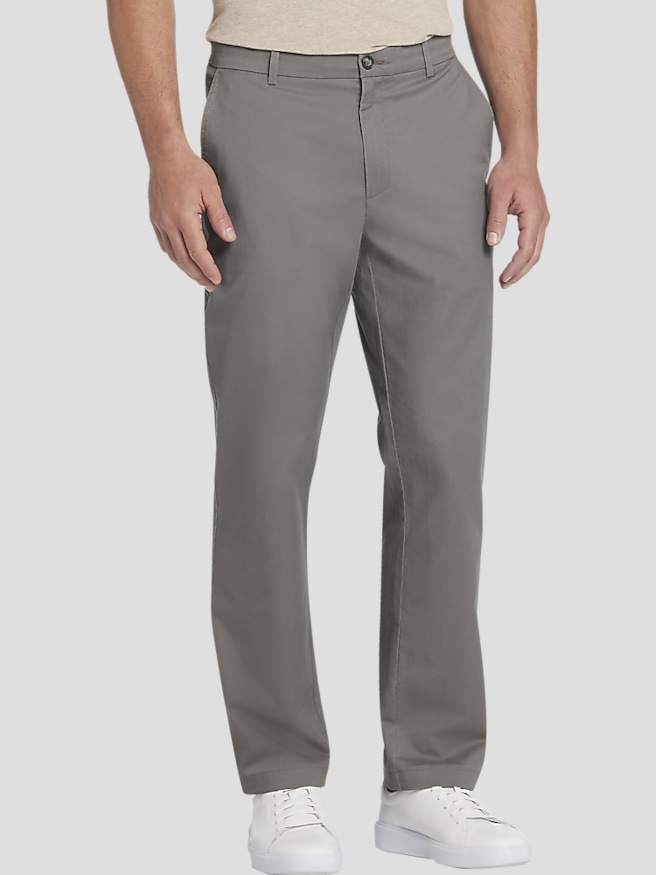
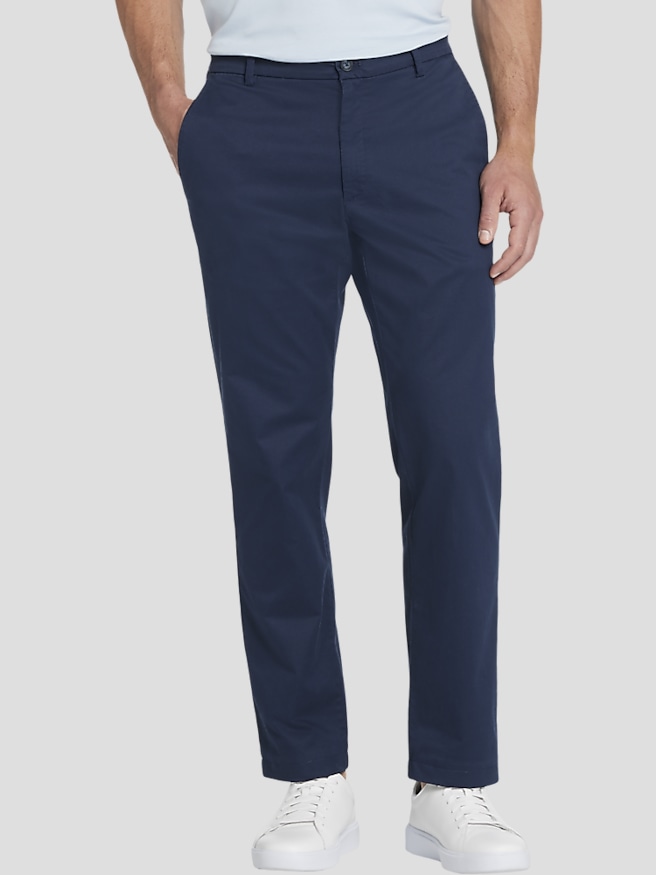
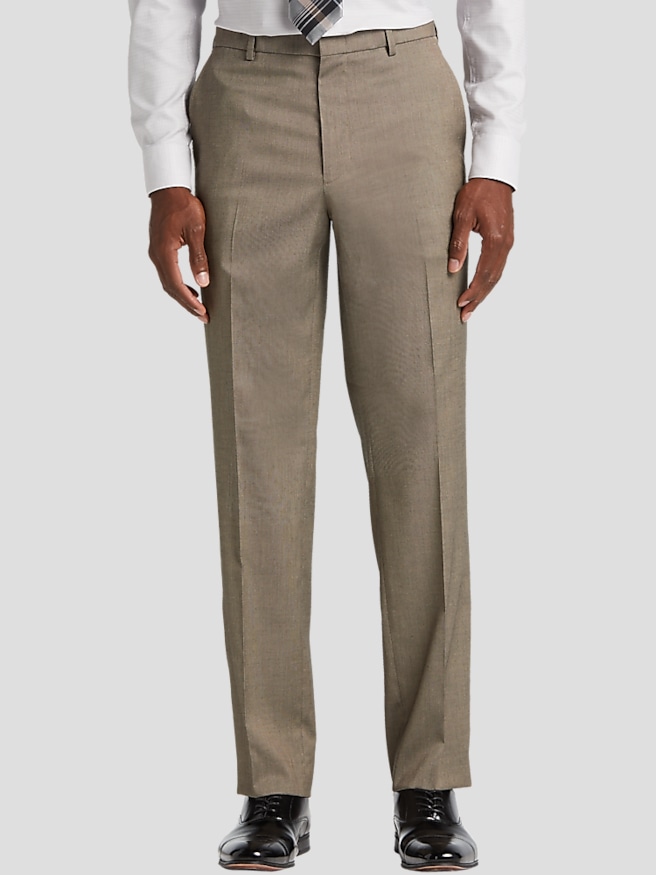
Stretch cotton pants combine the familiar softness of cotton with added flexibility, creating an everyday option that can look polished without feeling rigid. Most stretch cotton fabrics blend cotton with a small amount of elastane, also called spandex, though the exact composition varies. Cotton contributes a natural hand feel and breathability, while the stretch fiber helps the fabric give when sitting, bending, or taking a longer stride. That combination is especially useful in men’s pants intended to move between a desk, a commute, and plans after work. A woven cotton twill typically has a subtle diagonal texture and enough structure for a clean chino silhouette; a smoother weave can create a more streamlined appearance. Fabric weight, weave density, and finishing also influence how the pants drape, so two pairs with similar fiber percentages may feel noticeably distinct. A soft, washed finish tends to look relaxed, while a crisp surface and defined crease can lean toward business casual. Stretch content alone does not determine comfort: the cut, waistband construction, and room through the seat and thighs matter just as much. Nor does a higher stretch percentage automatically mean better shape retention, since yarn construction and fabric quality also affect how well the pants recover after movement. Some fabrics flex mainly across their width, while others offer movement in multiple directions; those features depend on the construction rather than the cotton label alone. For someone who spends part of the day seated and part walking between appointments, a balanced fabric offers enough give to move comfortably while maintaining a tidy line through the leg. The result is a practical middle ground between rigid cotton trousers and softer knit bottoms. Stretch cotton chinos and trousers suit everyday office settings, casual dinners, travel, and other occasions where comfort matters but a finished appearance still counts. Their appeal comes from that combination of useful movement, familiar texture, and styling flexibility rather than from any single fabric feature.
Fit gives stretch cotton pants their shape, and added flexibility should complement a suitable cut rather than compensate for one that is too tight. A well-fitting waistband sits securely without digging in when seated, and the front pockets lie reasonably flat instead of pulling open. Across the seat, the fabric should follow the body without strong horizontal strain lines; through the thighs, there should be enough space to walk and climb stairs comfortably. Slim fits generally stay closer to the leg, straight fits maintain a more consistent line from knee to hem, and tapered fits narrow toward the ankle. Someone with fuller thighs may prefer more room above the knee with a gentle taper below, while someone seeking a less fitted silhouette may favor a straight leg. These descriptions are useful starting points, but measurements and proportions vary by cut. Rise matters, too: the distance from the crotch seam to the waistband affects where the pants sit and how comfortably a tucked shirt stays in place. Length changes the overall impression. A hem that just meets the top of a loafer looks neat and understated, while a slight break over a lace-up shoe gives a more traditional finish. Excess fabric pooling at the ankle can interrupt an otherwise clean silhouette. For business-casual use, stretch cotton pants pair naturally with an Oxford shirt, a fine-gauge sweater, or an unstructured jacket. A polo and simple leather sneakers create a more relaxed combination without making the outfit look unfinished. Neutral shades such as navy, charcoal, tan, and olive offer plenty of room to vary shirts and footwear, while texture can add interest without a bold pattern. Anyone comparing cotton-rich options with other flexible materials can explore Stretch Fabric Pants for the broader category. The distinction is useful: stretch describes a fabric’s capacity to give, not its fiber content, surface texture, or level of formality. Cotton remains a strong choice for those who prefer a familiar woven feel and an understated appearance that works across multiple everyday settings.
Care and construction help determine how stretch cotton pants hold up beyond the first few wears. The garment’s care label should take priority, because dyes, finishes, trims, and fiber blends can require distinct treatment. For machine-washable styles, cool water and a gentle cycle are often appropriate, and turning pants inside out can help limit surface abrasion. Avoiding excessive dryer heat is particularly important: cotton can shrink, and repeated high heat can weaken elastane over time. When the care instructions permit it, air-drying or using a lower dryer setting can help preserve fit and flexibility. Removing pants promptly and smoothing the legs makes everyday wrinkles easier to manage, while ironing should follow the temperature guidance on the label. Stretch does not necessarily mean wrinkle-free, stain-resistant, or suitable for every activity; those qualities require their own fabric treatments or construction features. Durable pants also depend on even stitching, secure belt loops, a smoothly operating closure, and reinforced areas where pockets and seams take repeated stress. A good fit supports longevity by reducing unnecessary tension across the seat, crotch, and pocket openings. Rotating between pairs and treating small stains promptly can help maintain a consistent appearance, especially in pants worn frequently for work or commuting. For travel, stretch cotton trousers offer comfortable movement during a long drive or flight and enough structure for a meal afterward, although packing and extended sitting may still leave creases. They also make a useful gift for someone building a business-casual wardrobe, starting a job with a relaxed office dress code, or replacing pants that feel restrictive. Knowing the recipient’s waist measurement, inseam, and preferred cut is more helpful than relying on a size label alone. A person who regularly wears straight-leg chinos may appreciate that familiar shape with added give, while someone accustomed to a tapered silhouette may value a cleaner ankle opening. Whether worn with a tucked button-down for a presentation or a knit polo for a family gathering, the most useful stretch cotton pants bring together comfortable proportions, reliable construction, and care requirements that fit naturally into an everyday routine.