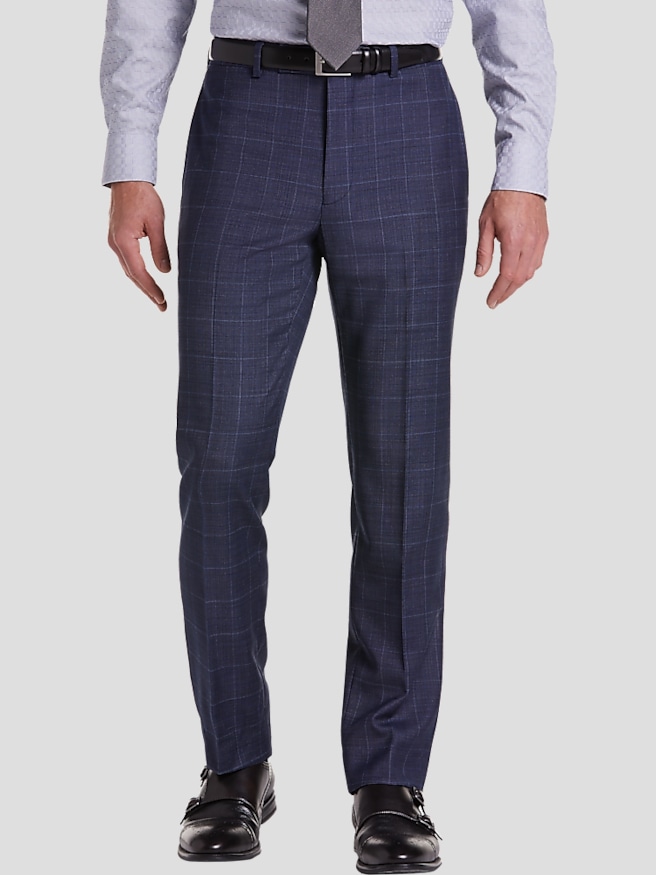
Straight leg wool pants combine the clean appearance of dress trousers with a shape that leaves comfortable room through the leg. The defining feature is a relatively consistent width from the knee to the hem, rather than a pronounced taper or flare. That balanced silhouette works with tucked-in shirts, fine-gauge sweaters, and tailored jackets, making these pants a useful foundation for business attire and polished everyday dressing. Wool contributes much of their character: its natural crimp gives the fabric resilience, while its ability to absorb moisture vapor supports comfort through a full day of wear. A well-chosen wool fabric also drapes smoothly instead of looking stiff, helping the leg fall neatly over a dress shoe. Fabric construction makes a noticeable difference in appearance and feel. Worsted wool, made with fibers combed into alignment, generally has a smooth surface and a crisp finish suited to meetings, presentations, and dressier occasions. More textured wool fabrics create a softer visual effect that pairs naturally with knitwear and less structured jackets. Pure wool emphasizes the fiber’s natural drape and feel, while wool blends can introduce other qualities depending on the fibers used. A small amount of elastane may provide stretch; polyester or nylon may contribute strength and shape retention. The fiber label offers a clearer picture than the word “wool” alone, since the proportion and combination of fibers influence how trousers move, feel, and need to be maintained. Lining can also affect comfort, particularly across the front of the thighs, by creating a smoother surface between the wearer and the outer fabric. For a versatile wardrobe, charcoal, navy, and medium gray are easy colors to coordinate without making every outfit look identical. Subtle patterns add depth, while solid fabrics keep attention on the cut and the rest of the outfit. These qualities make straight leg wool trousers especially useful for men whose schedules move between desk work, client conversations, and an evening reservation without much opportunity to change.
Fit gives straight leg wool pants their intended shape, and the leg opening is only one part of the equation. The waistband should sit securely at the intended rise without needing a tightly cinched belt to hold it in place. Across the seat, the fabric should lie smoothly rather than pulling into horizontal lines or gathering in loose folds. Enough space through the thighs allows the wearer to sit, climb stairs, and walk at a natural pace without straining the pockets or disturbing the crease. Straight leg does not necessarily mean loose or oversized; a pair can sit close to the body through the waist and seat while maintaining a clean line below the knee. For anyone comparing silhouettes, Tailored Wool Pants offer a related category, and the terms can overlap: tailored describes the shaping and finish, while straight leg describes the lower-leg silhouette. Rise is another meaningful detail. A higher rise can create a longer visual line through the legs, while a lower rise changes where the waistband sits in relation to a tucked shirt or jacket button. Front construction changes the look as well. Flat-front trousers present an uninterrupted surface, while pleats introduce extra fabric that can open with movement when properly fitted. Neither detail replaces the need for adequate room at the waist and thigh. Hem length finishes the proportions. A slight break creates a small fold where the trouser front meets the shoe; a cleaner, shorter hem produces little or no break. Excess length can collect around the ankles and obscure an otherwise balanced cut. Trying trousers with the type of shoes they will be worn with makes that relationship easier to judge. Thoughtful alterations can refine the waist or hem, but the underlying fit through the rise, seat, and thighs should already feel comfortable. The result is a composed appearance that still allows ordinary movement, from taking a seat at a conference table to stepping into a car.
The appeal of straight leg wool trousers extends beyond a single dress code. With a pressed shirt, leather belt, and oxfords, they create a straightforward business outfit; with a textured polo or a fine knit and loafers, the same general silhouette feels more relaxed without becoming casual in the way denim does. A navy blazer over gray wool pants is a familiar combination because the contrast looks deliberate, while tonal dressing creates a quieter, more continuous line. When pairing separate trousers with a jacket, coordinating colors and textures usually looks more intentional than trying to approximate a matching suit with nearly identical fabrics. For interviews, professional gatherings, dinners, and ceremonies where a full suit is not required, wool pants offer structure without demanding an elaborate outfit. They can also make a practical gift for someone building a professional wardrobe, provided the recipient’s measurements, preferred rise, and usual fit are known. Long-term usefulness depends on both construction and care. Secure seams, neatly finished pocket openings, a stable waistband, and a well-finished hem all contribute to trousers that hold their shape through repeated wear. Wool’s resilience helps it recover from ordinary creasing, but it is not immune to wrinkles, abrasion, or damage. Following the garment’s care label is essential, since fiber blends, linings, and internal construction can require different treatment. Many wool dress trousers call for professional dry cleaning rather than machine washing. Between cleanings, allowing them to air after wear and hanging them neatly can help preserve their appearance. Light brushing with a suitable clothing brush removes surface dust, while spills deserve prompt attention without vigorous rubbing. Pressing should follow the care instructions, with protection against excessive heat that could leave shine on the fabric. Rotating trousers rather than wearing the same pair repeatedly gives the fabric time to recover. With an appropriate fit and consistent care, straight leg wool pants can remain a dependable part of a well-dressed wardrobe.