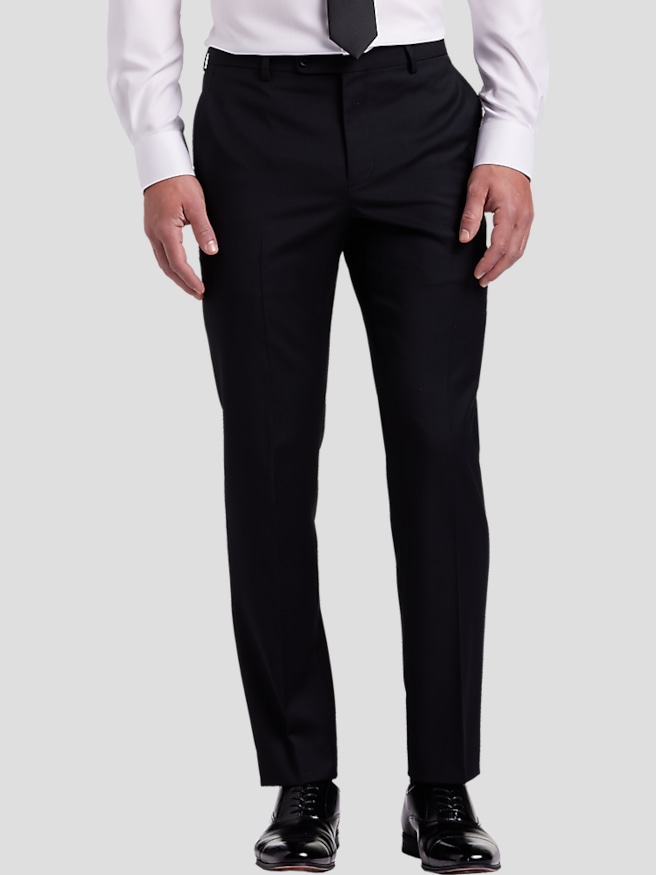
Tailored wool pants are dress trousers shaped for a clean, balanced silhouette, with enough structure to look polished and enough room to move comfortably. Their appeal comes from the way wool hangs: a well-chosen fabric falls smoothly from the hip, holds a defined crease, and gives an outfit a finished appearance without needing a matching jacket. For men moving between office meetings, evening dinners, and special occasions, that balance makes wool trousers a useful foundation. Wool is a natural fiber that can absorb moisture vapor and help regulate comfort, although fabric weight, weave, and lining all affect how a pair feels throughout the day. Smooth worsted wool has a refined surface that works well with crisp shirts and tailored jackets. Wool flannel has a softly brushed finish and a more substantial feel, making it especially appealing during the cooler months with textured sport coats or fine-gauge sweaters. High-twist wool uses tightly twisted yarns that can contribute to a springy feel and resistance to creasing; in an open weave, it can also provide welcome airflow. Merino describes the source of the wool rather than a particular weave, and its finer fibers often produce a softer hand. Pure wool emphasizes the fiber’s natural drape, while wool blends may incorporate other fibers for stretch, strength, or a distinct texture. Neither the fiber name nor the percentage alone tells the whole story: the cloth’s construction and finishing matter, too. A lightweight, tightly woven pair can feel quite unlike a heavier brushed pair, even when both share a similar fiber composition. A partial lining can add smoothness against the skin and help the trouser leg slide easily over the thigh. Within the broader category of Men's Tailored Pants, wool brings particular depth to everyday dressing, from the subtle texture of charcoal cloth to the clean line of a navy trouser beneath a pale blue shirt.
Fit gives tailored wool trousers their character, and a close cut is not automatically a better cut. The waistband should sit securely at the intended position without pinching when seated or relying on a tightly cinched belt to stay in place. Across the seat and thighs, the fabric should lie smoothly rather than pulling into horizontal lines or leaving pockets standing open. For someone with fuller thighs, a little more room through the upper leg often creates a sharper result than a narrow silhouette stretched beyond its intended shape. A tapered leg can still provide definition below the knee, while a straight leg offers a more consistent line from thigh to hem. The rise—the distance between the crotch seam and waistband—also changes both comfort and proportion. A moderately higher rise can sit naturally beneath a tucked shirt and jacket, while a lower rise creates a distinct fit that may feel less comfortable during long stretches at a desk. Tailored describes the shaping or silhouette; it does not necessarily mean the trousers were made to individual measurements. Flat fronts give a smooth, understated appearance, while pleats can provide additional room through the hip and thigh when properly fitted. Pleats should settle neatly when standing rather than remain pulled open. Belt loops and side adjusters offer distinct waistband finishes, with side adjusters providing a clean look without a belt. Length deserves equal attention because it determines how the entire leg reads. A slight break creates a small fold where the hem meets the shoe, while little or no break shows a cleaner line at the ankle. Excess fabric pooling over the instep can obscure otherwise good tailoring. When alterations are needed, fitting the trousers with the shoes intended for regular wear helps establish the right hem. Walking, sitting, and bending during a fitting reveal whether the cut supports an ordinary day, not just a moment in front of a mirror. An unfinished hem, when specified, allows the length to be completed to suit the wearer.
Color, texture, and finishing details help tailored wool pants move naturally between settings. Charcoal and navy create a restrained base for business clothing, while medium gray makes a useful bridge between formal shirts and softer knitwear. Brown and muted earth tones work especially well with textured jackets and suede footwear during the cooler months. For a presentation followed by dinner, smooth wool trousers with a tucked cotton shirt, leather shoes, and a sport coat can remain appropriate throughout the day. For a family gathering or a relaxed workplace, flannel trousers with a crewneck sweater and loafers feel considered without looking overly formal. Wool dress pants also suit many weddings, celebrations, and professional events when the stated dress code permits separates; occasions requiring a suit or tuxedo call for the corresponding ensemble rather than trousers alone. As a gift for a graduate, a partner starting a new role, or someone refreshing a work wardrobe, they are most practical when the recipient’s measurements, fit preferences, and alteration needs are known. Long-term usefulness depends on care as much as styling. The care label should determine cleaning methods, since wool fabrics, blends, linings, and waistband construction may have distinct requirements. Many structured wool trousers call for dry cleaning, and washing them without suitable instructions can cause shrinkage or distort their shape. Between cleanings, airing them after wear and gently brushing away surface dust can help keep the cloth fresh. Hanging them neatly along the crease, without crowding them against other clothing, helps preserve their line. Rotating pairs gives the fabric time to recover between wears, while avoiding overfilled pockets reduces strain and prevents bulky outlines. Spills deserve prompt attention: blotting gently is safer than rubbing, and uncertain stains are best assessed by a professional cleaner. Pressing should follow the fabric’s care requirements, with protection against excessive heat that can leave shine on dark wool. No cloth is immune to abrasion, particularly at the seat and inner thighs, but comfortable fit, thoughtful rotation, and appropriate cleaning all support durability. With those practical details in place, tailored wool pants provide a polished, adaptable foundation for years of regular wear.