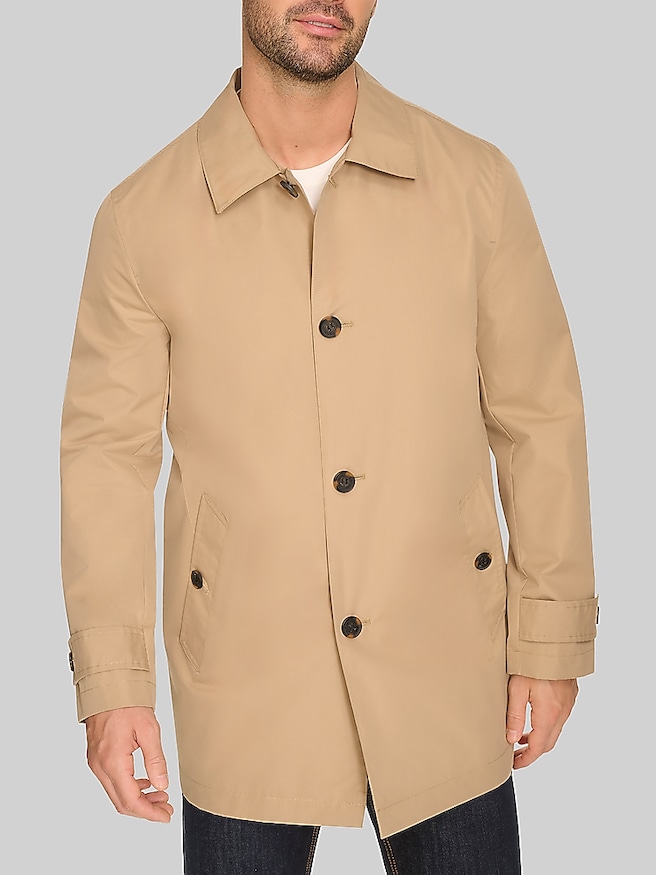
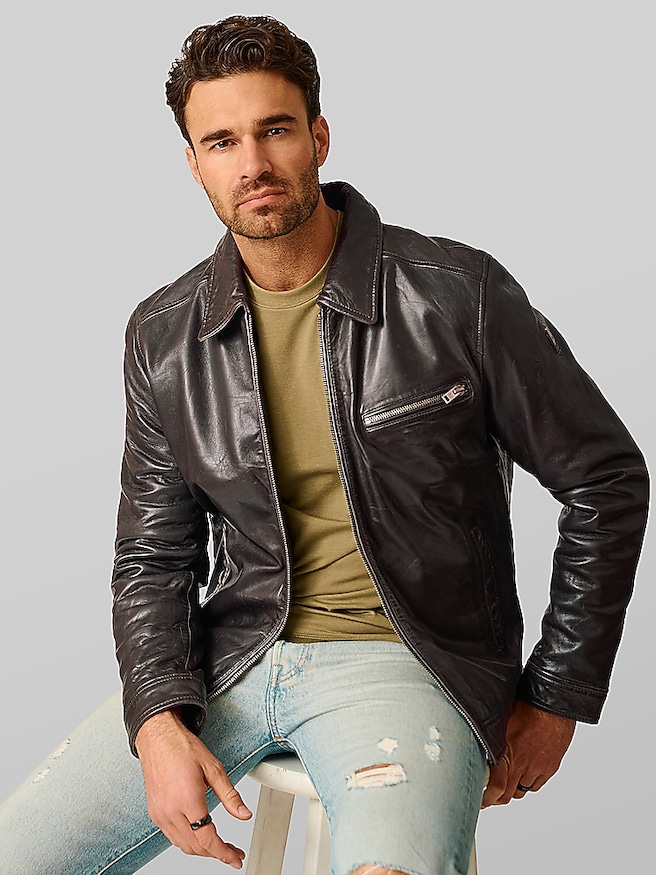
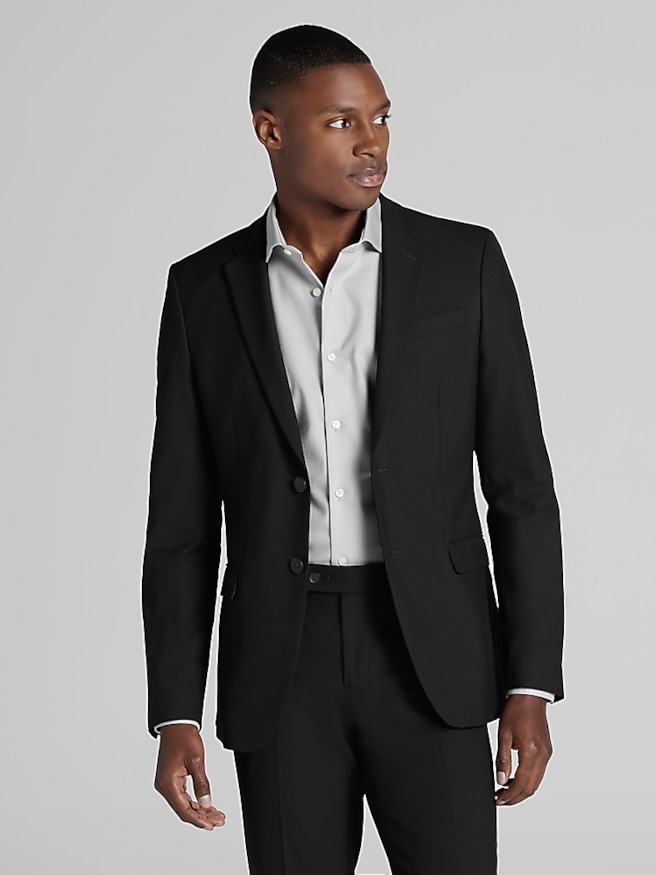
A stand-collar jacket has a short, upright collar that rises around the neck rather than folding down into a conventional collar or lapel. That simple construction gives stand collar jackets their distinctive outline: a clean neckline, an uninterrupted front, and a shape that can feel relaxed or polished depending on the fabric and cut. The collar may meet neatly at the throat, close with a snap or button, or remain slightly open above a zipper. Its height and firmness make a noticeable difference. A low, softly constructed collar frames the neck without much structure, while a taller, firmer version creates a more defined profile. Unlike the folded neckline of notch collar jackets, a stand collar keeps attention on the vertical lines of the jacket and the clothing beneath it. Over a plain crewneck T-shirt, that outline looks straightforward and casual; over a fine-gauge knit or a neatly fitted button-down shirt, it can work well for a business-casual office, a dinner reservation, or an evening gathering. When pairing two collars, keep the shirt collar sitting comfortably inside the jacket rather than bunching against its edge. Other details help establish the overall character. A ribbed hem and cuffs suggest a sportier shape, while a straight hem, discreet pockets, and minimal visible hardware create a cleaner finish. A full zipper makes the front easy to adjust, and buttons or snaps can give the closure a more deliberate appearance. Dark, understated colors pair easily with tailored pants, while textured fabrics add dimension to simple combinations with chinos or denim. The result is an adaptable jacket style for men who prefer definition at the neckline without broad lapels. It is not automatically a substitute for a suit jacket when an invitation specifies formal attire, but it can bring a composed finish to everyday dressing.
Fabric determines much of how a stand-collar jacket feels, moves, and holds its shape. Cotton twill can provide a matte surface and a recognizable woven texture, making it a natural match for casual pants and everyday shirts. Wool and wool-blend fabrics can create a more tailored appearance, with drape and surface texture that vary according to the weave and construction. Leather gives the upright collar a pronounced edge and develops creasing through use, while suede has a softer-looking surface that requires particular attention to cleaning. Synthetic fibers may contribute abrasion resistance, easier maintenance, or a smoother finish; a small amount of stretch can help with movement, although fabric content alone does not determine comfort. The lining matters, too. A smooth lining allows sleeves to slide over a shirt more easily, while the construction through the shoulders and armholes affects how freely the jacket moves. Fit deserves attention both open and closed. With the closure fastened, the front should sit without strong pulling across the chest, and the collar should leave enough room to turn the head comfortably. For a conventional set-in sleeve, the shoulder seam generally sits near the edge of the shoulder; deliberately relaxed cuts and other sleeve constructions follow a different shape. Try the jacket over the type of shirt or knit it will usually accompany, then reach forward, bend the elbows, and sit down. These ordinary movements reveal restrictions that may not be obvious while standing in front of a mirror. Check that the cuffs do not interfere with the hands and that the hem works with the rise of the pants. A shorter, closer-fitting jacket emphasizes the waist, while a straighter cut leaves more room through the torso. Neither needs to feel tight to look intentional. Pockets should remain accessible without distorting the front, and the collar edge should feel smooth against the neck. For anyone who spends much of the day seated, checking the closed jacket in a chair is especially useful.
Care and construction help determine how well stand collar jackets hold up to repeated wear. Look for even stitching, securely attached fasteners, and pocket openings that feel reinforced rather than flimsy. A zipper should move smoothly without catching the lining, and the collar should sit evenly on both sides when closed. Because this style draws attention to the neckline, puckered seams or a twisted collar can be more noticeable than on a jacket with folded lapels. Care requirements vary substantially by material, so the sewn-in label should take priority over general assumptions. A cotton blend is not necessarily machine washable, and a wool blend is not automatically suitable for the same treatment as a knit sweater. When machine washing is permitted, follow the specified water setting and drying method, and fasten closures as directed to reduce snagging. Leather and suede call for material-appropriate care; a cleaner intended for smooth leather may alter the surface of suede. Test any approved treatment in an inconspicuous area, and use a qualified cleaner when the care label calls for professional attention. After wear, empty the pockets so that keys, a phone, or a wallet do not pull the fabric out of shape during storage. A supportive hanger can help a structured jacket retain its shoulders, while knit-heavy constructions may need a different storage method according to their care instructions. Address marks promptly using the recommended method rather than rubbing aggressively at the surface. For gifting, a stand-collar jacket can suit a father, brother, partner, or recent graduate whose wardrobe leans toward clean, practical pieces. Start with the recipient’s usual jacket measurements, preferred fit, and willingness to maintain the fabric. Someone who favors uncomplicated dressing may appreciate an easy-care woven style, while someone who enjoys textured clothing may prefer a fabric with more character. The most useful choice complements familiar pants and shirts, feels comfortable through everyday movement, and has a neckline the wearer enjoys both open and fastened.