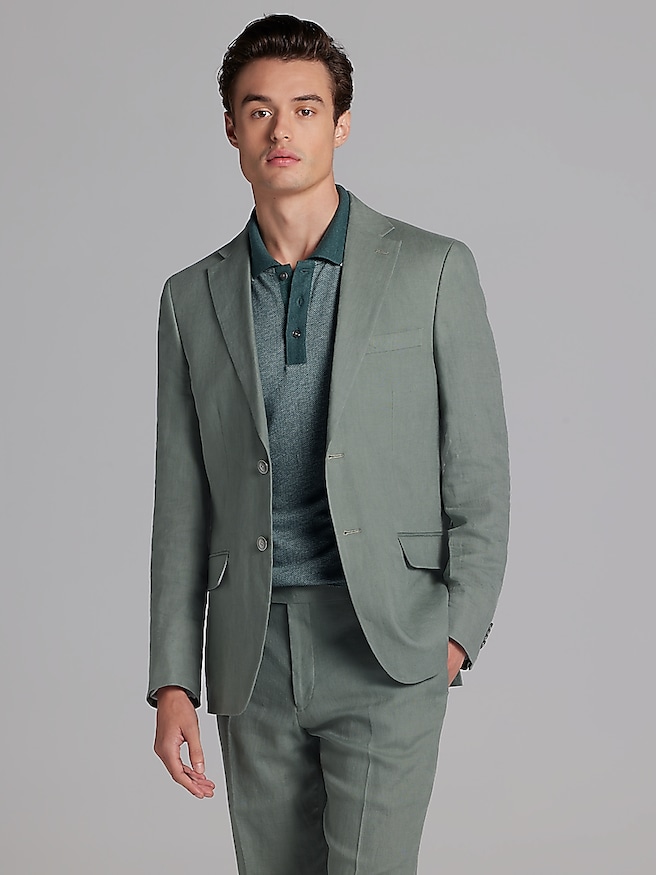
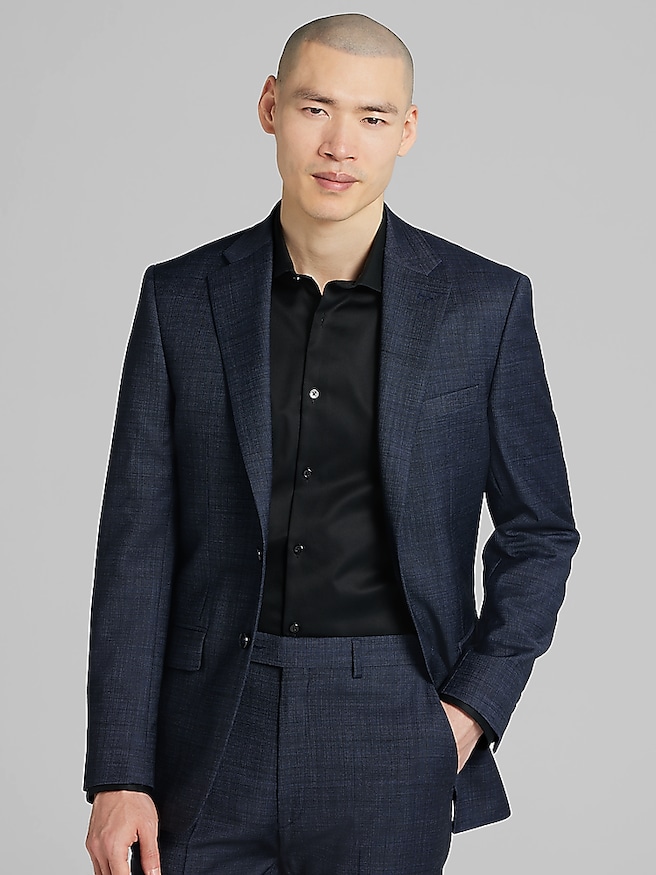
Spring wedding guest suits balance the significance of the occasion with the lighter colors and varied settings associated with spring celebrations. A ceremony beneath flowering trees, an afternoon reception on a terrace, and dinner in a city ballroom can call for distinct expressions of the same essential look: a well-proportioned jacket, coordinating trousers, and thoughtful finishing details. Navy and medium gray offer a versatile foundation, while light blue, soft sage, and beige introduce color without making the outfit feel overly assertive. Subtle texture can be just as effective as a brighter shade. A fine basket weave or quiet tonal pattern adds dimension in photographs while remaining easy to coordinate with a solid dress shirt. For daytime garden weddings, lighter neutrals and softly structured tailoring often complement the surroundings; for cocktail receptions, deeper blue or gray suits generally create a dressier impression. The invitation remains the clearest reference for formality, since a relaxed venue does not necessarily mean a relaxed dress code. A suit with a matching vest can add definition and maintain a coordinated appearance when the jacket comes off, though the extra layer also affects comfort. Formal and black-tie celebrations deserve particular attention: a dark suit may suit some formal invitations, while black tie typically calls for a tuxedo unless the hosts specify otherwise. Within those expectations, a guest’s outfit can still express personality through restrained color, fabric texture, or a distinctive tie. The overall effect should feel celebratory rather than theatrical, with enough refinement for the ceremony and enough ease for conversation, dinner, and dancing. For guests attending several spring weddings, a solid suit in a versatile shade also offers room to vary the look through shirts and accessories. The same blue suit can feel crisp with white and silver, softer with pale pink, or more grounded with a textured neutral tie.
Fabric and construction shape how a spring wedding guest suit feels over several hours, not just how it looks at the first fitting. Lightweight wool offers a balance of breathability, drape, and natural resilience, making it useful for celebrations that move between an outdoor ceremony and an indoor reception. Wool’s ability to recover from ordinary creasing can also be helpful after a drive or a seated dinner, although performance varies with the weave and fabric weight. Linen has a more relaxed character, with visible texture and natural creasing that belong to its appeal. A linen blend may temper that rumpled effect while retaining some of the fabric’s airy feel; the result depends on the other fibers and their proportions. Cotton suits tend to have a crisp, less fluid appearance, and cotton blends can provide a middle ground between structured tailoring and casual texture. Stretch blends may offer additional flexibility, but stretch does not replace a correct fit. Jacket lining and internal construction matter, too: a lighter or partially lined jacket can feel less enclosed, while more structured tailoring produces a firmer silhouette. Across fabrics, the shoulders should sit cleanly without overhang or tightness, and the jacket should button without pulling into an X across the front. A slim fit generally follows the body more closely, while roomier cuts leave additional space through the chest, seat, and thighs; fit names alone do not tell the whole story. Trousers need enough ease for sitting through the ceremony and stepping onto the dance floor without strain. A clean hem keeps fabric from pooling over the shoes, and sleeve length should allow a modest glimpse of shirt cuff. These proportions make even understated tailoring look intentional. Durable construction also supports repeated wear: secure buttons, tidy seams, and fabric that hangs smoothly help a suit remain useful beyond one invitation, especially when alterations refine the fit without restricting ordinary movement.
Shirts, shoes, and accessories give spring wedding guest suits their finishing character without requiring every detail to compete for attention. A white dress shirt creates a clear contrast with almost any suit color, while pale blue offers a softer pairing with navy, gray, or beige. A small-scale floral tie can acknowledge the season without overwhelming the outfit, particularly when its background color connects with the suit. With a patterned shirt or textured suit, a simpler tie usually keeps the combination balanced. A pocket square works best as a complement rather than an exact duplicate of the tie, and a neatly folded white square remains an understated option. Brown leather shoes often pair naturally with blue and lighter neutral suits; black leather provides a sharper finish with charcoal and more formal combinations. For a lawn ceremony, stable dress shoes with secure footing are more practical than delicate soles that struggle on uneven paths. Comfort also depends on familiar footwear, socks that stay in place, and trousers that do not catch at the shoe. Travel and after-event care help preserve the outfit’s appearance. A garment bag reduces unnecessary folding, while unpacking and hanging the suit on a broad, supportive hanger gives the fabric time to settle. The care label should govern cleaning and pressing, especially for blended fabrics or structured jackets. Gentle brushing, airing between wears, and prompt attention to spills can reduce unnecessary cleaning; aggressive rubbing or excessive heat may damage the surface. Jackets and trousers worn together should generally be cleaned together when professional cleaning is needed, helping maintain a consistent appearance. For invitations extending into another season, Summer Wedding Suits For Guests offers a related perspective on occasion dressing. A well-fitting spring suit can also remain useful for graduation celebrations, anniversary dinners, and other dressy gatherings, with a change of shirt or tie giving familiar tailoring a distinct purpose. That versatility begins with comfortable proportions, a fabric suited to the setting, and details that feel natural to the person wearing them.