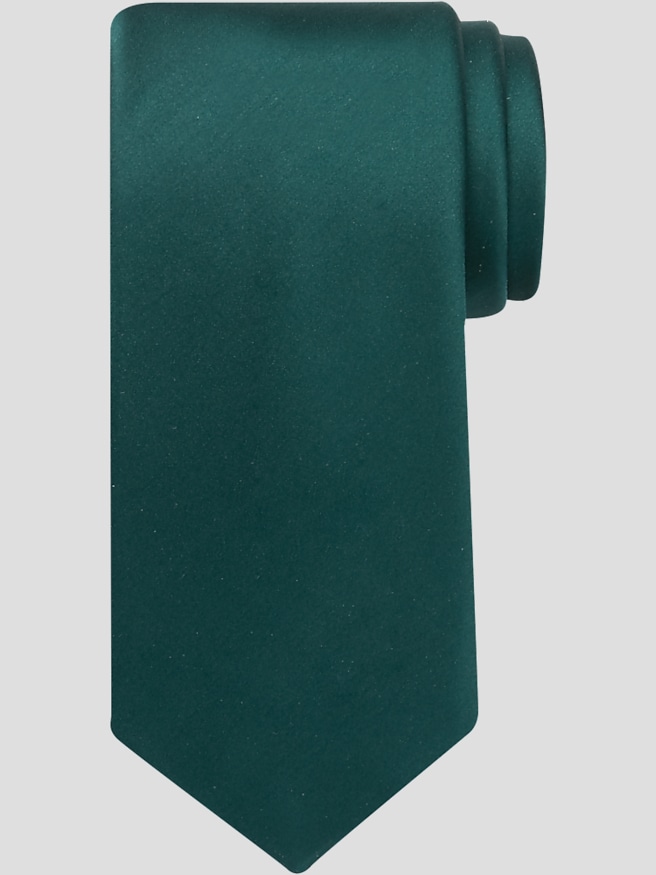
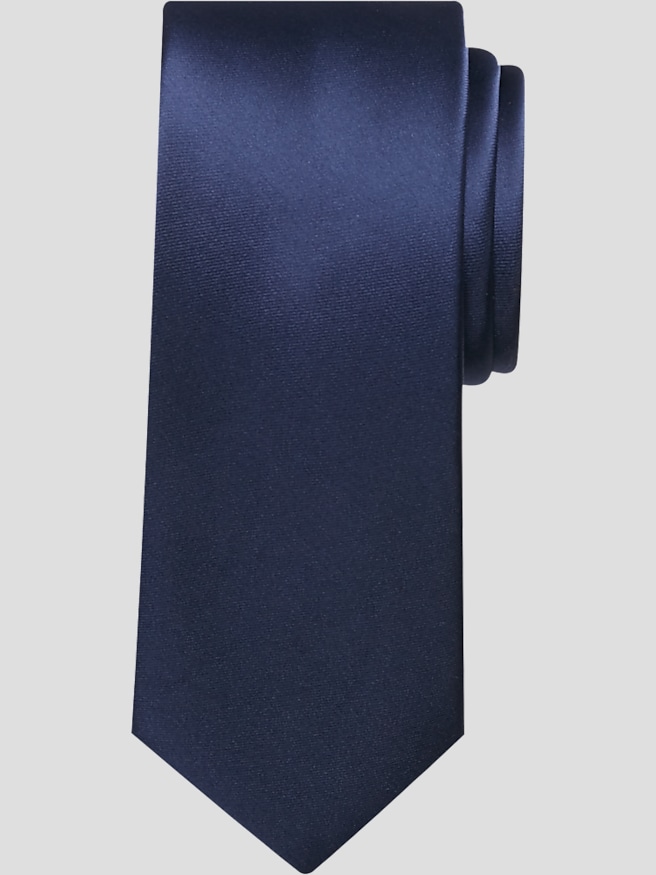
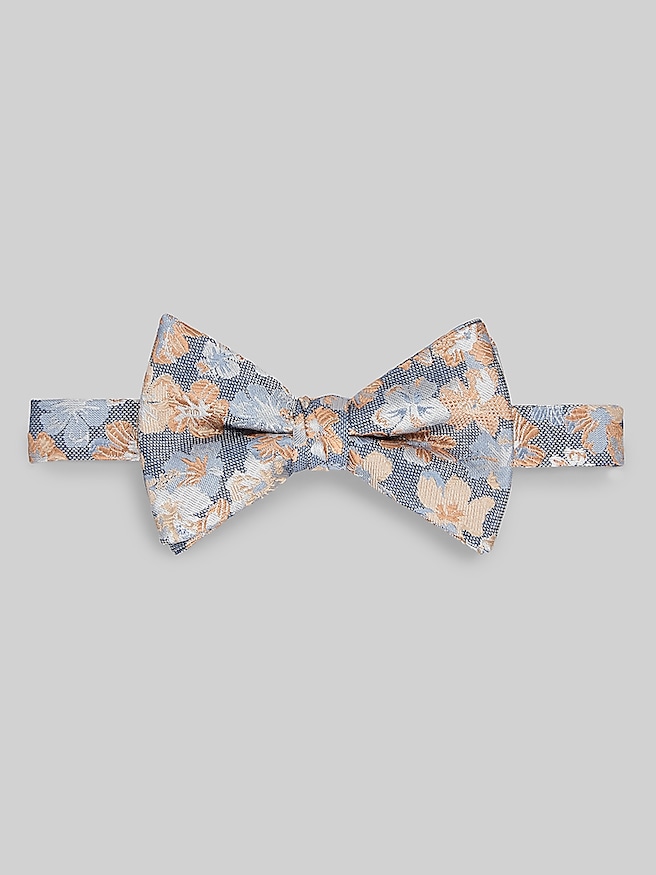
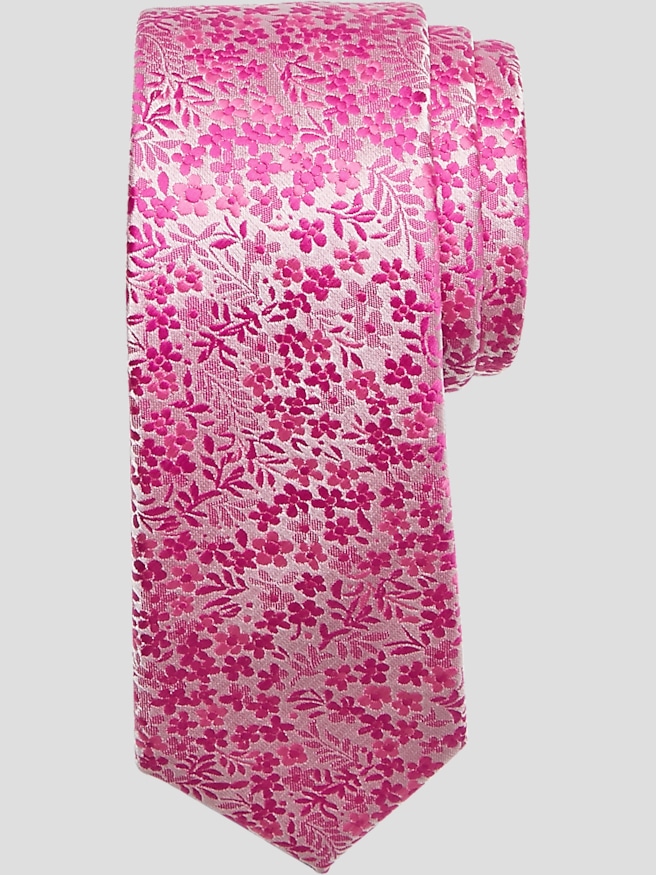
Spring ties are men’s neckties associated with lighter-looking colors, lively patterns, and fabrics that complement spring tailoring. Soft blue, sage, lavender, blush, and pale yellow bring color to a suit without requiring a bold outfit, while navy, green, and burgundy provide deeper alternatives with year-round versatility. The seasonal character often comes from the combination: a small floral against a cream background, a pale blue stripe on navy, or a subtly textured solid beside a crisp white shirt. Florals range from tiny, evenly spaced motifs that read almost like dots to larger botanical designs with a more expressive look. Paisleys, checks, and geometric patterns also suit the theme, especially when their colors connect with a shirt or jacket. These ties work for spring weddings, graduation ceremonies, office days, religious gatherings, and family celebrations where a little color feels appropriate. At a daytime wedding on a garden lawn, a sage tie can sit comfortably against a tan suit; in a conference room, a dusty blue pattern can soften charcoal tailoring without losing its professional character. A white shirt provides a clean backdrop for nearly any palette, while a light blue shirt creates a quieter combination with greens, pinks, and deeper blues. Pattern scale matters as much as color. A small tie motif remains distinct against a widely spaced shirt stripe, whereas two patterns of nearly identical size can compete. Solid ties offer a simpler route when a jacket already has a noticeable check or windowpane. For wedding parties, ties can share a color family without matching every other accessory exactly. A pocket square that picks up a secondary shade generally looks more considered than a perfectly duplicated pattern. The result is neckwear with a clear purpose: bringing spring color and personality into clothing that still feels appropriate to the occasion.
Fabric and construction shape how a spring tie looks, knots, and wears. Silk is a familiar choice for its drape and range of finishes, from smooth and lustrous to matte and textured. A woven silk tie can have enough visual depth to stand on its own with a plain shirt, while a printed silk tie often carries detailed florals or closely spaced motifs particularly well. Linen and cotton tend to have a drier, less reflective appearance that complements softly structured jackets and suits with visible texture. Linen’s characteristic irregularities are part of its appeal, although it can show wrinkles more readily than smoother fabrics. Silk-linen and silk-cotton blends can balance texture with fluidity, depending on their proportions and construction. Knit ties introduce another option, with an open-looking surface and, often, a squared end that feels less ceremonial than a traditional pointed blade. A tie’s light appearance does not necessarily mean it is thin: the outer fabric, lining, and internal structure all contribute to its weight and knot size. For proportion, tie width generally works best in conversation with the jacket’s lapels and the wearer’s frame rather than as an isolated measurement. A narrow blade can look undersized beside broad lapels, while a very wide tie may overwhelm a trim jacket. Length matters, too. With the knot settled at the collar, the front tip usually reaches around the waistband, leaving the shorter blade concealed behind it. Taller wearers or those with a larger neck measurement may need additional length to achieve that balance. A four-in-hand knot creates a compact, slightly asymmetrical shape that suits many collars; a half-Windsor offers a fuller, more balanced triangle. Thick fabrics need less knot volume, while lighter fabrics can accommodate a little more. Those details help a tie sit comfortably at the neck and hang cleanly through a full day of meetings, photographs, or celebration.
Good care helps preserve the color, shape, and surface of spring neckwear, especially when a favorite tie becomes a regular part of a work wardrobe. The care label should determine cleaning, since silk, cotton, linen, and blended fabrics can require different treatment. Many structured ties are not suited to machine washing, even when the outer fabric sounds familiar from washable shirts. Moisture and agitation can affect the lining, distort the blade, or leave the layers sitting unevenly. Spills are best handled promptly with gentle blotting rather than vigorous rubbing, followed by cleaning appropriate to the fabric. For delicate ties, a professional cleaner experienced with neckwear can assess stains without relying on repeated home treatments. At the end of the day, reversing the steps of the knot instead of pulling the narrow blade through a tight opening reduces unnecessary strain. Giving a tie time to rest between wears also allows minor creases to relax. Smooth woven ties can hang on a suitable rack, while knit styles often benefit from being loosely rolled or stored flat so they do not stretch. A suitcase calls for a loose roll or a protective tie case rather than a hard fold beneath shoes or other heavy belongings. Construction is worth considering alongside care: neatly finished edges, secure stitching, and a blade that hangs without twisting are useful signs of attention to detail, though every fabric will respond differently to wear. These practical qualities also make ties thoughtful gifts for graduates, wedding attendants, partners, or anyone building a wardrobe for a new professional role. A restrained pattern in a familiar color is often easier to wear regularly than a novelty design. Beyond formal occasions, a textured tie can work with an Oxford shirt, tailored trousers, and an understated casual jacket. For that less structured combination, Spring Bombers offer an alternative to a suit jacket, provided the overall look suits the setting. Whether chosen for one celebration or repeated weekday wear, a spring tie earns its place through comfortable proportions, compatible colors, and fabric that fits the way it will be worn.