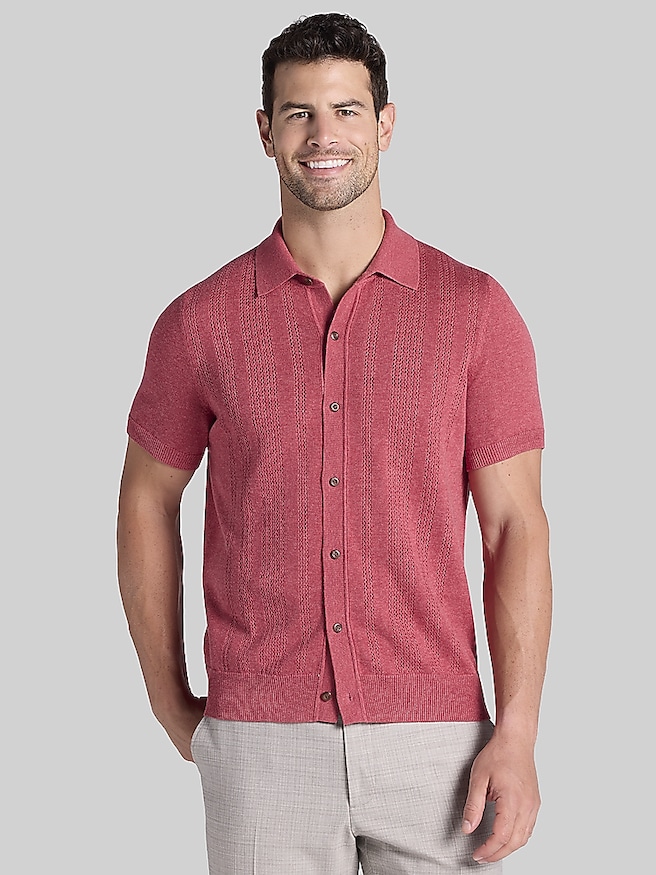
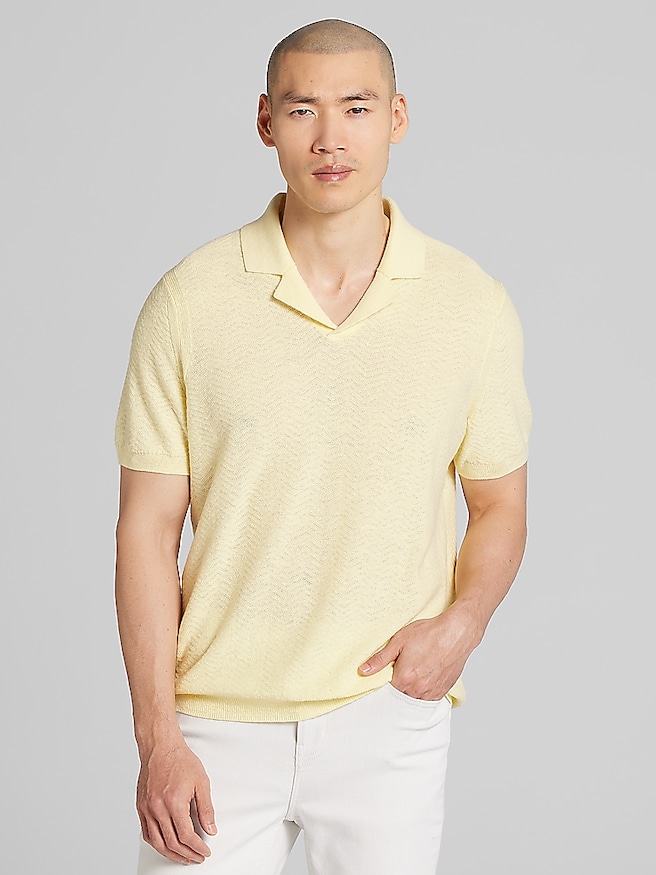
Spring sweaters are lightweight knit layers that bring texture, comfort, and a finished look to outfits for mild days and brisk mornings. For men’s spring wardrobes, fine-gauge pullovers, button-front cardigans, and zip-neck styles offer warmth without the bulk of heavier knitwear. Their appeal is versatility: a smooth crewneck can sit neatly over a T-shirt, while a V-neck leaves room for the collar of a button-down shirt. A cardigan opens easily when an afternoon feels warmer and closes comfortably for an evening outdoors. Fabric makes a noticeable difference in how each style feels and drapes. Cotton offers a soft, familiar hand and a breathable feel, making it a practical choice for everyday wear. Cotton-linen blends can have a drier texture and a relaxed appearance, with subtle irregularities that suit casual outfits. Fine merino wool provides lightweight insulation and can help manage moisture, while cashmere and cashmere blends offer softness with relatively little weight. Fiber content is only part of the picture, though. A densely knitted cotton sweater may feel warmer than a loosely knitted wool blend, so stitch construction and fabric thickness matter alongside the label. Fine, compact stitches tend to create a smoother surface that layers well beneath a jacket. Open-knit textures allow more airflow and give a simple outfit added dimension, although a visible base layer becomes part of the look. Ribbed patterns introduce texture and stretch without requiring bold color or a large pattern. For spring use, the most adaptable sweaters have enough substance to take the edge off a breeze but remain comfortable indoors. That balance makes them useful for a commute, lunch on a patio, or a weekend visit when a shirt alone feels a little too light. Lightweight construction also makes a sweater easy to fold into a tote or overnight bag without taking up the space of a heavier outer layer.
Fit determines whether a spring sweater looks relaxed, polished, or somewhere in between. A regular fit generally leaves space for a shirt underneath without excess fabric gathering around the waist. A closer fit creates a clean outline under a tailored jacket, provided the knit does not pull across the chest or cling at the midsection. Shoulder seams typically sit near the natural edge of the shoulder unless the design intentionally uses a dropped shoulder. Sleeves should allow comfortable movement, with cuffs resting around the wrist rather than covering the hand. At the hem, enough length to meet the top of the trousers helps maintain coverage when reaching or sitting, while excessive length can interrupt the proportions of a tailored outfit. The intended base layer matters, too: a sweater worn over an undershirt needs less room than one worn over a woven button-down. Crewnecks pair naturally with chinos, jeans, and casual trousers, especially when the neckline lies flat and the shirt beneath does not bunch. V-necks frame a shirt collar and can accommodate a tie without crowding the neckline. A zip neck offers a sportier finish, while a cardigan adds an adjustable front that works well for desk-to-dinner dressing. Navy, gray, cream, and muted earth tones provide easy combinations with established wardrobe staples. Pale blue, soft green, and understated pink introduce spring color without making the entire outfit feel bright. Texture can provide the interest instead: a lightly ribbed sweater with smooth trousers creates contrast that remains restrained. For occasions that call for a tailored finishing layer, Spring Formal Coats can complement lightweight knitwear, with the full outfit chosen to suit the stated dress code. A fine-gauge sweater may fit a business-casual office or a relaxed dinner, while more formal settings can require a shirt, tie, or suit instead. The sweater’s neckline, thickness, and overall fit help determine where it belongs, rather than color alone.
Care and construction influence how well spring sweaters hold their shape through repeated wear. Even stitching, secure seams, and ribbed edges that recover after a gentle stretch are useful signs of thoughtful construction. A lightweight knit does not need to feel thick to be durable, but it should have an even surface without unintended gaps or loose areas around stress points. Buttons should be firmly attached, and a zipper should move smoothly without catching the knit. Care requirements vary by fiber and construction, so the sewn-in label remains the best reference for washing, drying, and professional cleaning. Some cotton and blended sweaters permit machine washing on a gentle cycle, while other knits call for hand washing or dry cleaning. Heat and agitation can cause shrinkage, felting, or a change in texture, particularly with animal fibers. When washing is permitted, gentle handling and careful reshaping help preserve the original proportions. Drying flat, when directed, supports the garment’s weight and helps prevent a stretched hem or elongated sleeves. Folding sweaters for storage also reduces the shoulder bumps that hanging can leave behind. Friction from bag straps, jacket linings, and frequent contact at the sides can lead to pilling; a fabric comb or suitable sweater shaver, used carefully according to its directions, can tidy the surface without aggressive pulling. A short airing between wears may help refresh a sweater that is otherwise clean, and prompt attention to spills keeps a small mark from becoming harder to treat. These practical details matter for anyone who reaches for knitwear several times a week, packs it for travel, or keeps a light layer close at hand in an air-conditioned office. Spring sweaters also make useful gifts for someone who appreciates comfortable, versatile clothing. Familiar colors, a neckline the recipient already wears, and a manageable care routine usually matter more than an unusual detail. A well-chosen sweater should feel at home with the shirts, trousers, and jackets already in the closet, bringing another comfortable option to everyday dressing.