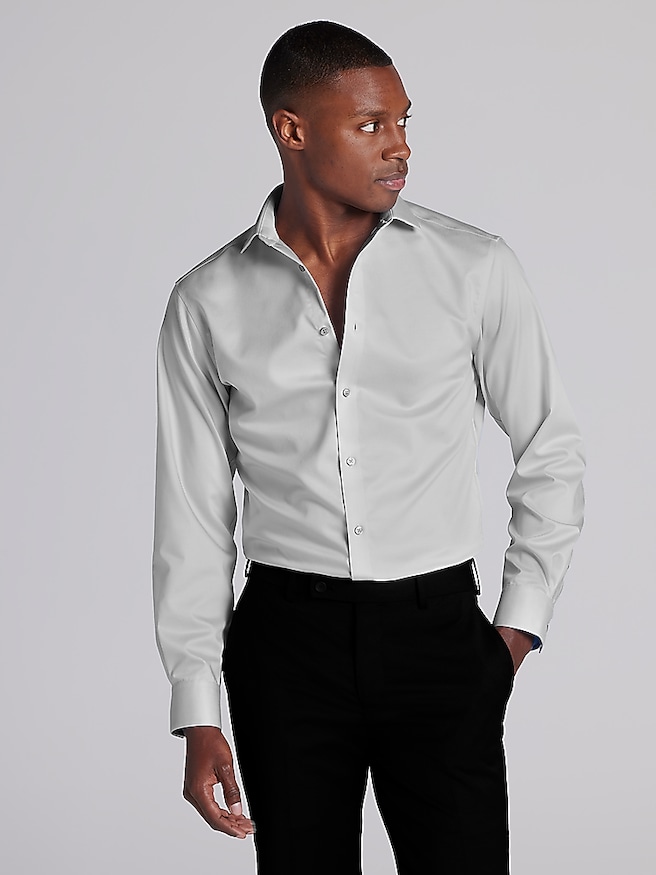
Spring long sleeve shirts bring lightweight fabrics, full sleeve coverage, and easy layering to a season known for cool mornings and mild afternoons. They occupy a useful space between a crisp dress shirt and a relaxed weekend shirt, with the fabric, collar, and cut determining how polished or casual they feel. Cotton is a familiar choice for its softness and breathability, while linen has an airy feel and a naturally textured appearance. Cotton-linen blends can balance the character of linen with the smoother hand of cotton, though the exact feel depends on the blend and construction. Poplin offers a fine, relatively smooth surface that sits neatly beneath a jacket. Oxford cloth has a more noticeable basket-weave texture, giving it a relaxed character that works well for everyday office wear. Lightweight chambray provides a denim-like appearance without necessarily having the weight of denim, and rayon blends can offer a softer, more fluid drape. Fiber content alone does not tell the whole story: fabric weight, weave density, and finishing also affect how a shirt feels against the skin. A loosely woven fabric may allow more airflow than a densely woven fabric made from the same fiber. For spring dressing, lighter constructions are particularly useful when a day includes a walk outdoors, a commute, and several hours inside. Long sleeves provide coverage without requiring a heavy outer layer, and sleeves that roll comfortably make the shirt more adaptable. White, pale blue, muted green, and soft neutral shades create a light visual impression, while fine stripes and small checks add detail without dominating an outfit. Deeper colors remain useful, too, especially when paired with lighter trousers. The most versatile choices have enough substance to hang neatly without feeling stiff, with a surface and texture suited to the setting rather than simply the season. A shirt intended for desk work may benefit from a crisp finish, while one chosen for a relaxed outdoor lunch can feel perfectly at home with a little natural texture.
Fit makes a substantial difference in how a spring long sleeve shirt looks and moves, particularly when lightweight fabric leaves less room to disguise pulling or excess volume. On a traditional set-in sleeve, the shoulder seam generally sits close to the edge of the shoulder. The chest should allow comfortable movement without the buttons pulling apart, and the back should not feel tight when reaching forward across a desk or steering wheel. A slim fit creates a closer outline, while a classic or relaxed fit offers more room through the torso; neither should restrict ordinary movement. Sleeves should reach the wrist without swallowing the hand, and cuffs should close comfortably rather than pinch. A small amount of stretch can help with mobility, but it does not replace the right size. Shirt length matters just as much as the label on the fit. A longer hem is helpful for staying tucked through a workday, while a shorter, balanced hem generally looks neater worn loose. Button-down collars have a familiar, easygoing character, while point and spread collars can support a more tailored appearance, depending on their construction. For a business-casual office, a lightweight woven shirt with chinos and leather shoes creates a composed outfit without needing a full suit. A jacket adds structure for a client meeting and can be set aside afterward without leaving the shirt looking unfinished. For a weekend lunch, travel day, or backyard gathering, an open collar and relaxed trousers keep the same category of shirt approachable. The broader range of Spring Casual Shirts offers another way to explore the laid-back side of spring dressing. For celebrations, the invitation and venue should determine the level of formality; a casual woven shirt is not automatically a substitute for a dress shirt. Subtle patterns are especially useful when the rest of the outfit has texture, and a solid shirt gives patterned trousers or a jacket room to stand out.
Care and construction influence how well long sleeve shirts hold their shape through repeated wear. Even stitching, secure buttons, smoothly finished seams, and cuffs that lie flat are useful details to consider alongside fabric and fit. Areas that see regular friction, including collars, cuffs, and elbows, benefit from construction that feels substantial without being bulky. Lightweight does not have to mean fragile, but an especially fine or open fabric may need gentler handling than a sturdier weave. The care label remains the best reference because shirts with similar fiber content can have different finishes, trims, and washing requirements. When machine washing is permitted, appropriate water temperature, a suitable cycle, and avoiding excessive heat can help protect color and shape. Prompt removal from the washer or dryer reduces the chance of deep-set creases, while hanging a shirt with the collar and placket smoothed into place helps it dry more neatly. Cotton may need pressing for a crisp finish, and linen naturally develops wrinkles that are part of its relaxed appearance. A wrinkle-resistant finish can reduce maintenance, but it does not mean a shirt will remain perfectly smooth after being packed tightly or worn all day. For travel, a shirt that coordinates with several pairs of trousers and layers comfortably under a jacket can earn its place in a small bag. Giving it room on a hanger after unpacking helps restore its drape, with steaming or pressing used only as the care instructions allow. Spring long sleeve shirts can also make practical gifts for a dad, partner, graduate, or someone building a work wardrobe. Familiar measurements, preferred collar styles, and realistic care habits are more helpful than guessing based on appearance alone. Someone who enjoys a freshly pressed shirt may appreciate crisp cotton, while someone who prefers a relaxed finish may feel more comfortable in a textured blend. The lasting value comes from a shirt that suits daily routines, feels comfortable through ordinary movement, and looks appropriate wherever the day leads.