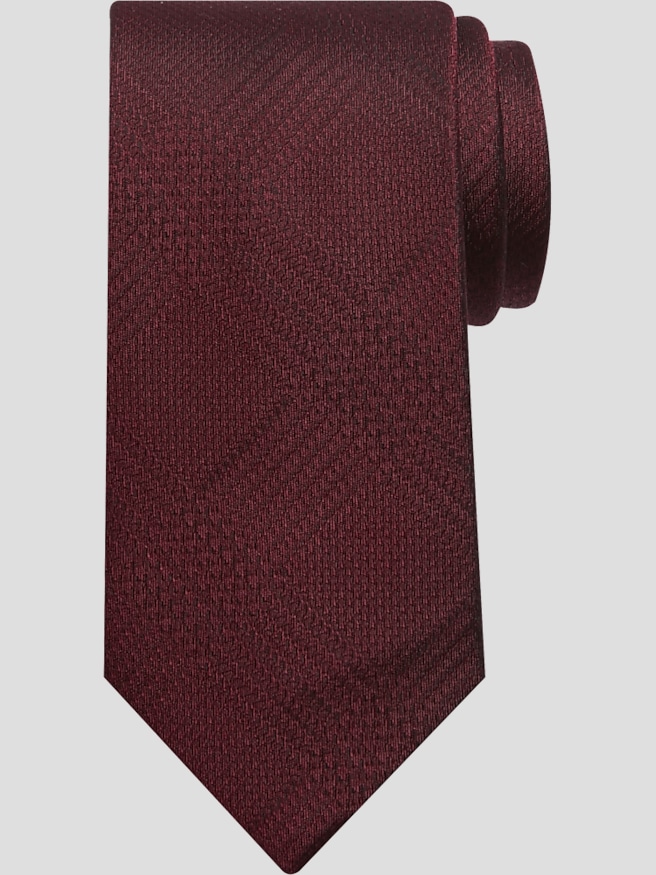
Solid silk ties bring a single, uninterrupted color to tailored outfits, making them versatile accessories for business settings, weddings, interviews, and other occasions that call for polished dress. Their appeal comes from the combination of silk’s natural luster, fluid drape, and ability to hold rich color without needing a printed pattern. A solid design does not necessarily mean a flat surface: satin weaves can look smooth and luminous, while twill introduces a fine diagonal texture, and other woven finishes give the fabric a more subdued appearance. These differences affect how a tie looks against a shirt and jacket, particularly under office lighting or in photographs. A softly textured navy tie can feel restrained with a charcoal suit, while a burgundy silk tie adds depth to a white shirt without competing with the rest of the outfit. Black creates a crisp contrast with lighter shirting, and shades of blue, green, gray, or brown provide other ways to coordinate with tailoring. Because there is no prominent motif to balance, solid silk neckties work especially well with striped shirts, checked jackets, and subtly patterned suits. They also look intentional with plain fabrics, where the distinction between a matte wool jacket, a crisp cotton shirt, and a gently reflective tie supplies visual interest. For a wedding party, a shared tie color can establish a coordinated look without requiring every suit or shirt to be identical. For a presentation or job interview, a restrained shade keeps attention on the person wearing it rather than on a busy accessory. The finish matters as much as the color: a highly lustrous surface tends to read as dressier, while a textured weave can sit comfortably within everyday professional clothing. Silk ties are not all constructed the same way, so fiber content, weave, lining, and overall proportions are useful distinctions when comparing styles. A tie labeled pure silk has a different composition from a silk blend, and the fabric label gives a clearer picture than appearance alone.
The fit of a solid silk tie depends on its width, length, and relationship to the rest of the outfit. Width generally looks most balanced when it relates to the jacket lapels and the wearer’s frame rather than following a trend in isolation. A narrow tie creates a leaner line with slim lapels, while a broader shape often complements more substantial tailoring. Length matters just as much: when tied, the front blade typically finishes near the waistband or belt buckle, with the narrow end sitting behind it rather than extending below. Taller wearers, larger neck sizes, and fuller knots may require additional length to reach that position comfortably. A tie that looks well proportioned before knotting can finish too short if a large knot uses more fabric than expected. The four-in-hand produces a relatively compact, slightly asymmetrical shape that suits many everyday shirt collars. A half-Windsor creates a fuller, more symmetrical knot, although the finished size also depends on fabric thickness and construction. A wider spread collar generally has room for a more substantial knot, while a narrower opening often looks balanced with less volume. With a solid color, these details become particularly noticeable because there is no pattern drawing attention away from the knot or the way the blade hangs. A small dimple beneath the knot can add dimension, but the fabric should settle naturally rather than look tightly compressed. Lining helps give a tie its body and influences how it knots, drapes, and recovers after wear; a thicker feel is not automatically a sign of better quality. Neat stitching, an even shape, and edges that lie smoothly contribute to a finished appearance. In a complete outfit, the shirt collar should sit comfortably around the neck, the knot should rest neatly at the collar opening, and the tie should fall without twisting. These proportions help a simple accessory look considered, whether it accompanies a full suit or a jacket and dress trousers.
Care has a direct effect on how long silk neckwear retains its appearance. Silk is a fine natural fiber, and repeated friction, sharp objects, moisture, and careless storage can leave visible marks. Untying the knot after each wearing, rather than pulling the narrow end through a tightened knot, reduces unnecessary strain on the fabric and seams. Resting the tie between wearings allows light creases to relax, while smooth hanging or loose rolling helps prevent hard folds. Storage away from direct sunlight can help protect color, and enough space between accessories keeps the surface from rubbing against rough fasteners or hardware. Stains deserve particular caution because rubbing or adding water can spread a mark or leave a ring. The care label should guide cleaning, and a professional cleaner experienced with silk neckwear can assess spills or stubborn marks. Direct ironing and aggressive heat can flatten texture or alter the surface, so pressing methods should also follow the manufacturer’s guidance. Everyday habits matter as well: keeping a tie clear of a meal, fastening a jacket thoughtfully, and avoiding contact with abrasive bag straps can reduce preventable wear. With appropriate care, a well-made solid silk tie can remain useful across many occasions, moving from regular office outfits to graduations, ceremonies, dinners, and celebrations. It can also make a thoughtful gift for a graduate beginning a professional wardrobe, a partner marking a milestone, or someone who enjoys tailored clothing. Familiar suit colors, preferred tie widths, and usual dress codes provide more useful direction for a gift than a striking shade alone. The same attention to texture and proportion applies when exploring Cool Silk Ties, while a solid design places particular emphasis on the character of the fabric. For someone building a small, versatile tie wardrobe, colors that coordinate with several shirts and jackets can support repeated wear without making every outfit look identical. The lasting appeal of solid silk lies in that balance: enough richness to finish a dressed-up look, with enough simplicity to complement the clothing around it.