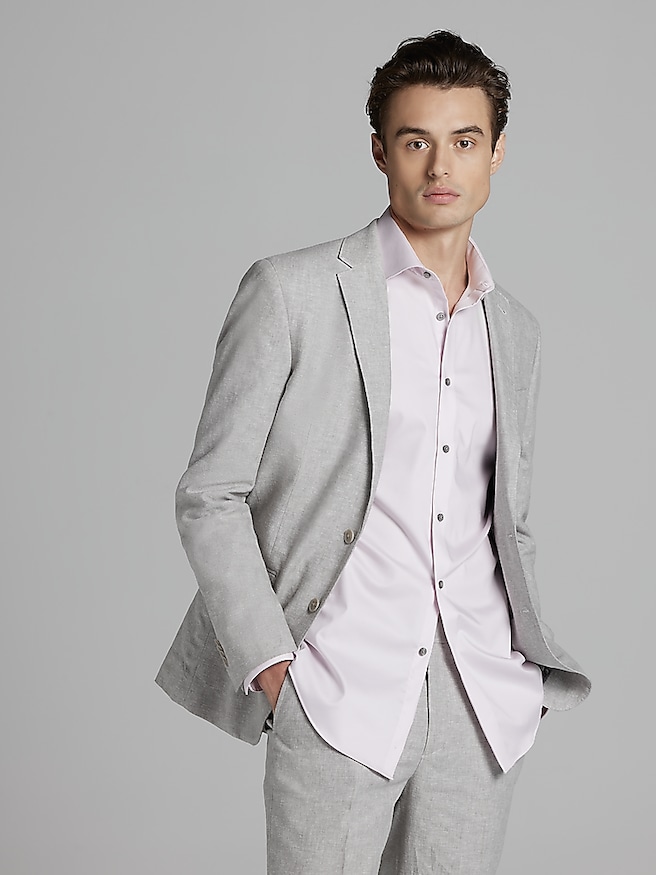
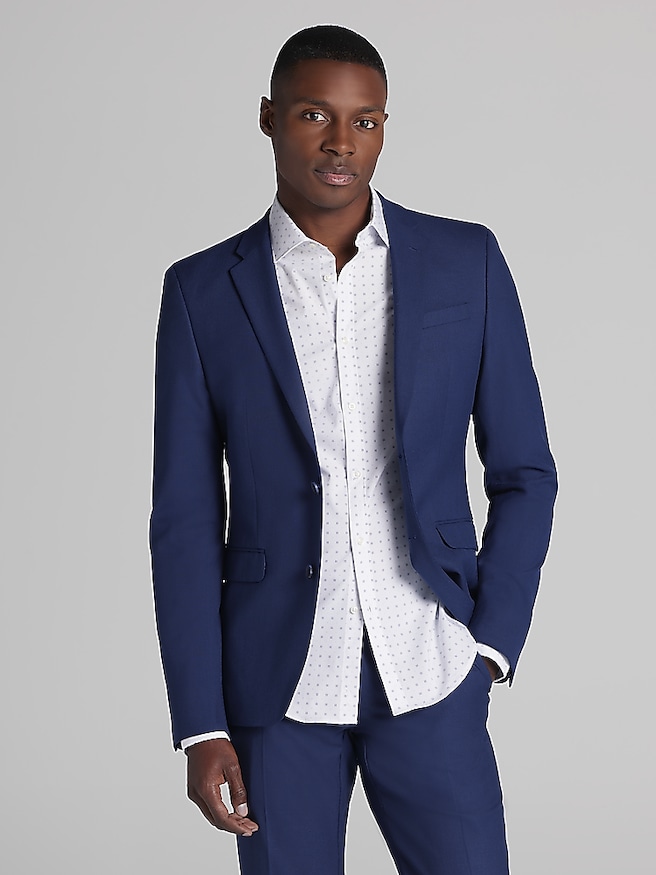
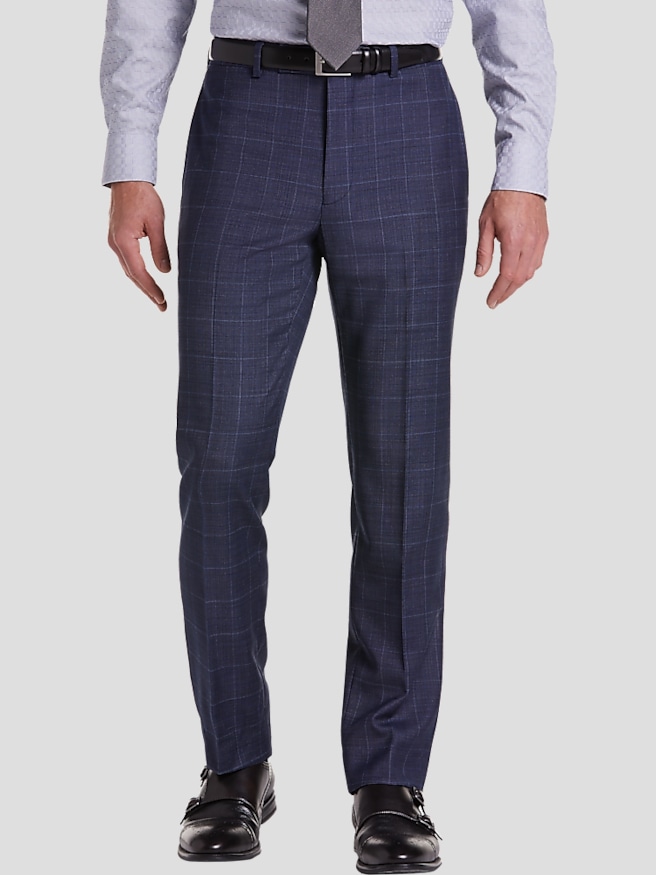
Slim fit suits for a wedding offer a streamlined silhouette with shaping through the jacket’s chest and waist and a narrower line through the trousers. The effect is polished without needing to be tight: the jacket follows the torso, while the pants taper toward the ankle without clinging to the legs. This balance makes slim-fit tailoring a natural choice for grooms, groomsmen, and wedding guests who prefer a defined shape in person and in photographs. Compared with classic-fit tailoring, slim cuts generally have less room through the body and legs, although proportions vary by design. A successful fit depends on shoulder width, chest shape, and leg proportions rather than a particular body type. Color helps establish the mood of the outfit. Navy has depth without the severity of black and pairs easily with a white shirt, textured tie, and polished leather shoes. Charcoal feels understated and formal, while medium gray creates a softer contrast with ivory shirts and muted accessories. Black can create a crisp, dressy look, but the invitation’s dress code remains important; a dark suit is not a substitute for a tuxedo when black tie is required. For the wedding party, coordinated suit colors create visual continuity without requiring identical details from every person. A groom’s vest, distinctive tie, or pocket square can provide a subtle point of distinction while keeping the group cohesive. Solid fabrics also leave room for meaningful accessories, such as cuff links given as a wedding-day gift or a tie chosen to complement the celebration’s colors. The strongest combinations have a clear focal point rather than several competing patterns. A lightly patterned tie against a smooth suit, or a textured pocket square beside a restrained lapel, brings dimension to close-up portraits without distracting from the person wearing it. The result is wedding attire that feels considered, appropriate to the occasion, and comfortable enough to remain part of the celebration from the ceremony through the final toast.
The appeal of a slim-fit wedding suit rests as much on proportion as on its narrower cut. Jacket shoulders should sit close to the natural shoulder line without collapsing at the sleeve or extending noticeably beyond it. Because shoulder construction is complex to alter, a sound fit there provides a better starting point than relying on adjustments to correct the entire jacket. Across the chest, lapels should lie flat, and the front should close without pronounced pulling around the button. A little shaping at the waist creates definition; deep creases radiating from the fastening usually indicate too much tension. Jacket length matters, too. A balanced hem generally covers the seat and works with the wearer’s torso and leg length rather than chasing an unusually cropped appearance. Sleeves that reveal a small amount of shirt cuff add a neat finishing detail, especially when exchanging rings or raising a glass. Slim trousers should allow room through the seat and thighs before narrowing toward the hem. Sitting through dinner, walking up steps, and joining the dance floor all require more movement than standing still for a fitting. Fabric that catches at the knees or pulls across the pockets can interrupt an otherwise clean line. A slight break or minimal break over the shoes often complements a tapered leg, with the exact length depending on footwear and personal preference. Alterations can refine sleeve length, trouser hems, and some waist shaping, but they cannot reliably transform the underlying proportions of every suit. Shirts and optional vests also influence comfort beneath a close-fitting jacket. A shirt with excess fabric can bunch at the waist, while a vest that lies smoothly helps maintain a tidy profile when the jacket comes off. For wedding parties with varied builds, coordinating color and fabric while allowing suitable fit adjustments usually looks more cohesive than forcing everyone into the same proportions. Consistency comes from the overall presentation, not from making every silhouette identical.
Fabric and construction influence how a slim-fit suit drapes, moves, and holds its appearance throughout a wedding. Wool is valued for its natural resilience and ability to form a smooth, structured line without looking stiff. Its fibers can recover from light creasing, although the weave, weight, and finishing all affect the result. Wool blends may combine that tailored appearance with added strength or flexibility, depending on their composition. Fabrics containing stretch can make reaching, sitting, and dancing more comfortable, but stretch does not compensate for a jacket or trouser that is too small. A smooth worsted fabric produces a crisp, refined surface, while subtle texture adds depth to a solid color without the visual emphasis of a bold pattern. Linen has a more relaxed character and develops visible creases, which can suit an informal celebration but may not match the sharp finish expected at a formal ceremony. Lining and internal structure also shape the experience of wearing the suit. A more structured jacket creates definition through the chest and shoulders; lighter construction follows the body more softly. Neither approach is automatically better, and the right balance depends on the desired silhouette and level of formality. Durability comes from appropriate fit, sound seams, thoughtful handling, and care suited to the fabric. Tension at pockets, knees, and jacket buttons places unnecessary stress on cloth and stitching. After wear, a shaped hanger helps support the jacket’s shoulders, and hanging trousers neatly helps preserve their line. Gentle brushing can remove surface dust, while professional cleaning should follow the care label rather than an automatic schedule after every brief wear. Stains benefit from prompt attention by a qualified cleaner, particularly when the fabric or finish requires special handling. Beyond the wedding itself, Mens Slim Fit Suits can provide a tailored foundation for anniversary dinners, business events, and other dressy occasions. A versatile solid color and balanced proportions make it easier to change the mood with another shirt, tie, or pair of shoes. That lasting usefulness gives wedding tailoring a place in a wardrobe well after the photographs are framed.