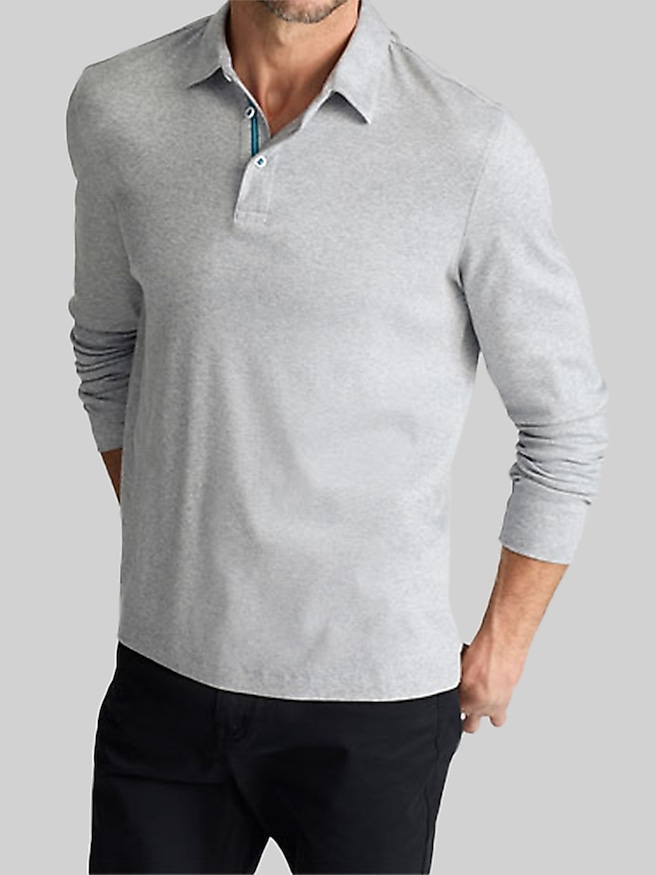
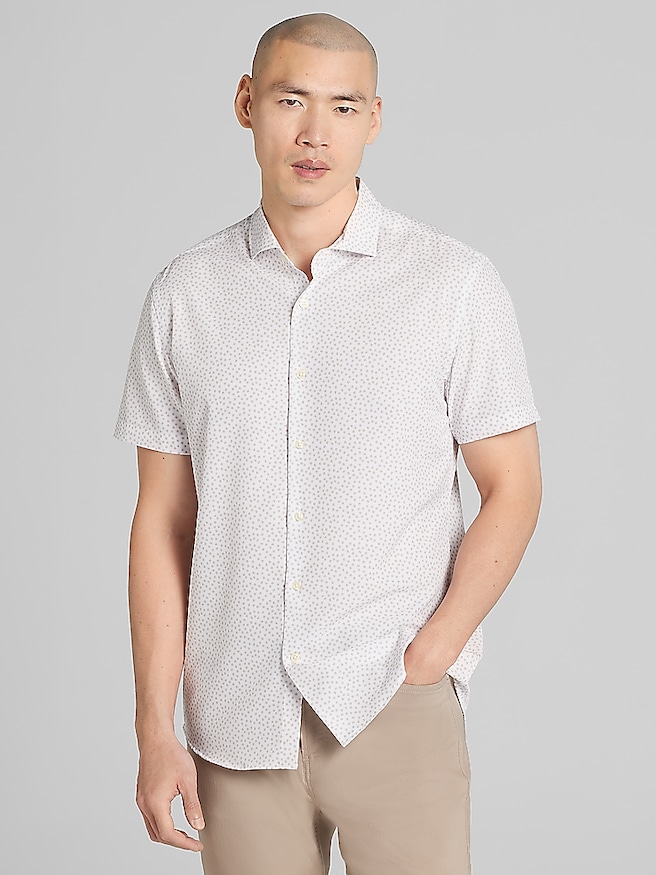
Slim fit polos bring a clean, close-to-the-body shape to a shirt that sits comfortably between a T-shirt and a button-down. The collar adds definition around the face, the short button placket keeps the front simple, and the narrower cut reduces excess fabric through the chest and waist. That combination works well for everyday dressing when a full dress shirt feels unnecessary but a crewneck feels too casual. Think of a lunch meeting in an office where collared casual shirts are appropriate, dinner at a neighborhood restaurant, or a weekend gathering with friends. A good slim fit follows the torso without clinging to it: the shoulder seams generally sit near the edge of the shoulders, the chest stays smooth with the buttons fastened, and the sleeves leave enough room to move without flaring widely at the opening. Fabric pulling across the chest, a placket that gaps, or a hem that rides up with an easy reach can signal that the cut is too snug. Slim does not have to mean tight, and the right shape depends as much on shoulder width and torso proportions as it does on the size printed inside the collar. Slim fit polos sit within the broader family of Fitted Polos, with an emphasis on a streamlined outline rather than a loose, boxy profile. Length matters, too. An untucked polo usually looks balanced when the hem covers the waistband without extending so far that it overwhelms the pants. A shirt intended for tucking needs enough length to stay in place when sitting or reaching. Side vents can give the hem room to settle over the hips, while a slightly longer back hem may help with coverage. These small construction details affect how the shirt looks in motion, not just how it appears while standing still. They also help explain why two polos marked with the same size can feel noticeably different through the body.
The fabric gives a slim fit polo much of its character. Cotton piqué has a subtly textured surface, often recognizable by its tiny raised pattern, that lends the shirt a classic, substantial look without making it resemble a dress shirt. Cotton jersey has a smoother face and a softer, T-shirt-like drape, which can make the same narrow silhouette feel more relaxed. Interlock knits tend to have a smooth, more substantial structure, while blends introduce other qualities depending on their composition. A small amount of elastane can add stretch for reaching across a desk or settling into a chair, particularly useful in a shirt with less extra room through the torso. Polyester and other synthetic fibers may contribute resilience, quicker drying, or moisture management, though performance depends on the fabric and finish rather than the fiber name alone. The balance between softness and structure is worth noticing: a very fluid knit may trace the body more closely, while a firmer fabric can hold a cleaner line through the chest and waist. Fabric weight also changes the way a polo layers, tucks, and hangs at the hem. Lightweight construction can slide neatly beneath a jacket, while a more substantial knit may provide a defined shape worn on its own. Neither approach is inherently better; the intended use and preferred feel make the difference. For a day with plenty of movement, stretch and freedom across the upper back may matter most. For a desk-based setting, a collar that holds its shape and a surface that stays neat after sitting may carry more weight. Finishing details contribute to durability as well. Even stitching, securely attached buttons, reinforced side openings, and tidy seams help a shirt withstand repeated wear. Ribbed cuffs can frame the upper arm, but their stretch and recovery influence whether they remain comfortable and keep their shape over time. A well-balanced polo combines these details without feeling stiff, restrictive, or overly delicate.
Color and styling give slim fit polos room to work across a broad everyday wardrobe. Navy, black, gray, and white offer straightforward pairings with chinos and jeans, while richer shades or muted earth tones can add interest without requiring a complicated outfit. A solid polo with flat-front pants creates a tidy line from shoulder to ankle; a textured knit adds dimension even when the colors stay understated. Dark denim and clean leather sneakers keep the look relaxed, while loafers and tailored trousers make it more polished where the dress code allows. Under a casual blazer, a polo offers a softer alternative to a dress shirt, provided the sleeves sit smoothly and the collar rests neatly inside the jacket opening. The placket changes the impression as well: leaving one button open creates an easy neckline, while fastening it higher brings a more contained look. A slim silhouette also benefits from pants that balance its proportions rather than competing with it through excessive bulk. These shirts can make thoughtful gifts for a father, brother, partner, or friend who favors simple outfits with a defined fit, especially when the recipient’s usual size and preferred cut are known. An existing shirt that fits well can provide a useful reference for chest width, shoulder placement, and overall length, since a familiar size alone does not guarantee the same proportions. Long-term appearance depends on care as much as construction. The care label should determine washing, drying, and ironing, particularly for blends or fabrics with special finishes. Washing with similar colors, limiting unnecessary heat, and avoiding an overloaded machine can help reduce fading, distortion, and abrasion. Promptly removing a shirt after washing and gently smoothing the collar and placket can also help it dry with a neater shape. Folding rather than suspending a heavy, wet knit helps prevent stretching through the shoulders. With suitable care and a fit that allows comfortable movement, a slim fit polo becomes an easy repeat choice for days that call for a little more polish without the formality of a button-down.