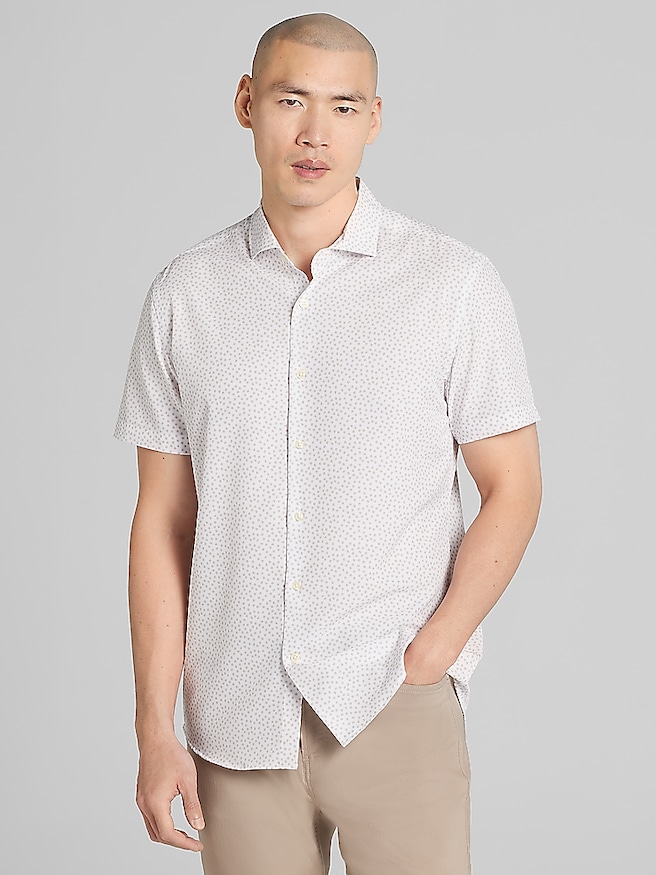
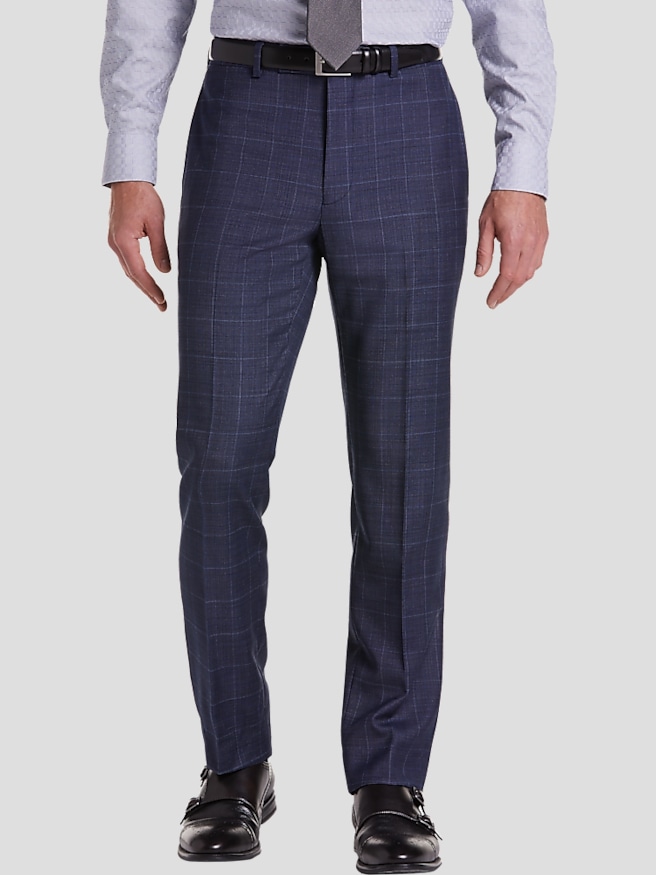
Slim fit business casual shirts bring a closer, cleaner silhouette to workday dressing without the formality of a full suit and tie. Compared with a traditional fit, a slim cut generally has less fabric through the chest, waist, and sleeves, creating a more defined shape beneath a sweater or jacket. The effect should be neat rather than tight: the button placket lies flat, the shoulders sit comfortably, and the fabric moves with the body instead of pulling across it. That balance matters during an ordinary day of reaching for a laptop, sitting through meetings, and walking out for lunch. A well-fitting shirt leaves enough room to bend the elbows and extend the arms without straining the back or opening gaps between buttons. Shoulder seams typically sit near the outer edge of the shoulders, while long sleeves finish around the wrist with cuffs that do not slide far over the hands. Slim fit is a description of the cut, not a requirement for a particular body type, and sizing can vary by maker and fabric. Neck, chest, sleeve, and waist measurements are more useful than relying on a familiar size label alone. Shirt length also changes how the finished outfit looks. Longer tails help a tucked shirt stay in place when sitting down, while a shorter hem can work untucked in a more relaxed office. Business casual expectations vary by workplace, but a collared, button-front shirt is a useful foundation for settings where a T-shirt feels too informal and a tie is unnecessary. For a first office job, a client visit, or a regular schedule split between home and headquarters, the appeal is straightforward: a shirt that looks composed on its own and sits smoothly under another layer. The best proportions support that purpose without making every movement feel restricted.
Fabric gives slim fit business casual shirts much of their character, from the crisp surface of poplin to the subtle texture of an Oxford weave. Cotton is a familiar choice for its breathable feel and comfortable contact with the skin, though weight and weave influence how airy or substantial a shirt feels. Poplin typically has a smooth, relatively flat surface that works well with tailored trousers and an unstructured jacket. Oxford cloth has a more visible woven texture, lending itself to chinos, loafers, and offices with a relaxed dress standard. Twill has a diagonal weave and often a slightly fuller drape, making it a natural option when a shirt needs some substance beneath a lightweight sweater. Cotton blended with a small amount of stretch fiber can offer extra give across the shoulders and elbows, especially useful in a close-fitting cut. Performance blends may provide moisture management, quicker drying, or wrinkle resistance when those features are specified in the fabric description. Those terms are not interchangeable, and a stretch shirt is not automatically wrinkle resistant. Linen and linen blends offer an airy feel and a more relaxed surface, but their visible creasing may be better suited to less formal workplaces. During the cooler months, midweight fabrics can feel comfortable on the commute without becoming bulky under indoor layers. A heavier fabric is not automatically more durable; weave quality, construction, fit, and care all contribute to how a shirt holds up. Even stitching, securely attached buttons, and neatly finished seams are useful details to examine, particularly around cuffs and other areas that see frequent handling. A collar that keeps its shape also helps preserve a tidy appearance after repeated wear. For long days that move from a desk to an evening gathering, fabric should suit both the office temperature and the amount of movement involved, rather than simply looking crisp on a hanger.
Color, pattern, and finishing details make these shirts adaptable across a working wardrobe. White and light blue offer a clean backdrop for navy, gray, and tan trousers, while muted stripes and small checks add interest without dominating an outfit. A finely patterned shirt can look understated across a conference table yet show more character up close. Solid colors are particularly easy to layer beneath textured knitwear, and a button-down collar can help keep the collar points tidy when worn open at the neck. A spread or point collar can also work without a tie, provided it sits comfortably beneath the jacket or sweater neckline. With chinos, a tucked slim fit shirt and a simple leather belt create a dependable office combination. Where workplace standards allow denim, Slim Fit Jeans For Business Casual can complement the shirt’s streamlined proportions, especially with a dark wash, minimal distressing, and clean footwear. An overshirt or softly structured jacket adds warmth for the trip outside, while a fine-gauge sweater offers an extra layer without overwhelming the shirt underneath. Keeping that polished appearance depends as much on care as on styling. The care label should determine washing, drying, and ironing methods because cotton, stretch blends, and treated fabrics can respond differently to heat. Promptly removing a shirt from the washer or dryer and hanging it neatly can help limit deep creases. Collars and cuffs benefit from attention before washing, using a treatment suitable for the fabric rather than aggressive scrubbing. Excessive heat can affect some stretch fibers and finishes, so hotter is not necessarily better. Rotating shirts between wears and addressing a loose button early can help preserve their usefulness. These practical qualities also make a business casual shirt a thoughtful gift for a graduation, a new role, or a professional milestone when the recipient’s measurements and preferences are known. A familiar collar style, a versatile color, and a comfortable fit are more likely to become part of a regular routine than a bold choice that does not match the workplace. From the morning commute to dinner after work, the strongest impression comes from balanced proportions, appropriate fabric, and details that stay neat through the day.