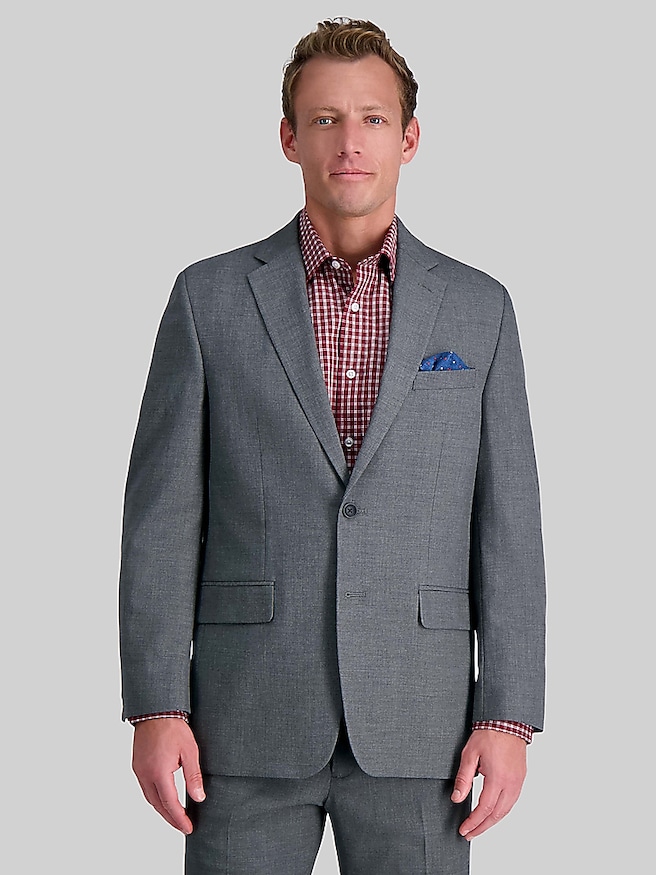
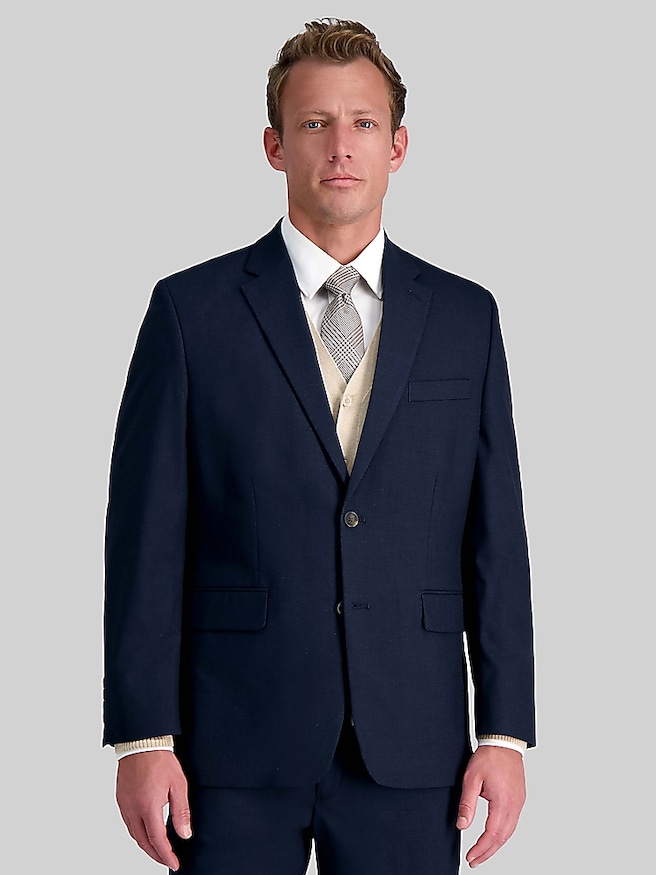
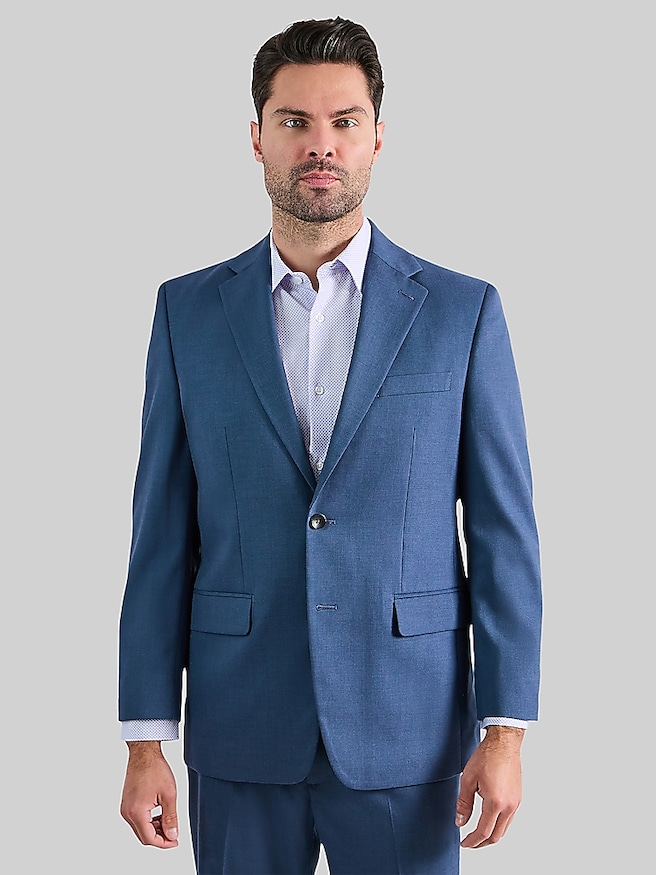
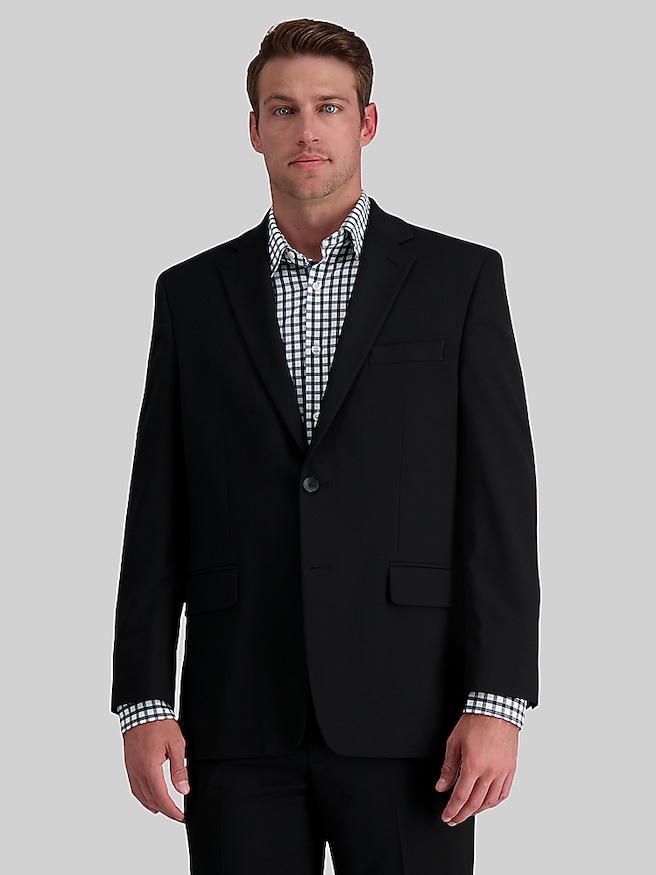
A size 42 suit is generally designed for a man with a chest measurement of approximately 42 inches, measured around the fullest part of the chest with the tape level and the arms relaxed. The number refers to body size, not the finished circumference of the jacket; the garment includes extra room for a shirt, comfortable breathing, and movement. That makes size 42 a starting point rather than a promise that every cut will feel identical. Shoulder shape, chest construction, waist shaping, and jacket length all influence how a suit sits on the body. Size labels such as 42S, 42R, and 42L pair that chest size with short, regular, or long proportions. As a general reference, short lengths often suit heights around 5 feet 3 inches to 5 feet 8 inches, regular lengths around 5 feet 9 inches to 6 feet, and long lengths around 6 feet 1 inch to 6 feet 4 inches. These ranges vary by maker, and torso length and arm length matter as much as overall height. A well-proportioned jacket rests smoothly across the shoulders, keeps its collar close to the shirt collar, and covers the seat without overwhelming the frame. When buttoned, the front should lie cleanly rather than pull into an X around the fastening. Trousers deserve equal attention: a size 42 suit with a standard six-inch drop is commonly paired with a 36-inch trouser waist, but that pairing is not universal. The jacket number alone does not establish the waist measurement, rise, or room through the thigh. For someone whose chest measurement sits between sizes, a size 43 suit provides a neighboring size to compare, although the cut and measurements remain important. These distinctions help establish the foundation for a suit that feels composed at a job interview, comfortable through a wedding ceremony, and appropriate for a full day of professional appointments.
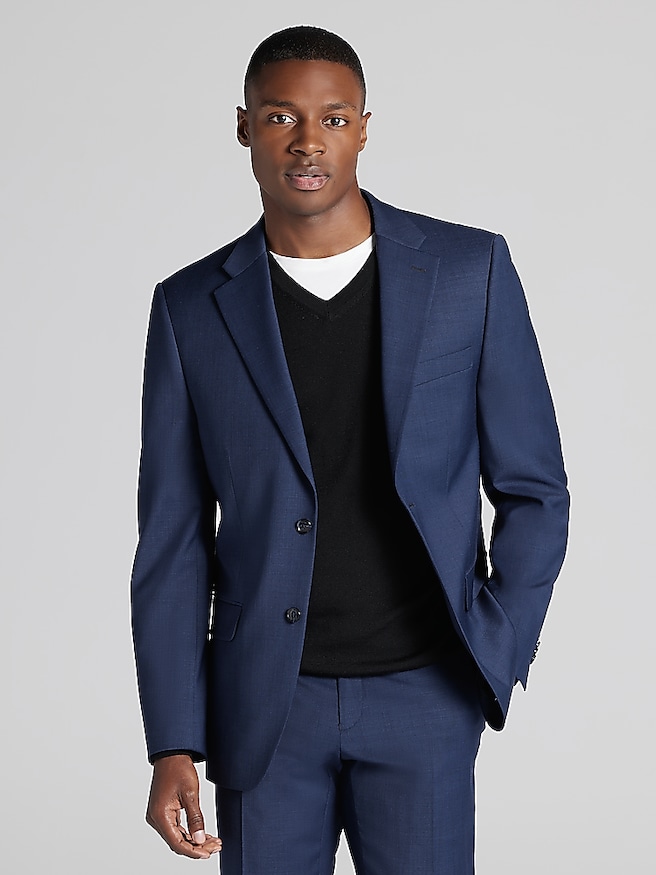
Within size 42 suits, the silhouette determines much of the overall impression. Slim fits generally sit closer through the chest and waist, with narrower sleeves and trousers; modern fits usually balance a shaped profile with some additional room; classic fits tend to allow more space through the body and legs. Those terms are not standardized, so a clean fit matters more than the label. Someone with a developed chest or fuller thighs may prefer extra room in those areas even when the waist is relatively trim. For a person who spends long stretches seated at a desk or traveling between meetings, a comfortable trouser rise and enough room across the upper back can make a noticeable difference. Fabric contributes just as much to that experience. Wool is valued for its drape, resilience, and ability to release many everyday wrinkles after a period of rest. Worsted wool fabrics often have a smooth, refined surface that works well for business settings and formal celebrations. Wool blends can combine that appearance with added strength or stretch, depending on their composition, while synthetic blends may offer useful crease resistance. Stretch content can ease reaching and sitting, but it cannot compensate for shoulders that are too narrow or a jacket that strains when closed. The lining also affects how smoothly the jacket slides over a dress shirt, and internal construction helps determine whether the chest looks softly shaped or more structured. Navy and charcoal create an understated base for interviews, presentations, and wedding guest attire. A subtle stripe adds direction to the silhouette, while a restrained check introduces visual interest without relying on bold color. Texture changes the effect, too: a smooth finish reads crisp and formal, while a lightly textured weave gives a solid color more depth. For repeated wear, balanced fabric weight, secure stitching, and a lining that moves freely are practical qualities, especially around the seat, pockets, and armholes where a suit experiences regular friction.
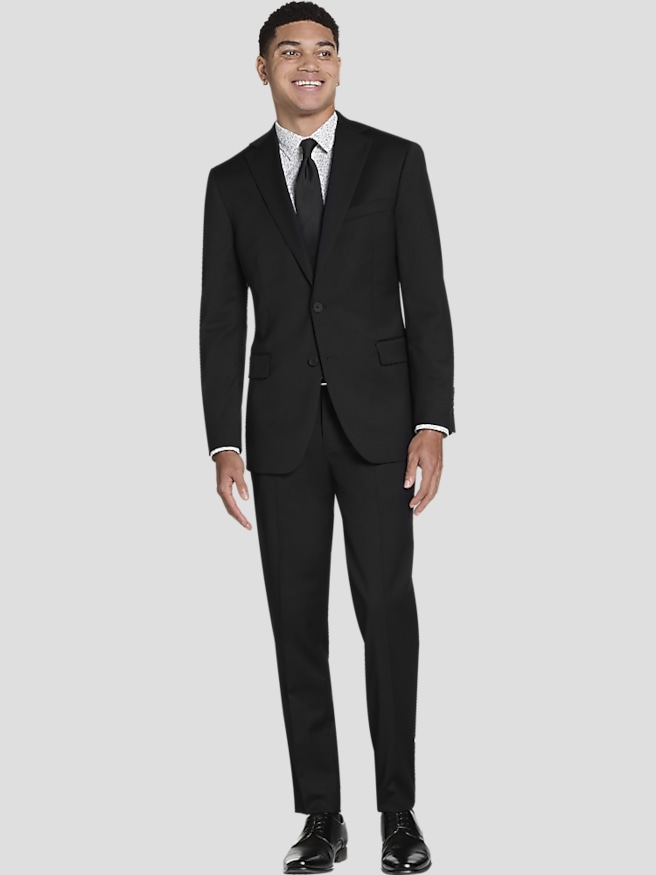
The appeal of a well-fitting size 42 suit extends beyond its appearance on a hanger. At a graduation, it should stay neat through photographs and feel comfortable when the wearer sits down; at a wedding reception, it should allow an easy handshake, a raised glass, and movement across the dance floor. In an office, the same attention to proportion keeps the jacket from looking bulky over a shirt or tight across the back during a presentation. A small amount of shirt cuff showing beneath the sleeve creates a deliberate finish, and trousers can fall with little or no break for a sharper line or a modest break for a more traditional effect. The hem works best when considered with the shoes intended for the outfit, since shoe shape changes how the fabric settles. Tailoring can refine sleeve length, trouser hems, and some waist measurements, subject to construction and seam allowance. Shoulder width and overall jacket balance are usually less straightforward to alter, which makes their initial fit especially important. For a graduation gift or a milestone career occasion, confirmed measurements and an understanding of the recipient’s preferred silhouette are more useful than guessing from casual clothing sizes. Long-term care helps preserve the shape and finish that make the suit worth wearing repeatedly. Following the garment’s care label is essential, since fabric blends, linings, and internal components can require particular handling. A broad, supportive hanger helps maintain the shoulders, while trousers hung neatly along their crease are less likely to develop unwanted folds. Light brushing removes surface dust, empty pockets prevent distortion, and time to air out between wears helps the fabric recover. Cleaning the jacket and trousers together when professional cleaning is needed can help keep their appearance consistent. Excessive heat or heavy pressing can leave shine on some fabrics, so careful treatment matters. With sound proportions, a fabric suited to its intended use, and thoughtful upkeep, a size 42 suit can remain a dependable choice for both everyday professional dressing and important personal occasions.