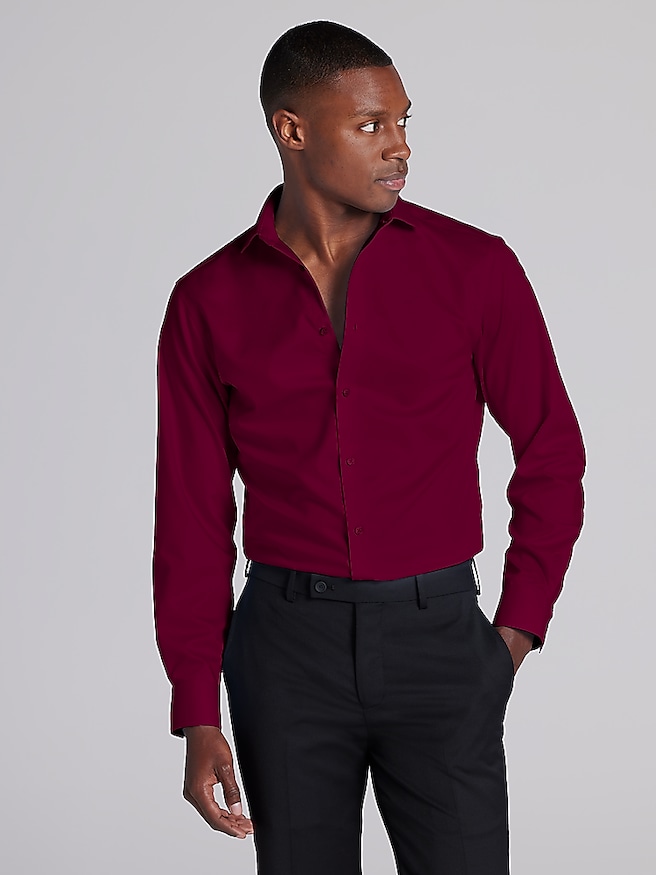
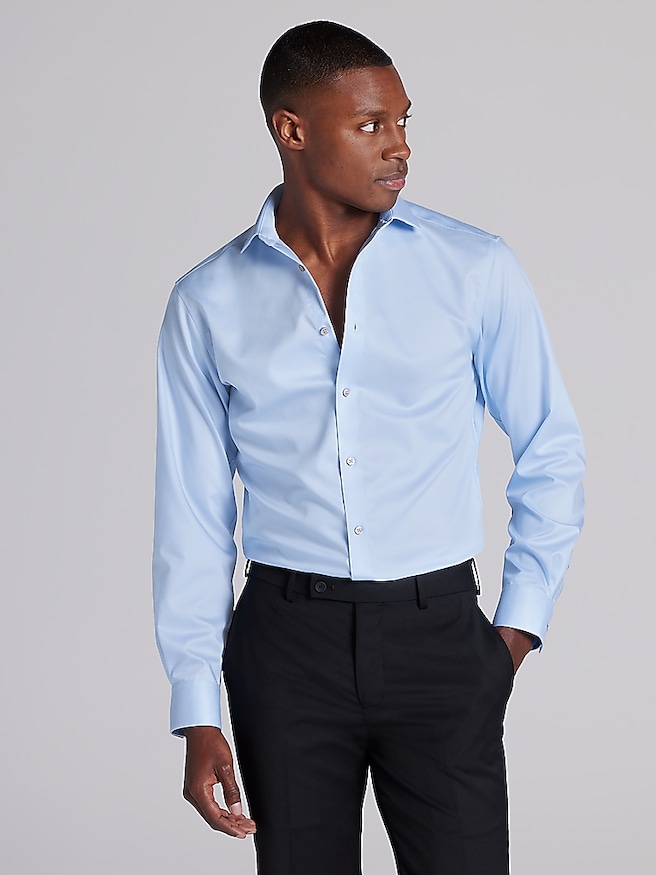
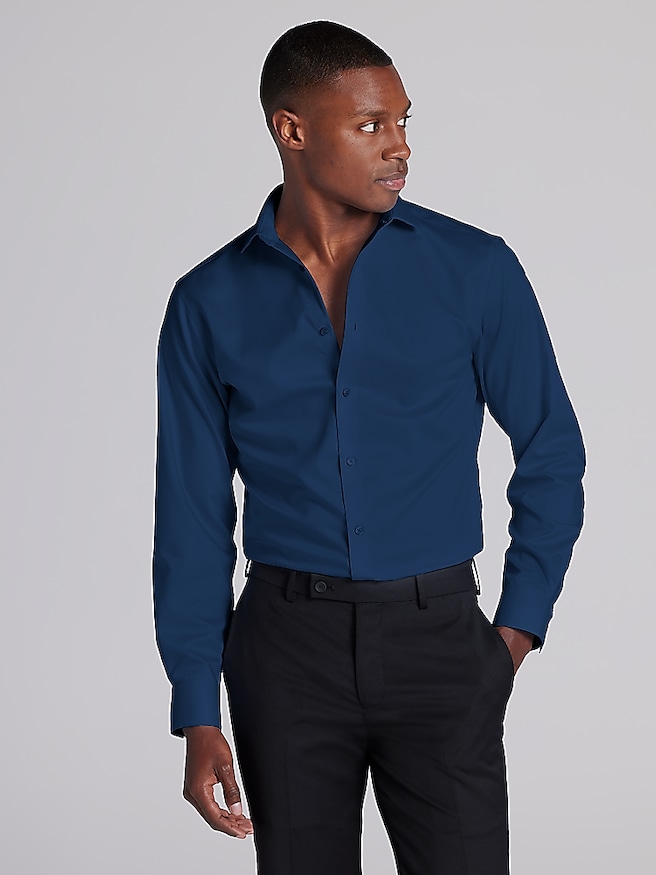
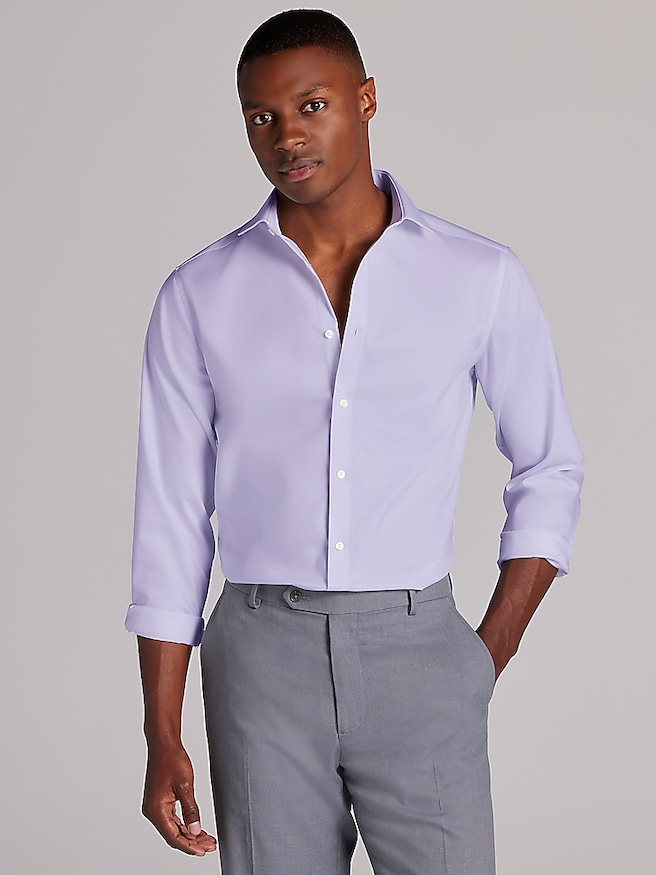
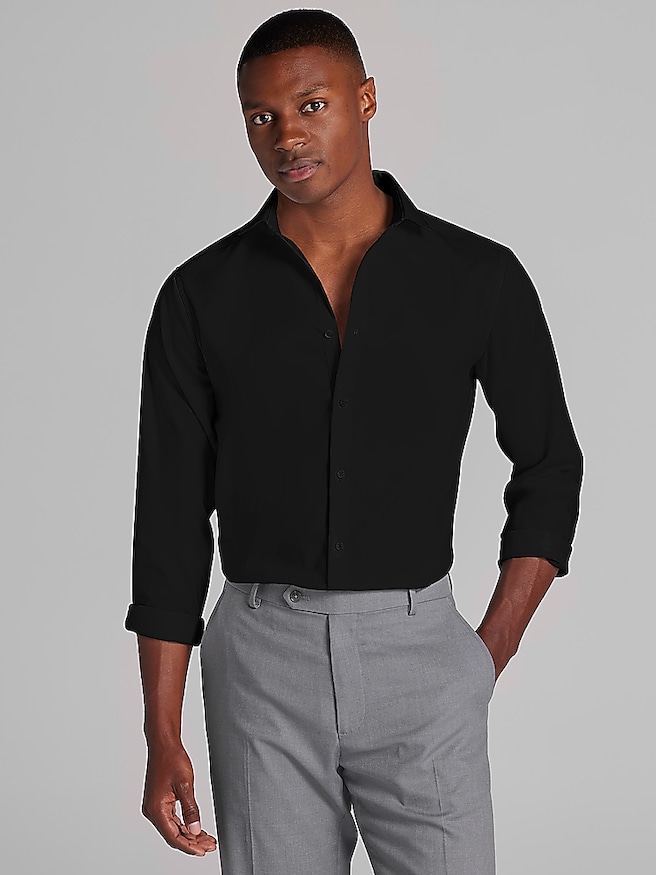
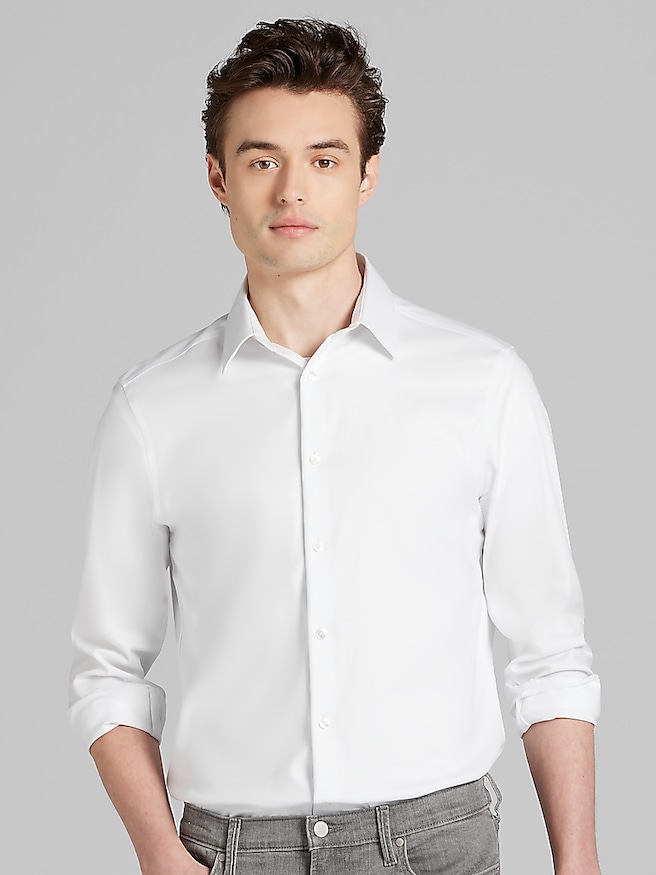
Size 17 dress shirts are sized for a neck measurement of approximately 17 inches, with sleeve length shown separately to describe the reach from the center back of the neck, across the shoulder, and down to the wrist. Common sleeve labels include 32/33, 34/35, and 36/37, so a shirt marked 17 34/35 pairs a 17-inch neck size with a sleeve designation covering 34 to 35 inches. That second measurement matters just as much as the collar size: a comfortable neckline cannot make up for cuffs that disappear beneath a jacket or hang too far over the hands. Neck size also does not determine the shape of the entire shirt. Size 17 can appear across slim, regular, and classic fits, with variations in room through the chest, waist, shoulders, and arms. Slim fits generally sit closer to the torso, while regular and classic fits typically leave more space, although those labels are not standardized across all shirts. The right balance leaves the collar comfortably buttoned, the shoulder seams near the shoulder edges, and the front smooth rather than strained between buttons. There should be enough room to sit through a meeting, reach across a dinner table, or put on a jacket without the fabric pulling sharply across the back. For someone wearing a tie throughout the day, a small amount of breathing room at the neck is especially important; roughly one finger should fit comfortably inside the fastened collar. Anyone comparing nearby neck measurements can also consider Size 16 Dress Shirts, keeping in mind that a smaller collar size is not a substitute for a more closely cut torso. These proportions make size 17 dress shirts relevant to everyday office wardrobes, wedding guest attire, interviews, and other occasions where a clean neckline and well-positioned cuffs help the whole outfit look composed. They also make a dependable foundation for dressing comfortably without losing the crisp outline expected from a dress shirt.
Fabric gives a size 17 dress shirt much of its character, from the cool, smooth feel of a lightweight weave to the soft texture of a more substantial cloth. Cotton is a familiar choice for its breathability and comfortable feel against the skin, particularly during long stretches indoors beneath a suit jacket. Cotton blends can combine that softness with qualities such as easier wrinkle recovery or quicker drying, depending on the fibers and finishing involved. A small amount of stretch may add flexibility when typing at a desk, driving to an appointment, or lifting an arm into a coat sleeve, but stretch works best alongside a suitable cut rather than compensating for a shirt that is too tight. Weave affects both appearance and everyday wear. Poplin typically has a smooth, relatively flat surface that looks sharp with tailored clothing, while twill has a subtle diagonal structure and often a slightly fuller drape. Oxford cloth brings more visible texture, and finer pinpoint constructions can bridge polished business dressing and less formal settings. Lighter fabrics may feel airy but can reveal an undershirt more readily, especially in white or pale shades; fabric density, color, and lighting all influence opacity. During the cooler months, a shirt with a little more substance can feel comfortable under knitwear without needing to look heavy. White offers a crisp contrast against dark tailoring, pale blue softens the overall effect, and restrained stripes or small checks add detail without dominating an outfit. Solid shirts tend to accommodate patterned ties easily, while patterned shirts often look balanced with quieter accessories. Collar shape contributes another layer of distinction: a point collar creates a narrower frame, a spread collar leaves more space around a tie knot, and a button-down collar has a more relaxed character. Together, fabric, color, and collar construction determine whether the shirt feels most at home in a formal conference room, at an evening celebration, or beneath a sweater for a polished casual dinner.
The details that receive the least attention on a hanger often become the most noticeable after several hours of wear. A well-proportioned size 17 dress shirt should have sufficient body length to remain tucked when sitting or moving, without creating excessive folds around the waistband. Sleeves should reach the wrist with the arms relaxed, and cuffs should close securely without squeezing; under a properly fitted jacket, a small edge of shirt cuff usually remains visible. Adjustable button cuffs offer practical flexibility, including room for a watch, while French cuffs use cuff links and bring a more formal finish to business or occasion dressing. Smooth seams, securely attached buttons, and neatly finished buttonholes are useful signs of careful construction, particularly around areas that handle repeated movement. Durability also depends on how the shirt is treated between wears. The care label is the best reference for washing temperature, drying, ironing, and any cleaning restrictions, since fabric blends and surface treatments respond differently to heat and agitation. Non-iron and wrinkle-resistant finishes can reduce routine pressing, but they do not mean every crease will disappear under every condition. Removing a shirt promptly after laundering and hanging it neatly can help preserve its shape and limit deep wrinkles. Collar points and cuffs may benefit from light pressing when permitted, and removable collar stays should come out before washing or ironing. Attention to marks at the collar and cuffs before they become set can also help keep light-colored shirts looking fresh. For someone who wears dress shirts several days a week, rotating between them allows time for appropriate cleaning and reduces constant wear on a single garment. As a gift, a dress shirt is most useful when the recipient’s neck size, sleeve length, and preferred fit are known; a familiar neutral color can make it easier to work into an established wardrobe. Whether worn for a presentation, a family celebration, or a regular day of appointments, a size 17 shirt earns its place through comfortable proportions, fabric suited to the setting, and details that stay neat from the first buttoning to the end of the evening.