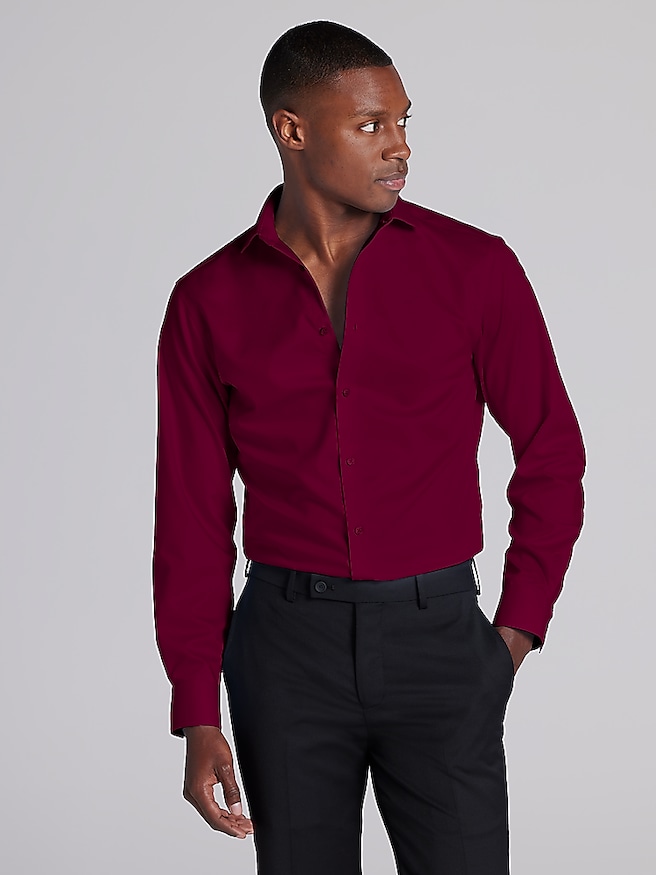
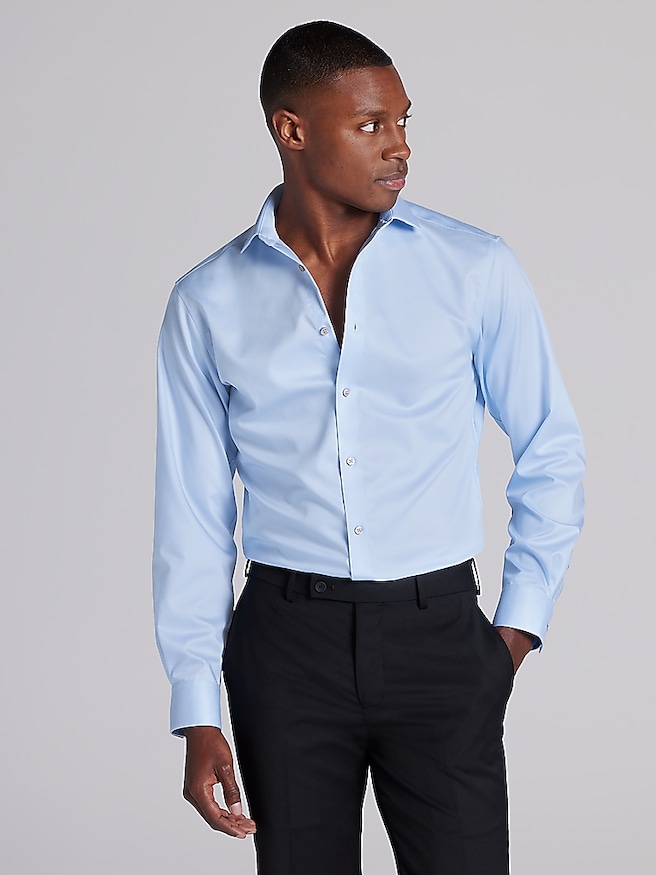
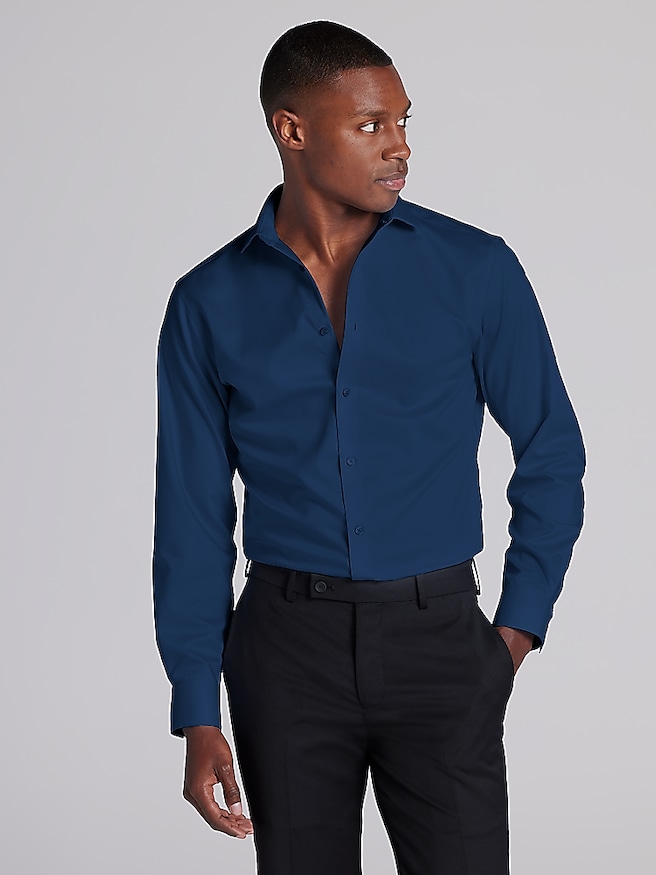
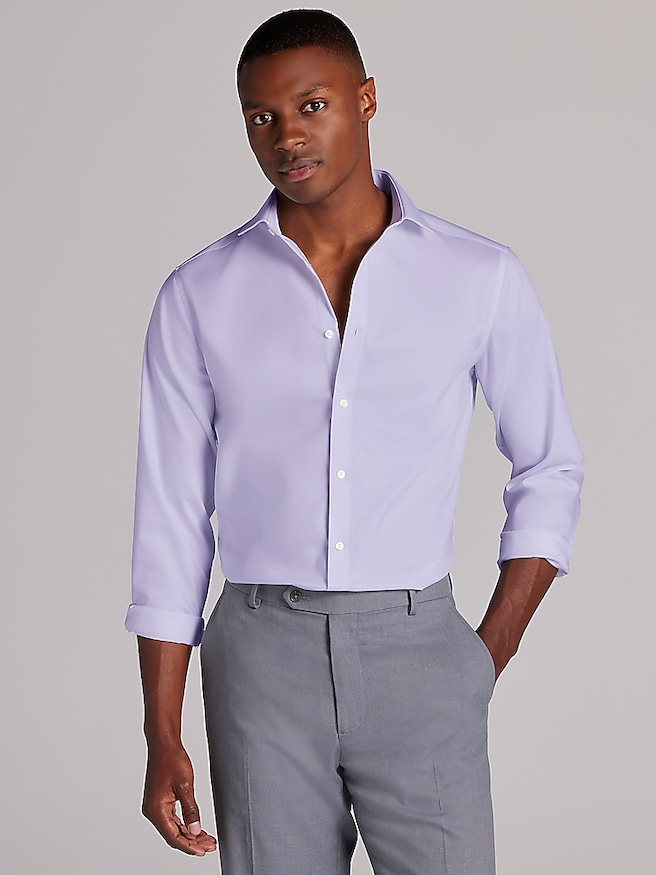
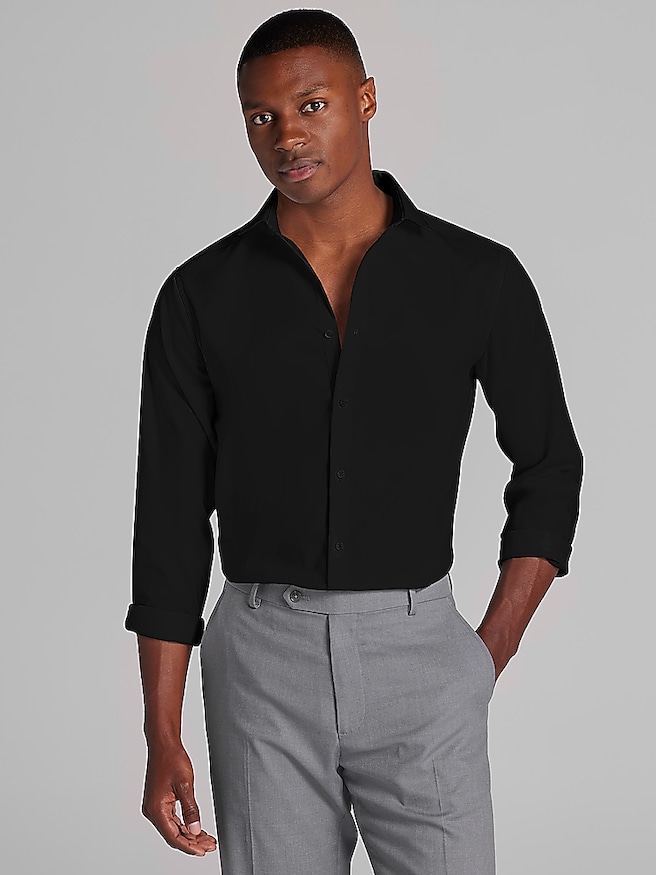
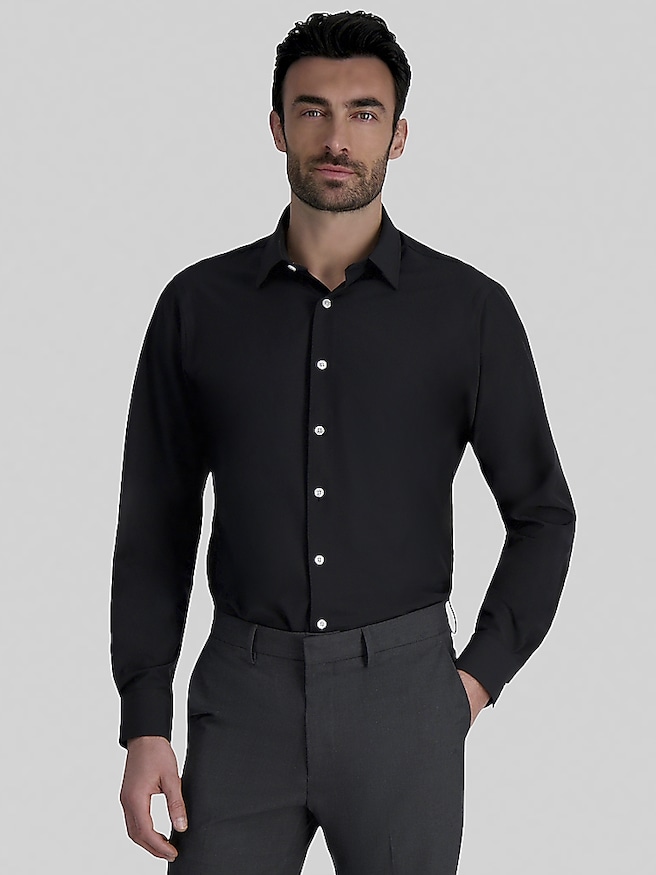
Size 16 dress shirts are designed around a nominal 16-inch neck measurement, with sleeve length and body fit providing the other essential pieces of a comfortable, polished fit. That neck size is a starting point, not a complete description of how a shirt will feel across the shoulders, chest, and waist. Two shirts marked size 16 can have noticeably distinct silhouettes, especially when one has a slim cut and another has a classic fit. Numeric sizing commonly pairs the neck measurement with a sleeve measurement, such as 16 32/33 or 16 34/35; the second set of numbers identifies the intended sleeve-length range in inches. Sleeve measurements generally run from the center back of the neck, across the shoulder, and down to the wrist, rather than from the shoulder seam alone. Some labels group neck sizes as 16–16.5, so the stated measurements and fit description matter more than assuming every label follows the same pattern. With the top button fastened, a dress shirt collar should sit neatly without pinching, leaving enough room to slip a finger comfortably between the collar and neck. Shoulder seams should rest close to the shoulder edges, while the front should lie smoothly without gaps between buttons. At a desk, behind the wheel, or reaching across a conference table, that balance becomes more important than a crisp appearance on a hanger. A size 16 shirt with the appropriate sleeve length should cover the wrist without bunching heavily at the hand, and its cuff can show slightly beyond a suit jacket sleeve. For someone whose neck measurement calls for more room, Size 17 Dress Shirts offers a related size category to consider. A larger collar, however, is not a substitute for choosing the right chest and waist proportions; fit and neck size serve separate purposes.
Fabric and construction give size 16 dress shirts much of their character, from the smooth surface of a fine poplin to the subtle diagonal texture of twill. Cotton is a familiar choice for its breathability, absorbency, and comfortable feel against the skin, although its finish and weave influence how readily it wrinkles. Poplin typically creates a clean, understated surface that works well beneath a suit, while twill often has a softer drape and a slight sheen. Oxford weaves have a more visible texture, and finer pinpoint versions can bridge business dressing and a less formal jacket-and-trouser combination. Cotton blends may offer easier upkeep or improved wrinkle recovery, depending on their fiber content and treatment. A small amount of elastane can add stretch, which may feel useful when sitting through a lengthy meeting or moving between a ceremony and a reception. Stretch does not make an undersized shirt fit correctly, though; a placket that pulls open or fabric that strains across the upper back still points to a fit mismatch. Slim fits generally reduce excess fabric through the torso, while classic or regular fits tend to provide more room, with exact dimensions varying by maker. Neither silhouette is automatically more polished. The better choice is the one that stays smooth under a jacket and allows natural movement without billowing at the waistband. Collar shape also changes the finished look. A point collar creates a narrower frame for a tie, while a spread collar leaves more space for a fuller knot. Button-down collars bring a more relaxed note and can sit neatly when worn without a tie. At the wrist, button cuffs offer straightforward everyday use, while French cuffs require cuff links and bring a more formal finish. Small construction details deserve attention as well: secure buttons, even stitching, and cleanly finished seams help a shirt stand up to repeated wear. Fabric weight alone does not establish quality or durability; the weave, yarns, construction, and care all play a part.
The usefulness of a size 16 dress shirt extends well beyond a single suit or occasion. A white shirt provides a clear contrast against navy or charcoal tailoring for interviews, presentations, weddings, and other settings where a composed appearance matters. Light blue offers a softer contrast while remaining easy to coordinate with patterned ties and textured jackets. Fine stripes and small checks can add visual interest without dominating an outfit, particularly when the trousers and jacket are solid. Pattern scale matters when a tie is involved: a narrow shirt stripe and a broader tie motif usually look more distinct together than two patterns of nearly identical size. For an open-collar outfit, the collar should rest comfortably against the neck and maintain its shape without relying on a tie to hold it in place. A shirt intended to stay tucked benefits from enough body length to remain secure when the wearer sits or lifts an arm, rather than creeping above the waistband after a few movements. These practical details make dress shirts useful for professionals building a work wardrobe, graduates preparing for interviews, and anyone who dresses up regularly for personal celebrations. They can also make thoughtful gifts when the recipient’s neck size, sleeve length, and preferred cut are known; neck size alone leaves too much to chance. Ongoing care helps preserve both the fit and the finish. The sewn-in care label should determine washing, drying, and ironing methods, especially for treated fabrics and stretch blends. Excessive dryer heat can contribute to shrinkage and wear, while prompt removal after laundering can limit deep creases. Removable collar stays should come out before washing or pressing when directed, and attention to the inside collar and cuffs helps address the areas that collect the most residue. Wrinkle-resistant or non-iron finishes can simplify upkeep, but they do not eliminate the need to follow care instructions. Allowing shirts to dry fully before storage and alternating between wears supports a dependable wardrobe, keeping the collar neat, the cuffs presentable, and the overall silhouette ready for repeated use.