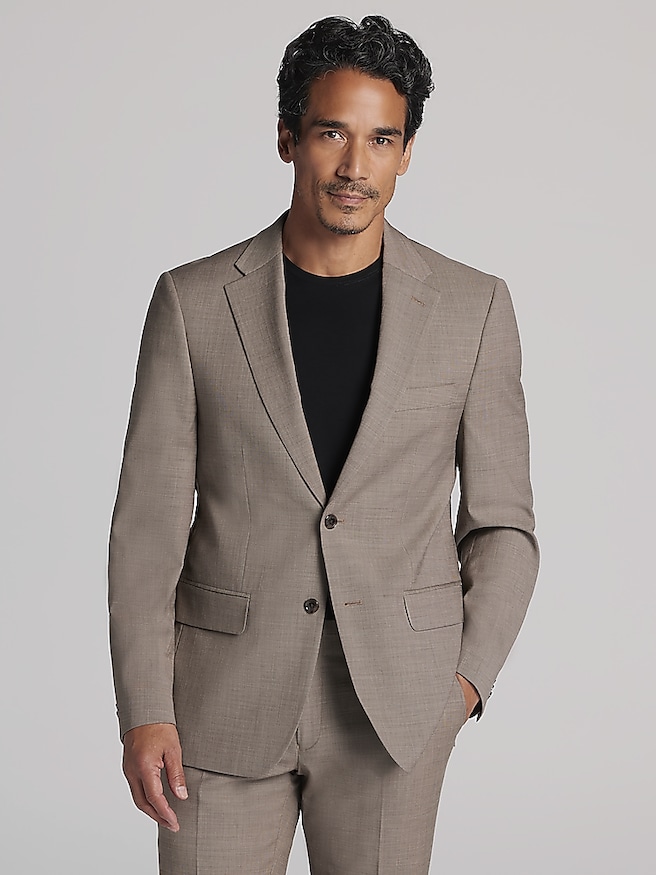
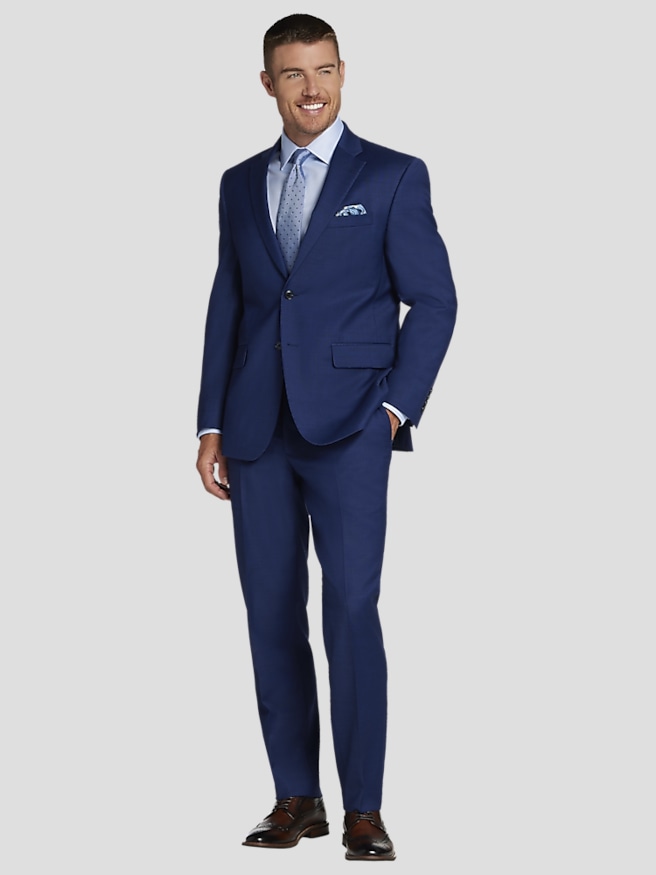
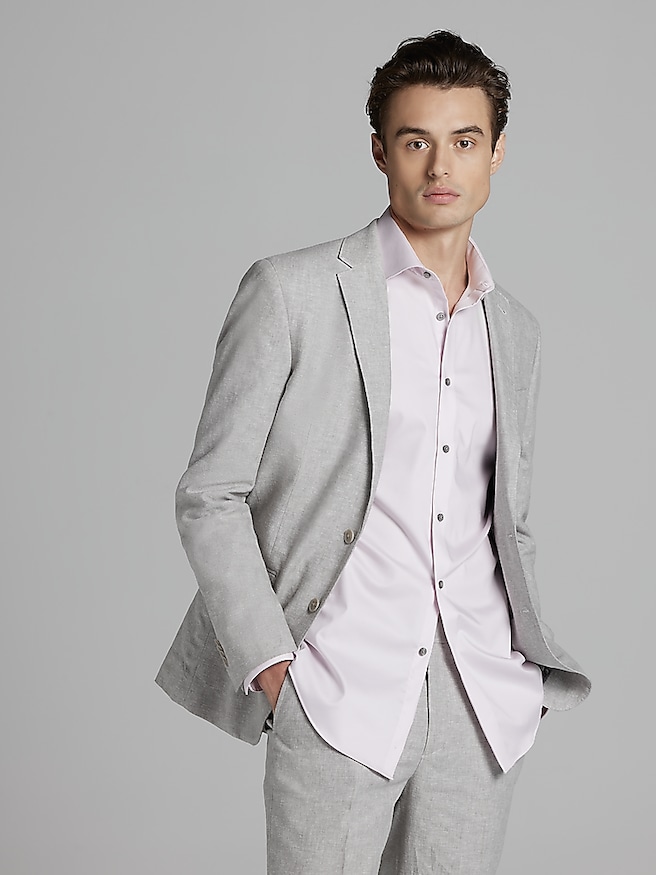
Short suit jackets are tailored jackets with a shorter body and sleeves than regular-length versions of the same chest size. They help create balanced proportions for men with shorter torsos or arms, often including those around 5 feet 7 inches tall or shorter, although height alone does not determine the best fit. The goal is a jacket that looks proportionate, not cropped: the hem should provide appropriate seat coverage, the shoulders should sit naturally, and the sleeves should meet the wrist without swallowing the hands. A short size is separate from the jacket’s cut, so it does not automatically mean slim or narrow. Classic, modern, and slim fits describe the shape and room through the torso; short describes the length category. On a size label, the number generally corresponds to chest size in inches, while the S indicates short length. For someone comparing 48S Suit Jackets, that means a jacket intended for an approximately 48-inch chest with short-length proportions, rather than a jacket measuring exactly 48 inches around the outside. Measurements and fit can vary by maker and construction, making the way the jacket sits on the body more useful than the label alone. A clean fit begins at the shoulders, with the seam close to the shoulder’s edge and no pronounced overhang or dents. The lapels should lie flat, the collar should rest against the shirt collar, and the front should close without pulling into an X around the button. With arms relaxed, a small amount of shirt cuff—typically about a quarter to half an inch—can show beneath the jacket sleeve. These details matter whether the wearer has a broad chest, a lean frame, or a fuller midsection. Short sizing can bring the jacket’s overall balance closer to the wearer’s proportions, while thoughtful tailoring refines the result without relying on excessive shortening of a regular-length jacket.
Fabric and construction influence how short suit jackets look, move, and hold their shape throughout the day. Wool is a familiar choice for tailored clothing because it drapes smoothly, breathes, and has a natural resilience that helps light creases relax between wears. Finer, smoother weaves create a polished surface suited to business meetings, ceremonies, and dressier celebrations, while more visible texture can lend depth to a jacket without requiring a bold pattern. Wool blends may combine that tailored appearance with other performance characteristics, depending on their fiber content. A small amount of stretch can make reaching across a conference table or sitting through a long dinner feel less restrictive, but stretch should complement a sound fit rather than compensate for tight shoulders or a strained button closure. Cotton and linen bring distinct textures and a more relaxed character, with linen’s natural creasing forming part of its appearance. Synthetic blends can offer useful wrinkle resistance and durability, though the fabric’s weight, weave, and finish also affect comfort and drape. Inside the jacket, lining and internal structure contribute to how smoothly it slips over a shirt and how firmly it holds its silhouette. For a first office suit or an outfit for interviews, understated navy or charcoal can provide a versatile foundation. Subtle checks and fine stripes add visual interest while keeping the overall effect restrained. A suit jacket looks most cohesive with trousers made from the matching fabric; two pieces described simply as navy may differ noticeably in shade, texture, or sheen. When worn separately, a jacket with visible texture and less formal detailing often pairs more naturally with contrasting trousers than a smooth, sharply structured suit jacket. A crisp shirt, a tie suited to the occasion, and well-kept dress shoes complete the picture without distracting from the jacket’s proportions. For a wedding guest, graduate, or professional preparing for a presentation, that balance can make the outfit feel considered rather than overworked.
The practical appeal of short suit jackets becomes clear in everyday movement: sitting at a desk, shaking hands before an interview, or standing beside family for photographs. A jacket should allow comfortable movement without a collar that lifts away from the neck or sleeves that bind sharply when the arms move forward. Some movement in a tailored garment is normal, but persistent pulling, bunching, or restricted reach deserves attention. Pocket placement, lapel width, and the button stance also contribute to the overall balance, which is why shortening a regular jacket is not always equivalent to choosing a short size. Removing too much length can leave the pockets unusually close to the hem and disrupt the relationship between the buttons and the jacket’s lower edge. Sleeve adjustments and modest waist shaping are common refinements, while major changes to shoulders or overall length are more involved. Once the fit is settled, consistent care helps preserve both appearance and useful life. A broad, shaped hanger supports the shoulders, and enough closet space keeps the sleeves and lapels from being crushed. Emptying the pockets after wear prevents keys, phones, and wallets from weighing down the fabric or stretching pocket openings. A gentle clothing brush can lift surface dust, and airing the jacket between wears allows moisture and odors to dissipate. Follow the care label for cleaning and pressing, and use professional cleaning when needed rather than treating every wear as a reason to clean. When traveling, a garment bag can protect the fabric from rubbing, while careful unpacking helps the jacket recover its shape. For a gift recipient building a professional wardrobe or preparing for a milestone celebration, a short suit jacket can be a thoughtful choice when chest size, length, and preferred cut are known. The most useful jacket is one that feels right for the wearer’s routine, pairs naturally with the rest of the outfit, and maintains a clean, balanced silhouette over repeated wears.