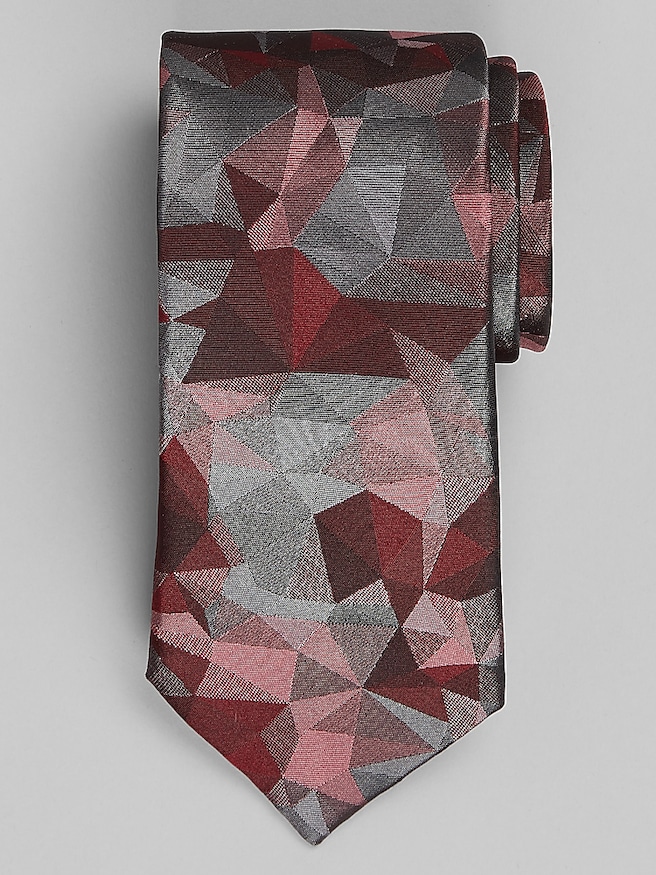
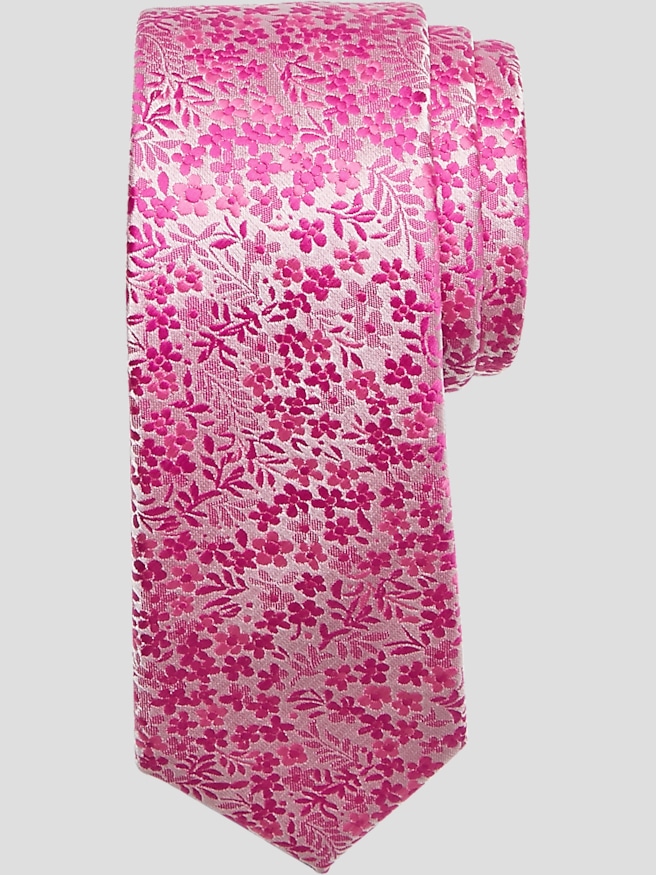
Shiny ties are neckties with a light-reflecting surface that adds a lustrous finish to dress shirts, suits, and occasion outfits. That shine can come from the fiber, the weave, or a combination of both, so a smooth silk tie and a glossy polyester tie may have noticeably different appearances even in the same color. Satin describes a weave rather than a fiber: its smooth face reflects light across the fabric, producing the fluid gleam often associated with dressier neckwear. Silk can offer a soft hand and a rich, dimensional sheen, while polyester can deliver a pronounced shine with good resistance to everyday wear. Neither material guarantees a particular finish; construction and surface texture matter, too. A woven pattern may alternate glossy and matte areas, giving a tie depth without making the entire surface highly reflective. Solid shiny ties create a clean band of color down the shirtfront, while tonal patterns can add detail that becomes more visible as the wearer moves. These distinctions are especially noticeable at weddings, proms, receptions, and evening celebrations, where a tie may look softly luminous in one part of the room and brighter beneath direct lighting. Deep navy, burgundy, and charcoal can lend a restrained polish, while silver tones, pale neutrals, and brighter colors make the reflective quality more prominent. Color and sheen work together: a dark glossy tie can feel understated against a white shirt, whereas a light satin finish creates a clearer focal point against a dark jacket. For business settings, a subtle luster generally blends more easily with tailored clothing than an intensely reflective surface, though the workplace dress code remains important. The appeal of shiny neckwear is not simply that it catches attention. A carefully chosen finish can make a familiar suit feel more appropriate for a meaningful occasion, echo the polish of dress shoes, and bring definition to an otherwise quiet combination of fabrics. Its effect is most convincing when the shine supports the outfit rather than competing with every other detail.
Proportion gives a shiny tie much of its polish. Tie width generally looks most balanced when it relates to the jacket’s lapels and the wearer’s frame, rather than standing apart as an unusually narrow or wide stripe. A slimmer tie can complement narrow lapels and a streamlined suit, while a broader blade often sits more naturally with fuller lapels and roomier tailoring. Length matters just as much: with the knot secured at a comfortable collar height, the front tip typically reaches the waistband or belt buckle. Taller wearers and those who favor larger knots may need additional length to achieve that position without leaving the narrow end too short to secure. Fabric thickness also affects the knot. A substantial satin tie can make a fuller knot than a lighter silk version, even when both have the same width. A smaller knot often works well with a narrow collar opening, while a wider spread collar can accommodate more volume. A slight dimple beneath the knot breaks up the reflective surface and gives the fabric shape, particularly with a smooth, solid finish. Against a crisp white or pale blue shirt, the tie’s color and texture remain easy to appreciate. A matte or subtly textured suit provides useful contrast, allowing the glossy neckwear to supply the outfit’s brightest fabric detail. The same balance applies when coordinating a tie with Shiny Dress Shirts: restrained color contrast and a quieter jacket can keep multiple reflective fabrics looking intentional. Patterns benefit from similar restraint. A tonal tie can sit comfortably against a small shirt pattern, while a bold patterned tie usually reads more clearly on a solid shirt. For wedding groups, matching color alone may not produce a consistent look, because different finishes reflect light differently in photographs. Comparable texture and sheen help create a cohesive appearance. Dress-code wording should also shape the choice; a glossy long tie is not automatically a substitute for the bow tie traditionally associated with black-tie attire.
The details behind the shine influence how a tie feels, hangs, and holds up over time. A well-shaped blade, an even surface, and neatly finished edges help the fabric fall cleanly rather than twisting across the shirtfront. The lining contributes to body and recovery, giving the tie enough structure to form a knot without making it feel unnecessarily bulky. Surface smoothness deserves attention because snags, pulls, and crushed areas can interrupt the way a glossy fabric reflects light. Contact with rough bag straps, sharp jewelry, or abrasive surfaces can be particularly noticeable on a smooth satin face. Care requirements vary by fiber and construction, making the care label more reliable than assumptions based on shine alone. After wear, loosening and undoing the knot reduces prolonged pressure on the same folds; a suitable hanger or a loose roll can help the tie rest without creating sharp creases. Storage away from direct sunlight also helps protect color. Spills call for gentle handling rather than vigorous rubbing, which can spread a mark or disturb the surface. Silk may develop water marks, and professional cleaning may be appropriate when the label calls for it. Polyester is often more resilient in everyday use, but that does not mean every polyester tie is washable or safe under high heat. Any pressing should follow the care instructions, with an appropriate temperature and protective cloth when permitted, because excessive heat can damage fibers or alter the finish. Those practical considerations make shiny ties appealing gifts for someone preparing for a graduation ceremony, wedding, prom, or another dress-up occasion. A recipient’s usual suit colors, preferred tie width, and typical collar style offer better direction than choosing shine alone. Someone who wears navy tailoring regularly may get repeated use from a rich, understated color, while a person dressing for a coordinated celebration may appreciate a more distinctive shade. With suitable proportions, thoughtful fabric choices, and careful handling, a shiny tie can become a dependable occasion accessory rather than a detail worn only once.